
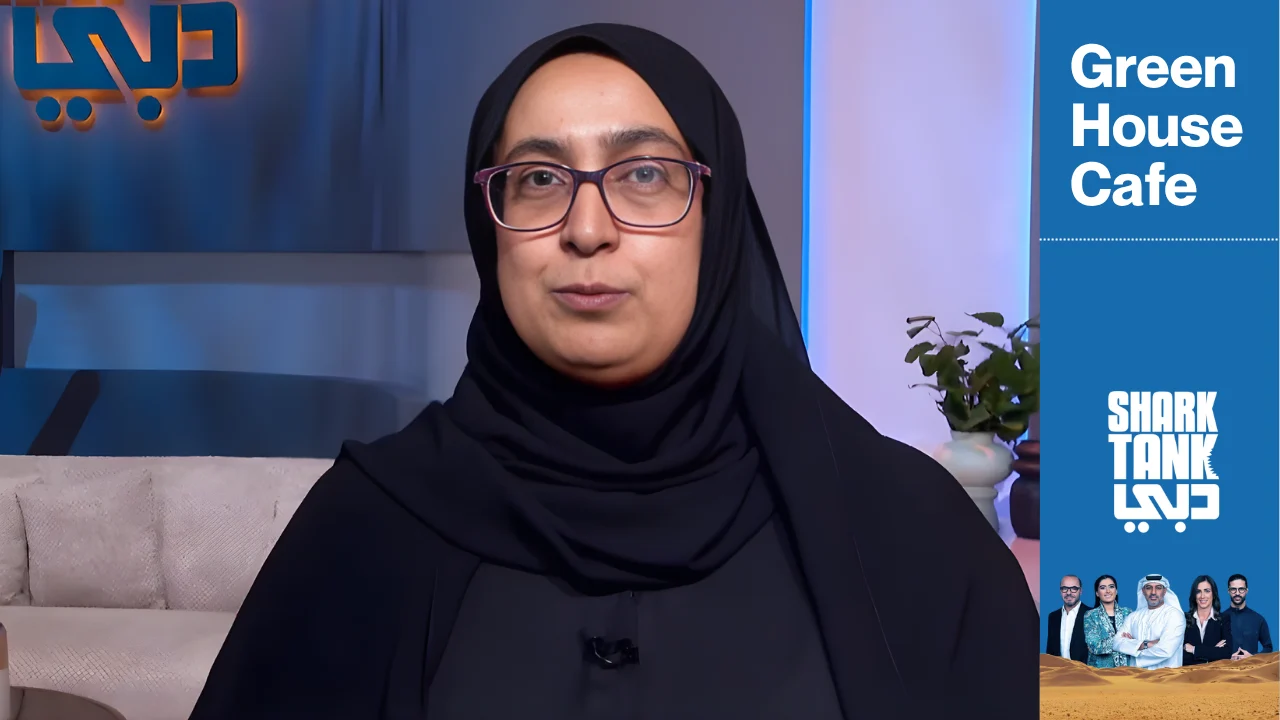
In a region where innovation meets extreme climate, Shark Tank Dubai delivered one of its most thought-provoking pitches yet. Founder Halima Al Hammadi walked in with a bold vision called Green House Cafe. It was not just another cafe idea, but a living ecosystem designed to merge food, sustainability, and human experience.
Her pitch instantly stood out because it tapped into something deeper than profit. It spoke to food security, sustainability, and a future where people reconnect with how their food is grown. But what followed was a powerful clash between vision and reality, leaving both the Sharks and the audience with unforgettable lessons.
Shark Tank Dubai Pitch Summary (Quick Facts)
| Company | Green House Cafe |
| Founder | Halima Al Hammadi |
| Industry | Sustainable Hospitality / AgriTech |
| Ask | 1.4 million AED |
| Equity Offered | 20% |
| Core Concept | Cafe integrated with hydroponic, vertical, and aeroponic farming |
| Unique Value | Immersive “mini forest” dining experience with live crops |
| Outcome | No deal |
A Cafe That Feels Like a Living Forest
At its core, Green House Cafe is not about coffee. It is about transforming how people experience food in the UAE. Instead of hiding agriculture behind supply chains, Halima brought it directly into the customer experience.
She envisioned cafes built along major highways like Sheikh Mohammed bin Zayed Road. These would act as green sanctuaries in the middle of urban life. Customers would not just eat, they would walk through crops, explore plants, and even shop for fresh produce while dining.
She described it as entering a “miniature forest,” a space where nature and hospitality blend seamlessly. This idea turns the traditional “farm-to-table” concept into something visible, interactive, and emotionally engaging. For a region increasingly focused on sustainability and food security, this vision felt both timely and inspiring.
The Harsh Reality: Dubai’s Heat vs Glass Design
But then came the moment that changed everything. The Sharks quickly identified a critical flaw, what could be called the “glass house paradox.” While the concept looked beautiful, it faced a brutal environmental challenge.
Dubai’s intense heat does not behave kindly with greenhouse structures. Instead of nurturing plants, a glass building in this climate can trap heat and turn into an oven. The Sharks warned that without advanced cooling and insulation, the cafe could literally become unbearable for customers.
The problem did not stop there. Solar energy, which could solve the cooling issue, introduces another conflict. Solar panels block sunlight, which destroys the transparent greenhouse aesthetic. This created a painful trade-off between sustainability and brand identity.
This moment was both surprising and powerful. It showed that in Dubai, great ideas must adapt to extreme conditions. A concept that works in Europe or cooler regions cannot simply be copied into the Middle East without major redesign.
Passion Meets a Critical Experience Gap
One of the most emotional parts of the pitch came from Halima’s story. Her journey was rooted in her upbringing and her involvement with UAE “productive families.” Her passion for farming was not just business-driven, it was deeply personal.
She also held intellectual property for her concept, including a patent from the Ministry of Economy. This gave her idea credibility and structure. However, the Sharks saw something missing.
They pointed out a gap in large-scale operational experience. Running a high-tech, climate-controlled cafe is very different from managing small-scale or home-based ventures. It requires expertise in logistics, staffing, systems, and customer flow at a commercial level.
This created a difficult but important lesson. Passion can start a business, but execution is what sustains it. In the eyes of investors, operational capability often matters more than the idea itself.
The Unexpected Twist: Asking for Too Little
Most entrepreneurs fear asking for too much investment. But in this pitch, the opposite happened. The Sharks were not concerned that 1.4 million AED was too high. They believed it was far too low.
This was a surprising moment that flipped traditional expectations. The Sharks explained that solving the technical challenges alone, especially cooling a glass structure in desert conditions, would require millions more in research and development.
In other words, the ask revealed a deeper issue. It suggested that the true cost of the project had not been fully understood. For investors, this raises a red flag because it signals potential underestimation of risk.
This insight is crucial for Dubai’s startup ecosystem. Ambition must be matched with realistic financial planning. Especially in tech-driven or climate-sensitive industries, underestimating costs can be just as dangerous as overestimating revenue.
No Deal, But a Vision That Still Resonates
In the end, the Sharks decided to walk away. The risks were too high, and the path to execution was unclear. Yet, the tone of the conclusion was not negative.
Halima received praise for her courage, clarity, and bold thinking. Her presence on the show itself was seen as an achievement. She remained confident and optimistic, stating that her dream would eventually become reality.
This is what makes the story powerful. It is not about failure, but about resilience. In Dubai’s entrepreneurial landscape, many ideas start ahead of their time. Some fail, but others evolve and return stronger.
The Green House Cafe leaves us with a bigger question. When does holding onto a vision become strength, and when does it become a limitation? That tension is what defines true innovation.
Why This Pitch Matters for Dubai Entrepreneurs
This pitch perfectly reflects how Shark Tank Dubai differs from other versions globally. It is not just about numbers, it is about adaptability, climate realities, and execution under extreme conditions.
For founders, the lesson is clear. A great idea must fit the environment, not just the market. For investors, it highlights the importance of balancing vision with feasibility.
And for audiences, it shows something deeper. In a city built on ambition, even the boldest dreams must survive real-world pressure.
Green House Cafe may not have secured a deal. But it achieved something just as valuable. It sparked a conversation that every future entrepreneur in the UAE needs to hear.