Grace Hopper Made Programming Languages Speak More Like People
Grace Hopper changed programming languages with work whose influence still reaches across modern technology.
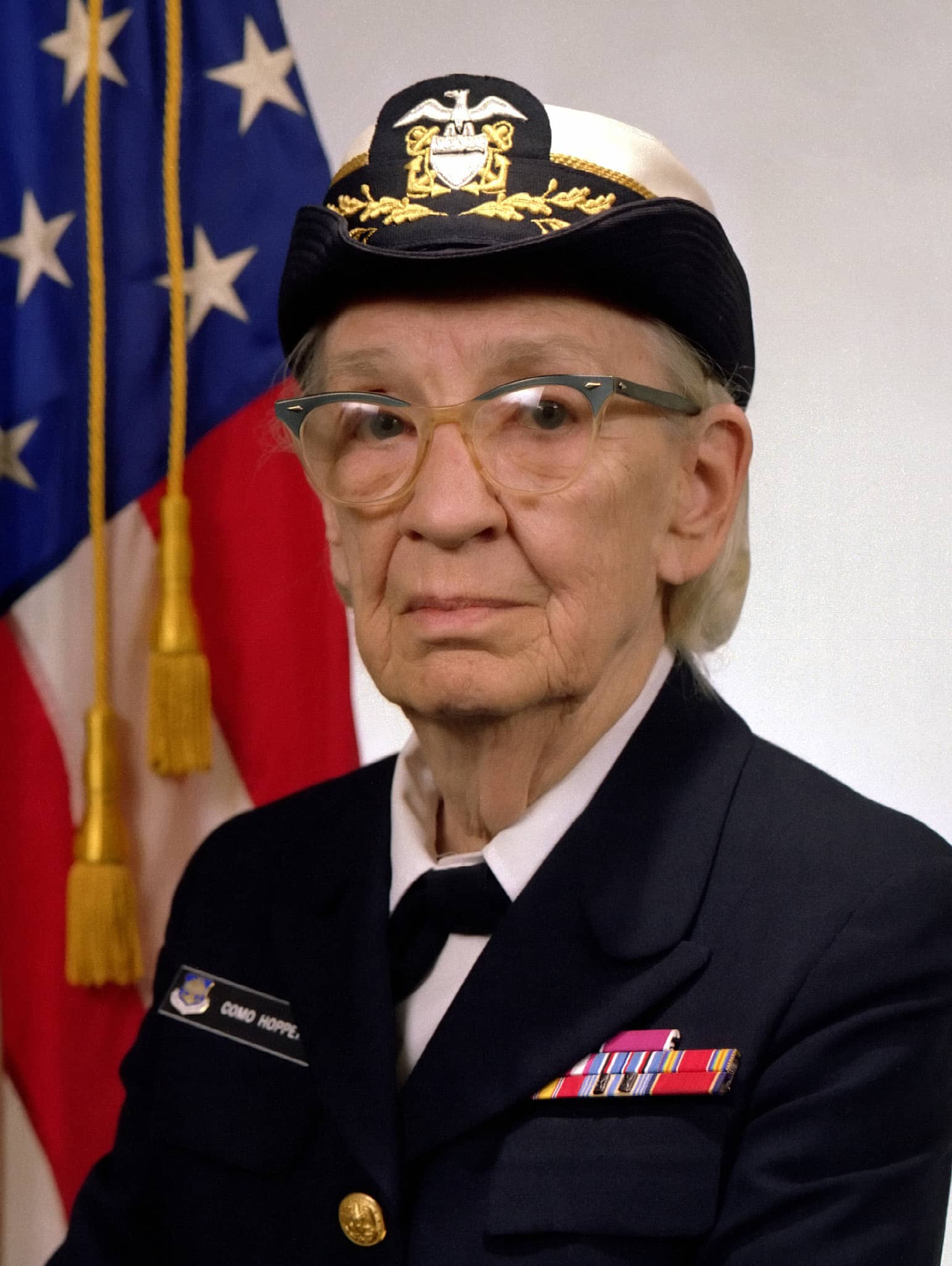
Grace Hopper refused to accept that programming had to remain trapped in machine-level notation. She championed languages that let people express instructions in more familiar terms.
1906–1992
Life
Programming languages
Field
A-0 and FLOW-MATIC
Defining milestone
From the Mark I to compilers
During the Second World War, Hopper joined the U.S. Naval Reserve and became one of the first programmers of Harvard’s Mark I. She later developed the A-0 system, often described as an early compiler.
A path toward COBOL
Hopper’s FLOW-MATIC used English-like statements and strongly influenced COBOL. Her conviction that computers could translate human-oriented instructions helped make programming more accessible to business and government.
The real debugging story
Hopper popularized the famous 1947 logbook story in which a moth was removed from a relay, but the words “bug” and “debugging” already existed. Her deeper legacy is stronger: she made language design a practical route to wider computing.
Why Grace Hopper still matters
Grace Hopper changed not just a technology, but the expectations around what technology could do. That influence remains visible in tools, institutions and debates today.
Source: Authoritative profile.
The weekly question
From obsession to clarity — one original question every week.
We answer one noisy topic at a time, in full. No daily roundup, no thread bait — just the question, the principles, and the system.