
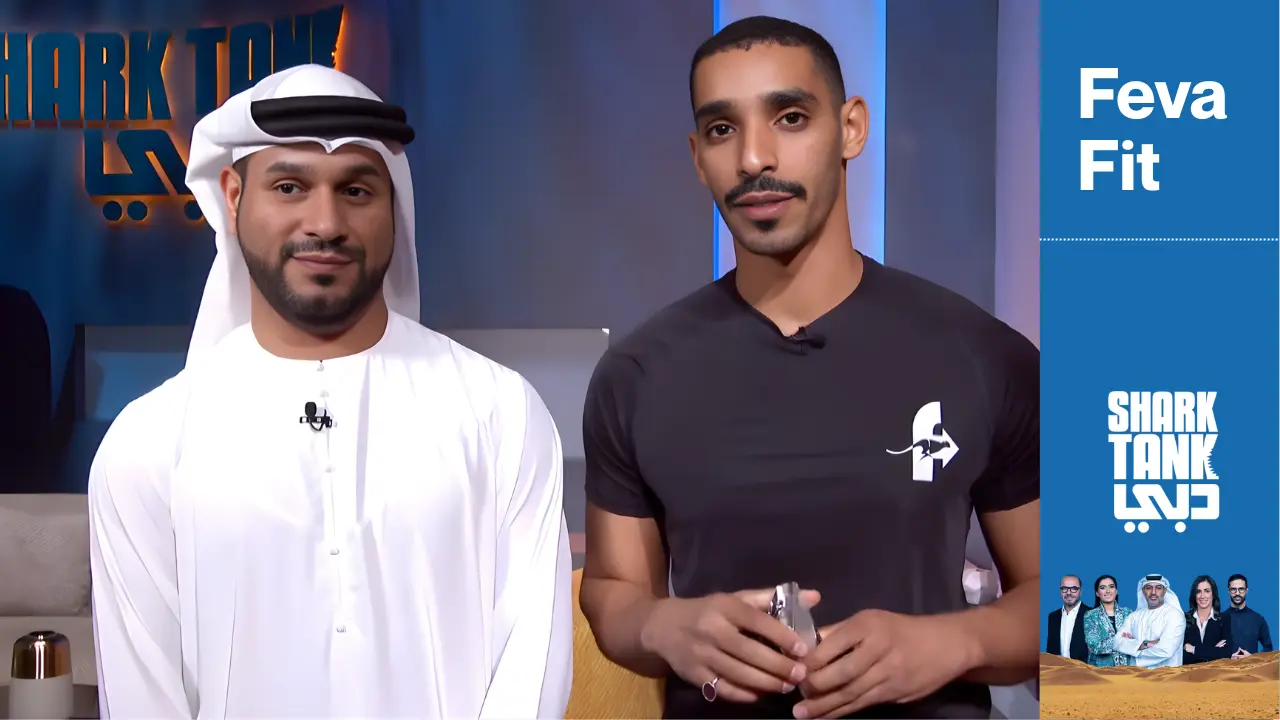
Across the UAE, companies invest millions into employee wellness, yet nearly all programs suffer the same silent failure. Engagement collapses by week five, long before employees see meaningful change. According to the founders of Feva Fit, this drop off isn’t a coincidence, it’s a predictable behavioral pattern traditional wellness programs are not designed to fix.
Appearing on Shark Tank Dubai, co founders Badar Al Tamami and Nasser Al Riyami argued that wellness in the workplace is broken because it forgets one essential truth: people don’t stay consistent unless you keep them emotionally engaged. Their pitch reframed corporate wellness as a game of psychology, motivation, and competition, not just gym access or step challenges.
Fast Facts
Project: Feva Fit corporate wellness model and Shark Tank Dubai pitch.
Challenge: Most workplace wellness programs lose engagement by week five.
Insight: Gamification and behavioral motivation significantly increase employee consistency.
Why It Matters: Feva Fit’s approach may reshape how UAE companies drive long-term workforce wellbeing.
Why Corporate Wellness Collapses After Week Five
Most corporate wellness programs launch with excitement, sleek branding, and big promises. But the enthusiasm fades fast when routines become repetitive and employees lose intrinsic motivation. Feva Fit claims this happens because companies measure attendance, not engagement, and focus on physical activity rather than behavioral reinforcement.
Badar and Nasser built Feva Fit to solve this exact problem. They argue that consistency comes from emotional triggers and social accountability, not from access to equipment or generic wellness portals. The “five week wall” exists because people need ongoing psychological incentives to keep going, a gap that Feva Fit directly targets.
The Founders: Psychology Meets Performance
Feva Fit’s edge lies in the complementary strengths of its founders. Badar Al Tamami, an athlete, entrepreneur, and motivational speaker, has coached hundreds of people toward unlocking their physical potential. His on camera energy instantly communicated why he is the face of the brand.
Co founder Nasser Al Riyami brings the technical and strategic backbone. His structured approach and business insight helped the Sharks understand how Feva Fit scales across corporations and government entities. Together, their combined expertise brings both credibility and story, two critical elements for convincing investors and employees alike.
What Is Feva Fit?
Feva Fit isn’t a gym, an app, or a fitness content library. It’s a corporate engagement engine that uses gamification, social competition, and HR analytics to keep employees active long after week five. The platform turns wellness into a shared experience rather than an individual obligation.
Its core features are built around three pillars:
- Gamification and Competitions Employees compete, earn rewards, and stay motivated through social challenges.
- Corporate and Government Focus HR teams use dashboards to track participation, vitality scores, and health improvements.
- Data Driven Outcomes Early partners recorded 20 percent plus engagement and employee satisfaction rates as high as 95 percent even before Shark Tank airing.
This moves Feva Fit beyond traditional corporate wellness, transforming it into a measurable system for boosting workforce vitality.
Feva Fit on Shark Tank Dubai: Pitch Highlights
The Sharks saw a polished and confident pitch that emphasized both business demand and social impact. To improve clarity and search performance, here is the complete pitch summary in table format:
| Startup | Feva Fit |
| Founders | Badar Al Tamami and Nasser Al Riyami |
| Ask | AED 1.5 million for 8 percent equity |
| Valuation | AED 18.75 million |
| Business Model | Corporate wellness programs, gamified engagements, HR dashboards |
| Pre Show Traction | Partnerships with organizations, 20 percent plus engagement, 95 percent satisfaction |
| Outcome | Pitch well received, highlighted rising corporate wellness demand in UAE |
The Sharks’ Reaction: A Strong Concept With Market Timing on Its Side
Corporate wellness is booming in the UAE, especially as companies seek to improve retention, reduce burnout, and strengthen culture. The Sharks responded positively to the concept and the founders’ energy. They recognized that companies suffer from declining workforce engagement and that Feva Fit’s gamified approach aligns with emerging workplace trends.
The platform’s combination of competition, measurement, and motivation resonated with the investors. While no investment was finalized during the pitch, the Sharks agreed the market opportunity is large and growing, especially in government, enterprise, and semi government sectors.
Before Shark Tank: Feva Fit Had Real Traction
One of the most impressive parts of Feva Fit’s story is that its impact predates its TV appearance. The founders had already implemented programs with multiple UAE organizations and collected real engagement data. These early results validated their belief that employees need fun, accountability, and emotional reward to stay consistent.
With 20 percent plus engagement rates and 95 percent satisfaction, they demonstrated proof of concept in a market where most corporate wellness initiatives fail quietly in the background.
After Shark Tank: Momentum and Recognition
Following the show, Feva Fit continued to rise within the UAE startup ecosystem. Most notably, founder Badar Al Tamami was selected for the Ma’an Social Incubator in Abu Dhabi, one of the region’s most respected programs supporting high impact ventures.
This recognition confirms that Feva Fit is more than a fitness brand, it is a social innovation platform positioned to shape the future of workplace vitality across the region.
Today, Feva Fit is headquartered in Dubai and continues partnering with corporations and government entities committed to improve workforce wellbeing.
Can Feva Fit Solve the Five Week Corporate Drop Off
Feva Fit’s success doesn’t depend on workouts or step counts. It hinges on whether companies can keep their employees emotionally invested long enough to build meaningful habits. By turning wellness into a game, giving HR teams real data, and attaching meaning to participation, Feva Fit attacks the core reason corporate wellness fails, low engagement.
If the company maintains focus, continues refining its gamification engine, and scales partnerships wisely, it may become one of the UAE’s most influential wellness innovations and a blueprint for corporate vitality worldwide.
What It All Means
Is your workplace wellness program failing because employees lack resources, or because no one has given them a reason to stay engaged past week five? Most initiatives stumble not from poor design but from low emotional connection. Feva Fit’s story highlights a deeper truth: consistency grows when people feel motivated, supported, and part of something bigger than a checklist.