Emil Krebs Mastered 68 Languages for Diplomacy and Discovery
German diplomat Emil Krebs reportedly mastered 68 languages and became qualified to translate officially from more than 40.
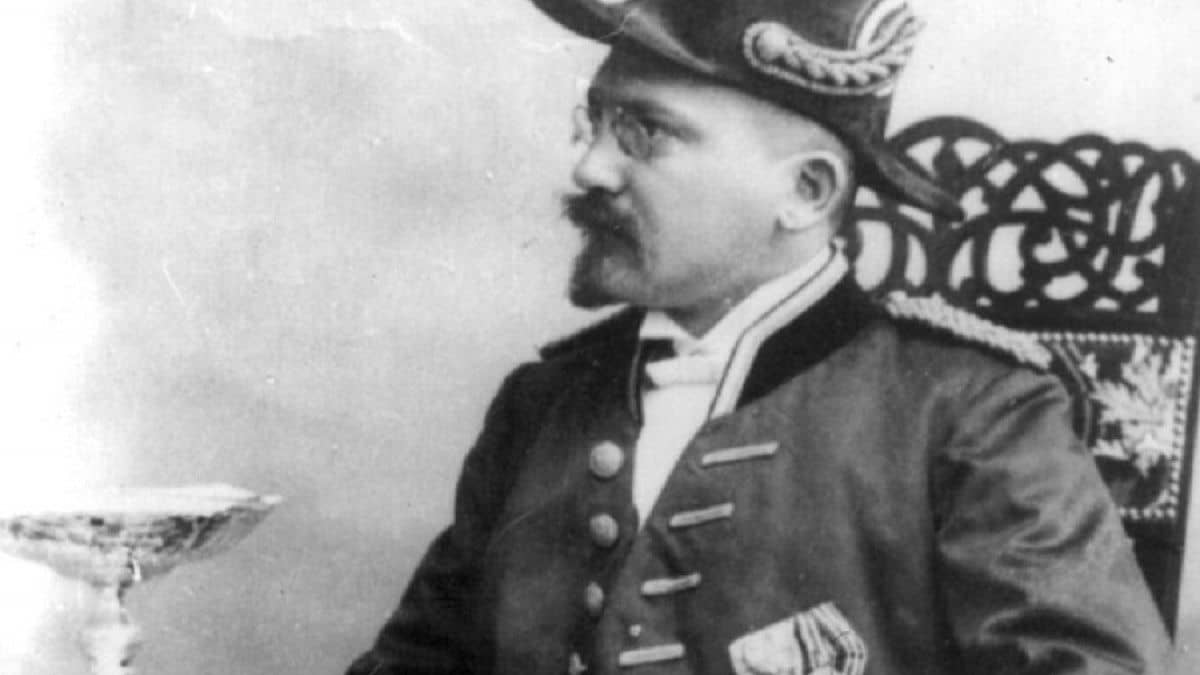
Emil Krebs approached languages with the intensity other people reserve for a life's single profession.
The German diplomat and interpreter reportedly mastered 68 languages, studied more than 100, and became qualified to translate officially from over 40. His abilities were not merely demonstrated for attention; they were used in diplomatic work.
The school curriculum was not enough
Krebs was born in Silesia in 1867. At school he studied Latin, Greek, French, and Hebrew, then taught himself additional languages including English, Spanish, Russian, Arabic, and Turkish.
By the time he completed school, the German Federal Foreign Office says he was already familiar with 12 languages.
He studied law but also pursued Chinese and Turkish at Berlin's Seminar for Oriental Languages. Language learning increasingly became the organizing purpose of his life.
A diplomatic career built on Chinese
In 1893, Krebs entered Germany's foreign service and was sent to Beijing as an interpreter. He remained in China for almost 25 years and became first interpreter at the German legation.
His command extended beyond Mandarin. He studied Mongolian, Manchu, Tibetan, Japanese, Korean, and numerous other languages connected to the region.
Diplomatic work gave practical consequences to accuracy. A mistranslated phrase could change the meaning of a negotiation or official document.
68
Languages the Foreign Office says he mastered
40+
Languages he could officially translate from
5,700
Works in his private library
Source: German Federal Foreign Office
How Krebs learned so many languages
Krebs often used a language he already knew to learn another. He studied Basque through Spanish, for example, and several Asian and European languages through English or Russian.
This method turned his repertoire into a network. Each new language created another bridge for comparison rather than remaining an isolated subject.
He also read extensively. His private library contained thousands of works representing roughly 120 languages, revealing how central books were to his system.
Returning to Berlin's language service
When diplomatic relations with China were broken during the First World War, Krebs returned to Germany. He later worked in the Foreign Office's cipher and language services and served as a court interpreter.
His colleagues saw him as the equivalent of an entire multilingual department.
1867
Born in Silesia
1887
Finished school with knowledge of 12 languages
1893
Sent to Beijing as an interpreter
1901
Became first interpreter at the German legation
1917
Returned to Germany
1930
Died in Berlin
What Emil Krebs's life teaches
His achievement combined unusual aptitude with an enormous amount of deliberate work. He studied grammar, read serious texts, compared related languages, and used them professionally.
The number 68 is striking, but his method is the more durable legacy. Krebs built knowledge in layers and allowed strong languages to support weaker and newer ones.
His story shows that multilingual mastery is not simply collecting greetings. It involves maintenance, precision, cultural context, and the patience to continue learning long after the novelty disappears.
The weekly question
From obsession to clarity — one original question every week.
We answer one noisy topic at a time, in full. No daily roundup, no thread bait — just the question, the principles, and the system.