Elif Bilgin Turned Banana Peels Into Experimental Bioplastic
At sixteen, Elif Bilgin developed an experimental bioplastic from banana peels and won Scientific American’s 2013 Science in Action Award.
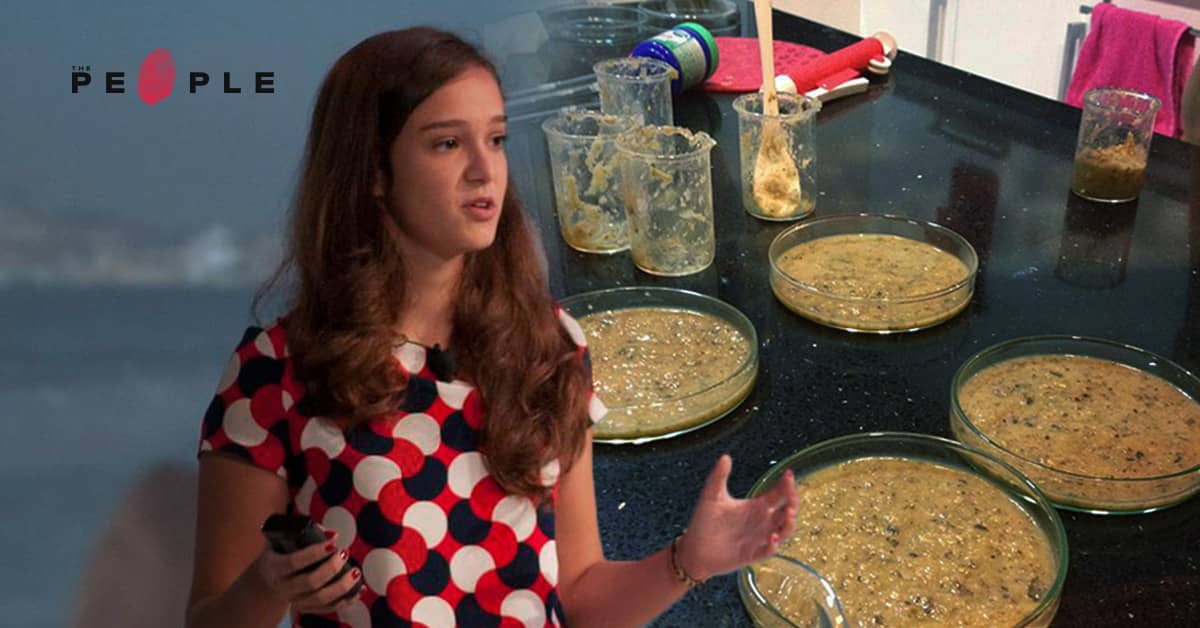
Elif Bilgin looked at discarded banana peels and saw a possible raw material rather than kitchen waste.
16
Age at award
2013
Science in Action
2 years
Development period
Going bananas for materials science
Banana peels contain starch and cellulose—polymers that can be processed into plastic-like materials. Bilgin tested mixtures, preparation steps and drying conditions to find a formula that produced a stable sheet.
Many trials failed through decay, brittleness or poor consistency. That failure log was part of the engineering.
Recognition
Her project won Scientific American’s $50,000 Science in Action Award at the 2013 Google Science Fair and made her a finalist in the 15–16 age group.
What the material could—and could not—do
The prototype suggested uses such as electrical-cable insulation. It did not instantly replace every petroleum plastic; real products require durability, manufacturing, safety and lifecycle testing.
Why her method was powerful
Bilgin connected two environmental problems: food waste and dependence on fossil-based materials. More importantly, she demonstrated that sustainable-material research can begin with accessible chemistry and careful iteration.
Sources: Scientific American, Hürriyet Daily News
The weekly question
From obsession to clarity — one original question every week.
We answer one noisy topic at a time, in full. No daily roundup, no thread bait — just the question, the principles, and the system.