Data, Devices and Dermatology: The Engineering Inside Skincare
Data, devices and dermatology are transforming modern skincare by combining engineering, laser precision, and data tracking to deliver targeted, measurable, and personalized skin treatments.

Skincare used to live entirely in the world of creams and guesswork. You tried a product, waited weeks, and hoped for the best. Today, skincare behaves more like engineering than cosmetics. Sensors measure, lasers target, devices stimulate and software tracks progress.
Behind modern treatments sits a quiet collaboration between dermatology, biomedical engineering and data science. The goal is no longer simply improving appearance. It is precision control over how skin repairs, renews and responds.
Here is what is actually happening beneath the surface.
Skin as a Biological System
Engineers do not see skin as “dry”, “oily” or “sensitive”. They see it as a layered biological system.
Each layer has a specific function:
- Epidermis: barrier and hydration control
- Dermis: collagen structure and elasticity
- Subcutaneous tissue: support and contour
Most skin concerns are mechanical problems:
- Wrinkles form when collagen scaffolding weakens
- Pigmentation occurs when signaling pathways misfire
- Acne develops when pore systems clog and inflame
Once you treat skin like a system rather than a surface, treatment becomes targeted instead of general.
Laser Technology: Controlled Energy Delivery
Lasers are one of the clearest examples of engineering in dermatology.
They work using selective photothermolysis. This means specific wavelengths of light heat a specific target while leaving surrounding tissue unharmed.
Different wavelengths solve different problems:
| Target | Technology Principle |
| Hair follicles | Melanin absorbs heat |
| Pigmentation | Pigment fragments |
| Blood vessels | Hemoglobin absorbs light |
| Wrinkles | Collagen remodeling triggered |
The key is calibration. Too little energy does nothing. Too much damages tissue. Modern devices use cooling systems and pulse timing measured in milliseconds to deliver energy precisely where it is needed.
That precision is what makes treatments safer and repeatable.
Microneedling: Mechanical Stimulation of Repair
Microneedling sounds simple, but the science behind it is complex.
Tiny controlled punctures trigger the body’s wound-healing cascade. The skin interprets micro-injury as a repair event and releases growth factors.
This activates fibroblasts, the cells responsible for producing collagen and elastin.
In engineering terms, it is not adding collagen. It is instructing the body to manufacture new structure.
Modern devices regulate:
- Needle depth
- Speed
- Density
- Pressure
Consistent depth is essential. Random depth causes irritation. Precise depth produces remodeling.
That consistency is why device-based microneedling behaves differently from older manual rollers.
Injectables: Biochemistry Meets Structural Design
Injectables are often misunderstood as simply filling wrinkles.
In reality, they work on different engineering principles.
Neuromodulators
These interrupt nerve signals to muscles. When muscles relax, mechanical folding of skin stops and lines soften. The structure improves because the repeated stress is removed.
Dermal Fillers
Fillers act as scaffolding materials. They support tissue where volume has been lost, restoring mechanical tension in the skin.
The skin behaves differently when tension is balanced. Light reflects more evenly, which is why the result looks “rested” rather than filled.
Modern providers, including dermani MEDSPA®, use evidence-based injectable and aesthetic treatments designed to produce long-lasting structural improvements rather than temporary masking.
Hydration Treatments: Fluid Dynamics
Hydration treatments now use fluid engineering principles.
Devices that infuse serums are designed around pressure gradients. Instead of products sitting on the surface, controlled suction and flow deliver ingredients into micro-channels.
This improves:
- absorption efficiency
- even distribution
- barrier function recovery
Hydrated skin is not just moisturized. It restores permeability balance, which changes how the skin reacts to environment and bacteria.
IPL and Light Therapies: Signal Modification
Light-based treatments also work at the cellular signaling level.
When specific light frequencies reach cells, they influence behavior:
- Bacteria activity decreases
- Pigment cells regulate production
- Inflammation reduces
- Healing speeds up
Rather than removing damage, the treatment changes the communication pathways that created the damage.
Data Tracking and Personalization
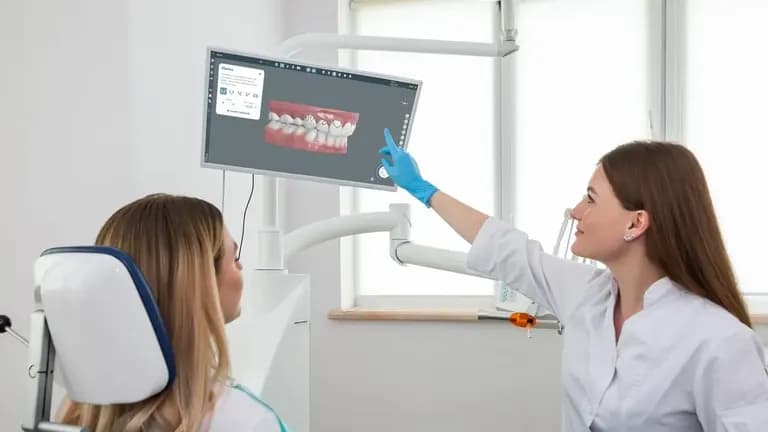
Modern skincare increasingly uses measurable feedback rather than subjective opinion.
Clinicians evaluate:
- pore density
- pigment mapping
- elasticity
- oil production
- redness distribution
Repeated imaging allows progress tracking across sessions. Treatments can then be adjusted based on response rather than a fixed plan.
This is a major shift. Historically, skincare was product-driven. Now it is response-driven.
Why Consistency Matters More Than Intensity
Engineering solutions rely on iteration, not extremes.
Skin responds best to controlled, repeatable stimulation rather than aggressive one-off treatments. Small, repeated interventions allow the body to rebuild structure gradually.
This explains the move toward maintenance-style treatments such as laser hair removal, rejuvenation therapies and collagen-stimulating procedures offered by clinics where treatments are designed to produce smoother skin through consistent, personalized care.
The weekly question
From obsession to clarity — one original question every week.
We answer one noisy topic at a time, in full. No daily roundup, no thread bait — just the question, the principles, and the system.