BRCĒ After Shark Tank: Why Two Sharks Bought Into a Better Shoelace
Michigan State students pitched a material that grips under tension. Daniel Lubetzky and Fawn Weaver agreed to $300,000 for 20% of BRCĒ.
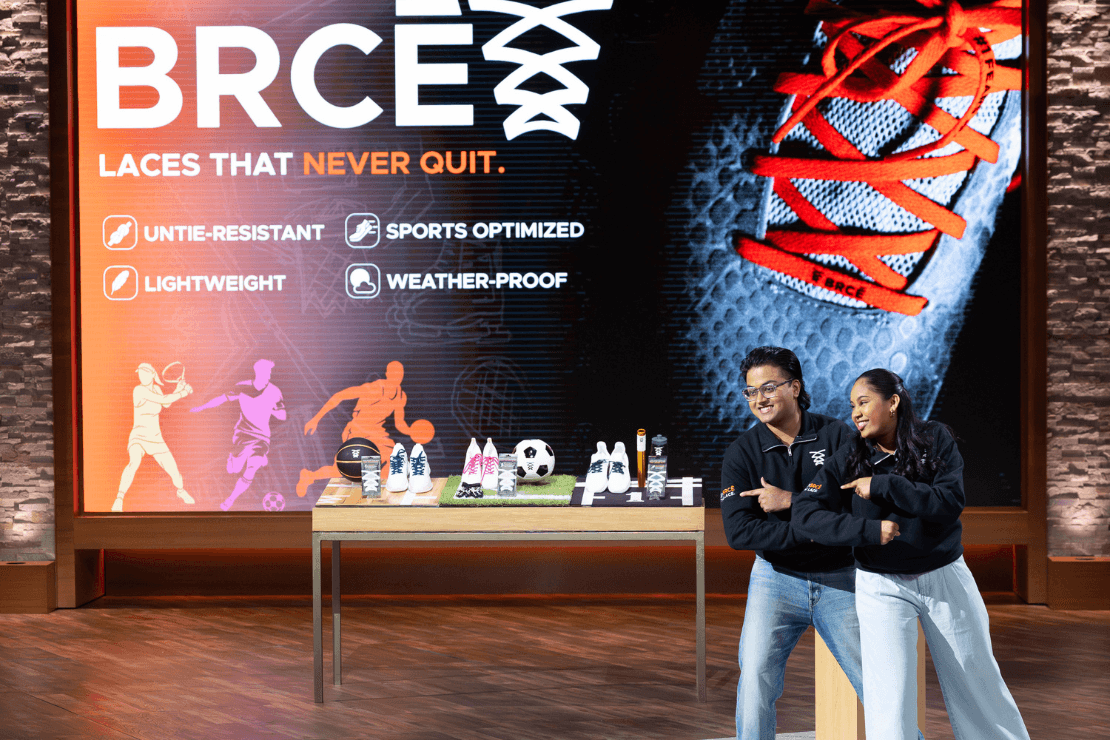
A lace coming loose during a race is a small equipment failure with an immediate consequence: stop to tie it, or keep running with a shoe that no longer fits as intended. Madhav Aggarwal and Tanvi Gadamsetti chose that familiar moment to explain a less familiar invention. Their product was a shoelace. What they wanted the Sharks to buy into was the material inside it.
Two Sharks took the proposition seriously. Daniel Lubetzky and Fawn Weaver agreed to $300,000 for 20% of BRCĒ. The difference between a premium pair of laces and a materials business still matters after the show. One can be evaluated by putting it in a pair of running shoes. The other depends on whether the founders can reproduce the performance across products and persuade customers or manufacturers to pay for it.
$300,000
On-air agreement
Daniel Lubetzky and Fawn Weaver partnered on the offer.
20%
Equity agreed
The team initially proposed 10%.
Five sports
Catalog categories
Running, basketball, racket sports, football and hockey.
Product snapshot
| Field | Details |
|---|---|
| Company | BRCĒ |
| Founder or founding team | Madhav Aggarwal and Tanvi Gadamsetti |
| Product | Replacement athletic laces made with a textured polymer composite |
| Industry | Sports equipment and performance materials |
| Shark Tank episode | Season 17, Episode 12 • March 4, 2026 |
| Current status | Sport-specific laces are listed for sale. |
What is different about BRCĒ shoelaces?
The company calls its material Lattice-Grip. Instead of relying just on a tighter knot, the lace has a textured structure intended to resist sliding under tension. The BRCĒ catalog distinguishes laces for running, basketball, racket sports, football and hockey. A skate and a running shoe differ in height, eyelets and the way the wearer wants the upper to flex, so fit matters as much as the material name.
Staying tied is a performance claim that a runner can evaluate directly. Preventing injury is a substantially different claim. A patent establishes protection for an invention; it does not establish a clinical result for every athlete who wears the laces.
Who built BRCĒ?
Aggarwal and Gadamsetti were Michigan State University seniors when they appeared. Both had competed in sports, and both connected their interest in equipment design to injuries that ended their competitive careers. Techstars, whose 2024 Founder Catalyst program included BRCĒ, identifies the shoelaces as the first commercial use of their polymer-composite technology.
That choice gave the founders a manageable first test. A consumer can change laces without buying different shoes, and a designer can change the lace without persuading an established shoe company to redesign an entire upper.
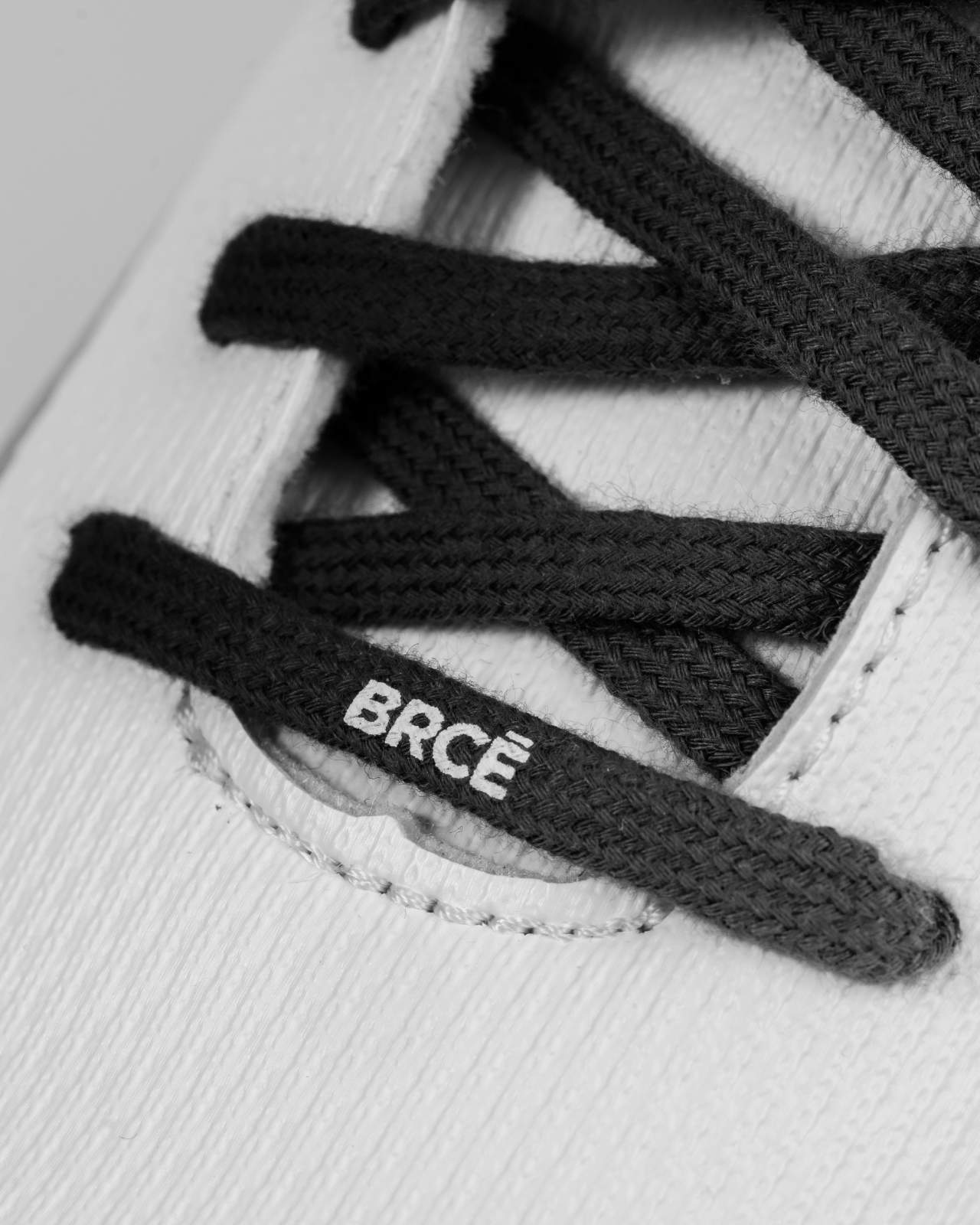
Black running laces from the BRCĒ product catalog.
“Both of our athletic careers ended because of preventable injury.” — Madhav Aggarwal, quoted by Techstars.
What happened to BRCĒ on Shark Tank?
The pair offered 10% for $300,000. Pitch reporting puts the figures discussed at about $100,000 in sales, roughly 52 cents to manufacture a pair and close to $20 at retail. That gap is striking, but the two prices are not a profit statement. The maker still needs packaging, fulfillment, marketing and a way to get each pair into someone’s shoes.
Kevin O’Leary proposed a structure involving a royalty. The founders instead accepted an equity agreement with Fawn Weaver and Daniel Lubetzky. At the final terms the implied post-money value fell from $3 million to $1.5 million. The televised agreement answers who offered what; it does not establish the private company’s current value.
Deal snapshot
| Negotiation point | What the evidence supports |
|---|---|
| Opening offer | $300,000 for 10% |
| Alternative structure | Kevin O’Leary proposed equity plus a royalty. |
| Agreement | $300,000 for 20% with Weaver and Lubetzky |
| Post-show closing | The reviewed sources document the on-air agreement. |
Can replacement laces support a materials company?
Selling finished laces puts BRCĒ in direct contact with athletes. It can see which lengths sell, how customers describe the grip and whether buyers return for another sport. Licensing the material to a shoe manufacturer would be a different business. It could reach more shoes while putting product qualification, negotiations and partner production schedules between an idea and a sale.
The attraction of the original retail numbers is that an inexpensive component can command a premium if a customer feels the difference. The limitation is that a durable replacement lace may not need replacing very often. The business therefore needs either a steady stream of new users, repeat purchases for additional shoes, or a broader route into footwear.
Business model snapshot
| Business question | Answer |
|---|---|
| Current product | Sport-specific replacement laces |
| Reported pitch economics | About $0.52 to make versus about $20 retail per pair |
| Other costs | Packaging, distribution, customer acquisition and operations |
| Expansion question | Can the material earn a place in additional products or partner designs? |
What happened after Shark Tank?
Latest update — November 12, 2026. BRCĒ lists athletic and children’s laces, a sizing chart and product specifications. The running line offers a choice of colors and lengths.
The catalog is useful evidence because it shows what a customer can actually select. The company status record also identified multiple sport categories after the broadcast. Neither source establishes that a sporting league has made the product mandatory or that every depicted team is a paying licensing customer. Those are different claims from having products designed for athletes.
Current status evidence
| Evidence | What it establishes |
|---|---|
| Sport-specific listings | Show a consumer product range rather than a single prototype. |
| Techstars founder account | Corroborates the team’s identity, program participation and material focus. |
| Pitch reporting | Supports the deal and early sales figures, not current earnings. |
Company timeline
| Date | Milestone |
|---|---|
| 2024 | BRCĒ participated in Techstars Founder Catalyst. |
| March 4, 2026 | The founders pitched as Michigan State students. |
| November 2026 | The catalog lists multiple sports, colors and lengths. |
How should athletes choose a pair?
Start with a shoe you already own. Remove and measure a lace that fits properly, taking account of any extra eyelets you use. Compare that measurement with the brand’s sizing chart and choose the correct sport before choosing a color. A tighter lace is not automatically a better fit: the goal is enough hold for the activity without uncomfortable pressure.
For a buyer whose existing laces rarely loosen, the benefit may be modest. For someone repeatedly stopping to retie a shoe, the direct comparison is simple: does the replacement stay at a comfortable tension through the same training session?
What can founders learn from BRCĒ?
A first product can be narrower than the invention behind it. The lace gave BRCĒ a visible failure to fix, a relatively low-cost way for buyers to try the material, and a way to learn about different shoes. The next proof point for a materials business would be a documented application beyond that first category. A patent and a compelling demonstration open that conversation; commercial adoption answers it.
The Season 17 episode guide lists the other pitches. Readers following how investors weighed product differentiation in Season 17 can also find The Chair Blanket, CRANEL, BocceRoll.
Frequently asked questions
Did BRCĒ get a Shark Tank deal? Yes. Weaver and Lubetzky offered $300,000 for 20%, which the founders accepted on air.
Who founded BRCĒ? Madhav Aggarwal and Tanvi Gadamsetti.
What did they initially ask for? $300,000 for 10%.
Which sports does the company cover? Its catalog includes running, basketball, racket sports, football and hockey.
Does a patent prove the laces prevent injuries? No. Patent protection and clinical evidence answer different questions.
The weekly question
From obsession to clarity — one original question every week.
We answer one noisy topic at a time, in full. No daily roundup, no thread bait — just the question, the principles, and the system.