
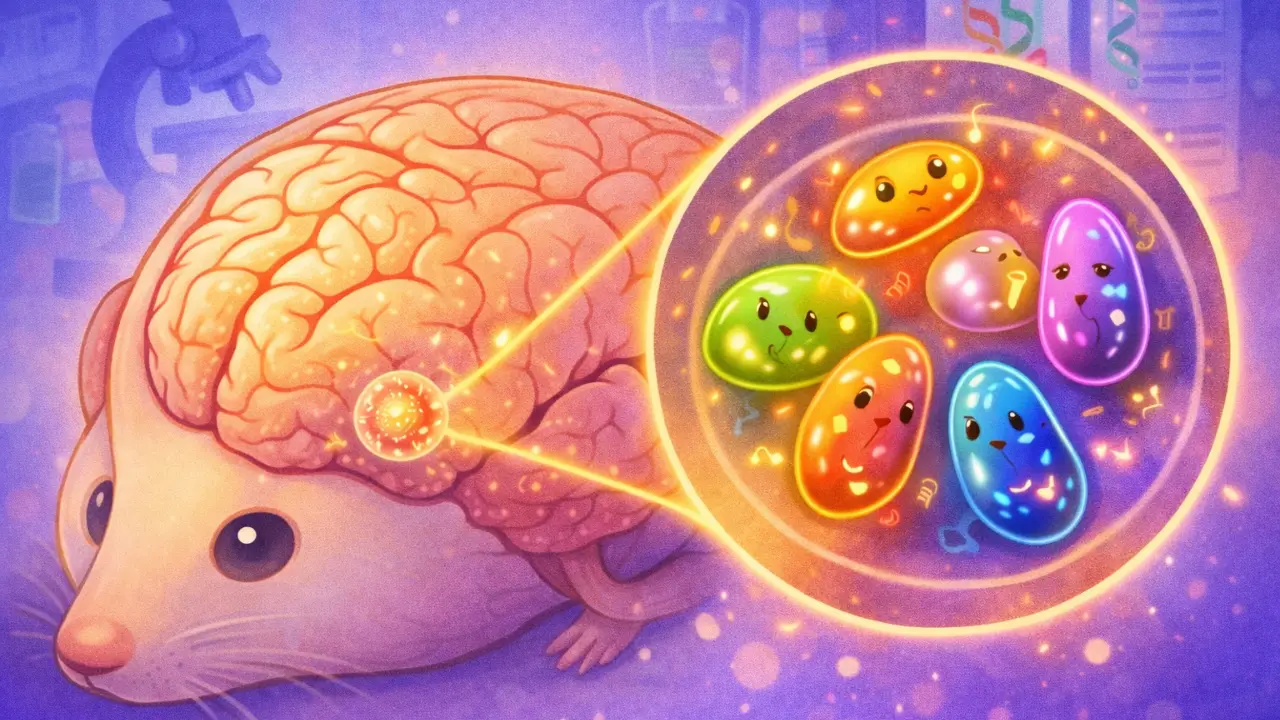
Researchers are now overturning the long-held belief that Toxoplasma cysts simply lie dormant in the brain. In mouse studies, these cysts are far more complex than once thought. Using single-cell RNA sequencing, scientists discovered at least five different bradyzoite subtypes inside each cyst, each carrying its own job and some poised to reactivate and cause disease. The work, led by Emma H. Wilson at UC Riverside and published in Nature Communications, involved isolating cysts directly from living brain tissue and mapping the gene activity of individual parasites with remarkable precision.
These findings overturn the longstanding view of a single sleeping form and instead paint brain cysts as dynamic hubs—a microbial city within the brain—where diverse subtypes co-exist and may switch programs under inflammation or stress. For context, recent coverage from ScienceDaily summarized the work, highlighting how heterogeneity explains why standard drugs struggle to eradicate cysts.
In the evidence phase, the team applied single-cell RNA sequencing to cysts from mouse brains and found at least five distinct bradyzoite subtypes, each with its own gene expression pattern. Some subtypes show transcriptional programs consistent with reactivation, while others appear more quiescent, helping explain persistent infection and potential relapse. The analysis drew on hundreds of cells across multiple cysts, underscoring the importance of studying the parasites in their native tissue context rather than from isolated cultures.
What this means for treatment is profound: drug strategies that assume a uniform cyst population may miss subtypes that drive reactivation. The path forward points to subtype-targeted approaches, potentially in combination with measures to reduce exposure risk in food and during pregnancy. For public health guidance, the CDC provides resources on toxoplasmosis prevention and management at CDC.
The Real-World Payoff: A New Route to Safer Brains
By reframing brain toxoplasmosis as a multi-subtype problem, researchers can prioritize therapies that disable the most reactivation-prone bradyzoite programs, while clinicians reinforce prevention strategies that reduce initial infection and cyst formation. In parallel, the broader neuroscience community is embracing the idea that the brain hosts dynamic, heterogeneous subsystems—not a monolithic organ under threat, but a complex ecosystem where latent infections may shape brain health in subtle ways.
Today, the era of the brain cyst as a single dormant entity is ending; the future belongs to subtype-aware therapies and smarter prevention that safeguard brain health for all.
Key Takeaways
- Five or more subtypes of bradyzoites per cyst challenge the dormancy model.
- Single-cell RNA sequencing reveals subtype-specific gene programs and reactivation potential.
- Therapies targeting cyst subtypes, plus reinforced food safety and prenatal precautions, could improve outcomes.
Related Reading
Scientists have uncovered a surprising energy mechanism that may help explain how Parkinson’s disease progresses and how future treatments could target cell power failures.
Read the Full Story