
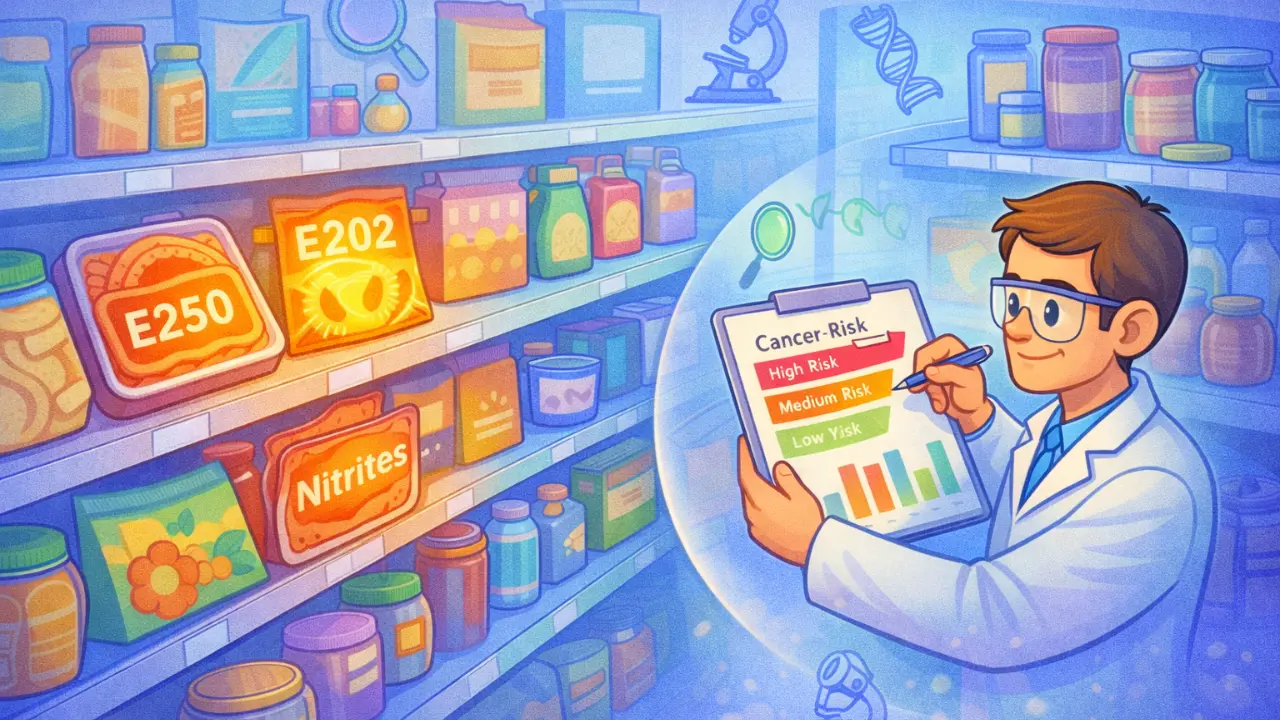
Public health headlines have long painted all preservatives with the same brush, but the NutriNet-Santé cohort—105,260 participants tracked for more than a decade—tells a different story. In this observational landscape, researchers faced a scientific gap: can we separate signal from noise when diets are self-reported and biology is messy? Put differently, the question isn’t whether additives are universally dangerous, but which ones, in what amounts, and under what conditions they might matter.
The Quiet Nuance Behind the Additive Alarm
When preservatives are pooled into a single category, there was no elevated overall cancer risk. That initial finding reflects the data’s reality: most preservatives do not stand out in the aggregate. Yet the story changes when the researchers sliced the data into subtypes. Non-antioxidant preservatives—potassium sorbate, potassium metabisulfite, sodium nitrite, potassium nitrate, and acetic acid—showed statistical associations with higher cancer risk in some analyses.
Quantitatively, sorbates were linked to about a 14% higher overall cancer risk, and sodium nitrite to roughly 32% higher prostate cancer risk. Antioxidants such as erythorbates showed associations in total measures, reminding us that how additives behave can differ across contexts.
BMJ study: Intake of food additive preservatives and incidence of cancer
The Mavericks in the Data: Who and What
Anaïs Hasenböhler and her colleagues faced the Herculean task of translating thousands of self-reports into credible risk signals. Through long follow-up and health-record cancer outcomes, they moved beyond anecdotes to patterns. The ScienceDaily summary distills the take-away for a broader audience: ScienceDaily summary: These common food preservatives may be linked to cancer.
What this Means for You and Policy
Importantly, this is not proof of causation—it’s observational and subject to unmeasured factors. Practical takeaways: favor fresh or minimally processed foods; read ingredient lists and recognize that not all preservatives carry the same risk. Policy regulators may shift from blanket bans to targeted labeling where evidence signals risk.
A Smarter Path Forward
The era of blanket warnings against “preservatives” as a single class is ending; risk appears to be compound- and context-specific. Now the conversation moves toward smarter labeling, consumer education, and targeted regulation that weighs benefit against risk. Today’s evidence—from the NutriNet-Santé cohort and the BMJ analysis—helps steer that shift. With these nuances in hand, the grocery cart becomes a choice guided by evidence rather than fear, and the next chapter in food safety is defined by targeted, real-world risk assessment.
Key Takeaways
- Most preservatives, when studied as a whole, do not elevate cancer risk.
- Some non-antioxidant preservatives showed associations with higher cancer risk; the effect sizes vary by compound and cancer type.
- Observational findings are not causal; prioritize fresh/minimally processed foods while monitoring evolving evidence.
Related Reading
Discover how one hidden immune pathway may link chronic gut inflammation to higher colorectal cancer risk, based on new research uncovering key cellular interactions.
Read the Full Story