
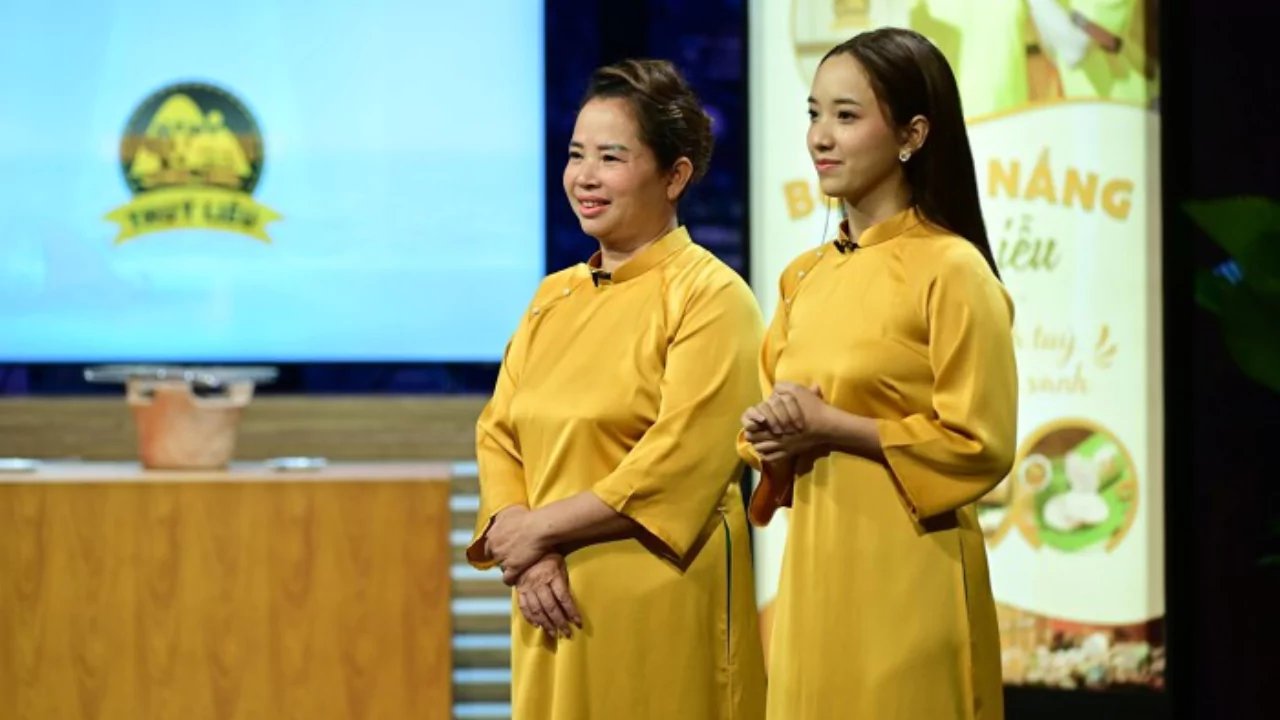
Bò Một Nắng Thúy Liễu is not just another name in Vietnam’s crowded specialty food market. It is a family-driven brand from Phú Yên that took a beloved regional dish and turned it into a business story that resonated with people across the country. The company’s journey reached a national audience when the founders appeared on Shark Tank Vietnam Season 6.
Although they walked away without investment, the appearance changed everything. Overnight, thousands of viewers were introduced to their signature dried beef, their family story, and the unique flavors of Phú Yên. The episode became more than a pitch; it became a turning point in their brand’s visibility. Now, the question that lingers is whether this short-lived burst of attention can be transformed into steady, long-term growth.
How It All Began: From Family Kitchen to National Stage
The origins of Bò Một Nắng Thúy Liễu lie in a family kitchen in the Sông Hinh district of Phú Yên. The founders, Nguyễn Gia Linh and her mother, Nguyễn Thị Thúy Liễu, combined two different skill sets to build the brand. Gia Linh brought a background in digital content creation and online marketing, while her mother carried the deep culinary knowledge of making authentic bò một nắng, a recipe passed down through experience rather than written instructions.
Before this venture, Gia Linh had experimented with several businesses, none of which found lasting success. After these setbacks, she returned to her hometown, choosing to invest her energy into something close to her roots. She and her mother decided to commercialize their family recipe, believing that authenticity and quality could set them apart.
Bò một nắng is a traditional Vietnamese specialty made from 100 percent grass-fed mountain beef. The meat is sliced into precise strips, marinated with a unique spice blend that includes lemongrass, garlic, chili, fish sauce, honey, and cloves, and then dried under the sun for a single day. The result is a chewy, savory product with a rich, concentrated flavor. It is typically served with muối kiến vàng (ant salt), a tangy and slightly spicy dipping salt made from ground ants and chili, which balances the richness of the beef.
By 2022, the brand had achieved a revenue of 12 billion VND with a 12 percent profit margin. This early success convinced the founders that they had a product worth showcasing on a bigger stage.
The Shark Tank Pitch: A Big Ask with Bold Plans
In October 2023, Bò Một Nắng Thúy Liễu took the Shark Tank stage asking for 2.5 billion VND in exchange for 20 percent equity, placing their pre-investment valuation at 12.5 billion VND. The founders presented a detailed vision for how they would use the funds.
They explained that nearly one-third of the capital would be used to purchase modern drying and packaging equipment. This investment would reduce their dependency on weather conditions and improve production efficiency. Another 30 percent would go toward opening a flagship store in Tuy Hòa, Phú Yên, a central location that attracts both locals and tourists. The remaining funds would be allocated to securing more inventory and working capital, which was essential because their beef suppliers required cash payments in advance.
The Sharks praised the taste and authenticity of the products but expressed doubts about the company’s valuation, financial clarity, and scalability. Questions arose about whether an artisanal production model could meet the demands of larger retail markets. While the founders’ passion and storytelling left an impression, all five Sharks declined to invest.
Life After Shark Tank: Viral Fame and New Customers
The televised rejection did not mark the end of the road. If anything, it gave Bò Một Nắng Thúy Liễu more visibility than they had ever enjoyed before. Millions of viewers were introduced to their brand during the broadcast and in online replays. The immediate aftermath saw a surge of interest from customers curious to try the product they had seen on TV.
Gia Linh leveraged her TikTok following of over 766,000 to sustain this attention. Her videos, often showing the marination process, packaging, or customer reactions, drew significant engagement. One clip gained over 120,000 likes and hundreds of comments. Others showed behind-the-scenes glimpses into their production facility, building a sense of transparency and trust.
In addition to TikTok, the brand strengthened its e-commerce presence. Products like bò một nắng muối kiến vàng and khô bò hai nắng began selling on Shopee and TikTok Shop. Their Shopee price of 350,000 VND for 500 grams placed them in the premium segment of the market, which often appeals to customers looking for high-quality gifts during holidays like Tết.
In December 2022, the brand was awarded the OCOP 3-star certification. This recognition from the Vietnamese government verifies both product quality and authenticity, opening doors to new distribution opportunities.
“For food brands in Vietnam, OCOP certification acts as a passport into higher-value markets,” explains food industry consultant Trần Hữu Nam.
The Roadblocks They Still Face
While the brand’s online sales and visibility have grown, certain challenges remain deeply rooted in their operations. The company’s sourcing model depends entirely on local farmers in Sông Hinh who only accept cash payments. This requirement ties up large amounts of working capital, making it harder to invest in expansion or equipment upgrades.
The reliance on natural sun drying also leaves them vulnerable to the weather. During rainy or humid periods, production slows down, and consistency becomes difficult to maintain. Without industrial drying equipment, meeting large orders year-round is a challenge.
Another significant gap is the absence of updated financial data since the Shark Tank pitch. Without clear figures for 2024 or early 2025, it is hard to measure whether the burst of interest after their television appearance turned into sustained growth.
Opportunities for Growth
The Vietnamese specialty food market, particularly through e-commerce, is expanding rapidly. In June 2025, online sales for bò một nắng across platforms reached 601 million VND, marking a 248 percent increase from the previous quarter.
Source: Metric.vn, E-commerce Category Report, July 2025.
This is a favorable environment for Bò Một Nắng Thúy Liễu, whose marketing already focuses heavily on online platforms. Their strong TikTok presence gives them a direct line to consumers nationwide. By optimizing delivery logistics and creating exclusive online product bundles, they could further increase online sales.
There is also significant potential in expanding to supermarket chains and tourist destinations. A flagship store in Tuy Hòa would allow them to engage directly with customers, offer tasting experiences, and sell souvenir packages to visitors.
In the longer term, export markets such as Korea, Japan, and the United States could be explored. With their OCOP certification and unique flavor profile, the brand could position itself in niche ethnic or gourmet food categories abroad.
Competing in a Crowded Market
The bò một nắng market in Vietnam is competitive, with numerous producers from Phú Yên and Krông Pa. Brands like Diệp An, 7 Thư, Tâm Đức, and Mười Đức also market themselves as authentic and high quality.
Bò Một Nắng Thúy Liễu distinguishes itself in several ways. The OCOP 3-star certification adds official credibility. Their pricing strategy positions them at the higher end of the market, appealing to customers who view the product as a premium gift. And perhaps most importantly, their story as a mother-daughter business resonates emotionally with customers, making the brand more memorable.
The Future: Can They Turn Fame into Fortune?
Today, Bò Một Nắng Thúy Liễu has the core elements of a successful brand: a trusted product, strong storytelling, and national recognition. The question is whether they can scale those strengths into a bigger business.
To do so, they may need to invest in industrial drying equipment to maintain consistency, formalize relationships with suppliers to secure better payment terms, and build a brand identity that is not entirely dependent on Gia Linh’s personal social media presence. Expanding into supermarket shelves and beginning trial exports could also unlock new revenue streams.
If they take these steps, the Shark Tank rejection could be remembered as a stepping stone rather than a setback—a moment that sparked the growth of a regional specialty into a national and possibly international brand.
TL;DR (Too Long; Didn’t Read)
After Shark Tank Vietnam Season 6, Bò Một Nắng Thúy Liễu kept momentum through OCOP credibility and TikTok led e-commerce. Long term growth depends on formal supplier contracts and controlled drying to scale consistently.
FAQs
Is Bò Một Nắng Thúy Liễu still operating after Shark Tank?
Yes. The brand continues active sales on Shopee, TikTok Shop, and through a 200-agent wholesale network and 40-50 restaurant partners.
Source: Shark Tank Vietnam startup profile.
Did Bò Một Nắng Thúy Liễu secure investment from Shark Tank?
No. They asked for 2.5 billion VND for 20% equity but all five Sharks declined, citing valuation and scaling concerns.
Source: Shark Tank Vietnam Season 6 recap.
What were their 2022–2023 revenue and profit figures?
They reported 12 billion VND revenue with a 12% margin in 2022; by October 2023, they had earned 8 billion VND and projected 15% profitability.
Source: Shark Tank pitch data (Shark Tank Vietnam startup profile).
Does Bò Một Nắng Thúy Liễu have any official quality certifications?
Yes. The brand holds a provincial OCOP 3-star certification and an official ATTP food safety license (No. 42/2021/NNPTNT-PY).
Source: Provincial OCOP record & brand public information.
Where can I buy Bò Một Nắng Thúy Liễu products?
You can purchase their products via Shopee, TikTok Shop (Gia Linh Shop – SG), and through their official Facebook page.
Source: Brand promotional presence on Shopee and TikTok Shop.
What challenges does the brand face for future growth?
Key challenges include cash-based cattle sourcing, vulnerability to weather-sensitive sun-drying, reliance on founder-led TikTok marketing, and limited working capital.
Source: Operational insights based on founder statements during pitch and post-show analysis.
What opportunities can help scale the business further?
Opportunities include investing in controlled drying tech, formalizing supplier contracts, entering supermarkets, opening a flagship store, and testing export markets.
Source: Strategic growth analysis from post-show investigation.