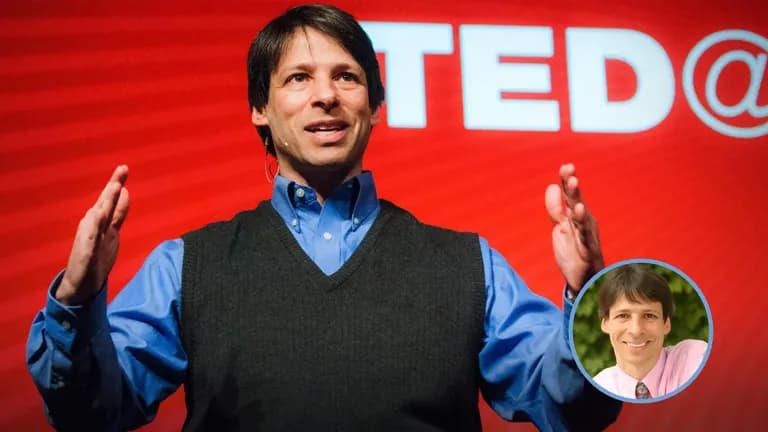
Ben Underwood Navigated the World Using Tongue-Click Echolocation
After losing his sight to cancer, Ben Underwood learned to navigate, cycle and play using echoes produced by tongue clicks.

Ben Underwood produced sharp clicks with his tongue and listened to the echoes. From those returning sounds, he could judge where walls, cars, trees and other obstacles stood.
Sight loss and adaptation
Underwood was born in California in 1992. Retinoblastoma led doctors to remove both eyes when he was three. As a young child, he began making clicks and discovering how the sound changed around different objects.
This is human echolocation: sound travels outward, reflects from surfaces and returns with information about distance, size, position and sometimes texture.
Age 3
Lost both eyes to retinal cancer
Age 5
Using echolocation independently
2006
Profiled nationally by CBS
16
Age at his death in 2009
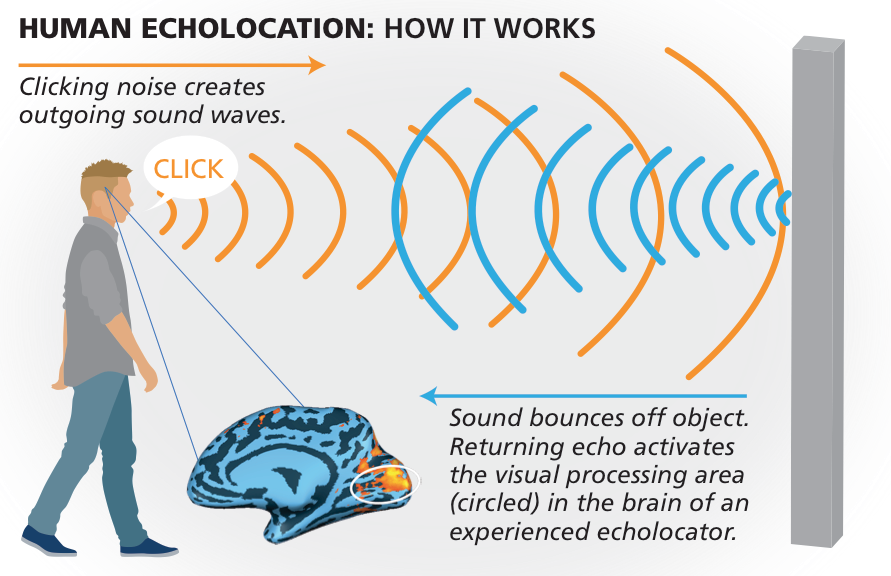
How human echolocation works.
Independence through sound
Underwood used echoes while walking, running, skating, cycling and playing games. His skill drew worldwide attention because he navigated without relying continuously on a cane or guide.
The ability was remarkable, but it was not supernatural. Researchers have shown that blind echolocators can train the brain to extract spatial information from very small differences in reflected sound.
A life cut short
Underwood’s cancer later returned. He died in January 2009 at age 16.
Media accounts often framed him as a boy who could “see without eyes.” The more accurate lesson is about perception and adaptation. Echolocation did not recreate normal vision; it provided useful spatial information through a different sensory route.
The geek lesson
Underwood experimented with sound until it became a practical navigation system. His legacy helped the public understand that perception is not limited to one sense—and that blind children benefit when exploration and independence are encouraged.
The weekly question
From obsession to clarity — one original question every week.
We answer one noisy topic at a time, in full. No daily roundup, no thread bait — just the question, the principles, and the system.