
Asthma Isn’t Caused by Leukotrienes After All — Meet the Pseudo-Leukotrienes
Morning coffee still fogs his thoughts as Robert Salomon leans over a glowing vial in the Case Western Reserve lab and realizes the asthma villains scientists chased for decades may be the wrong culprits—the pseudo-leukotrienes could be the real drivers.
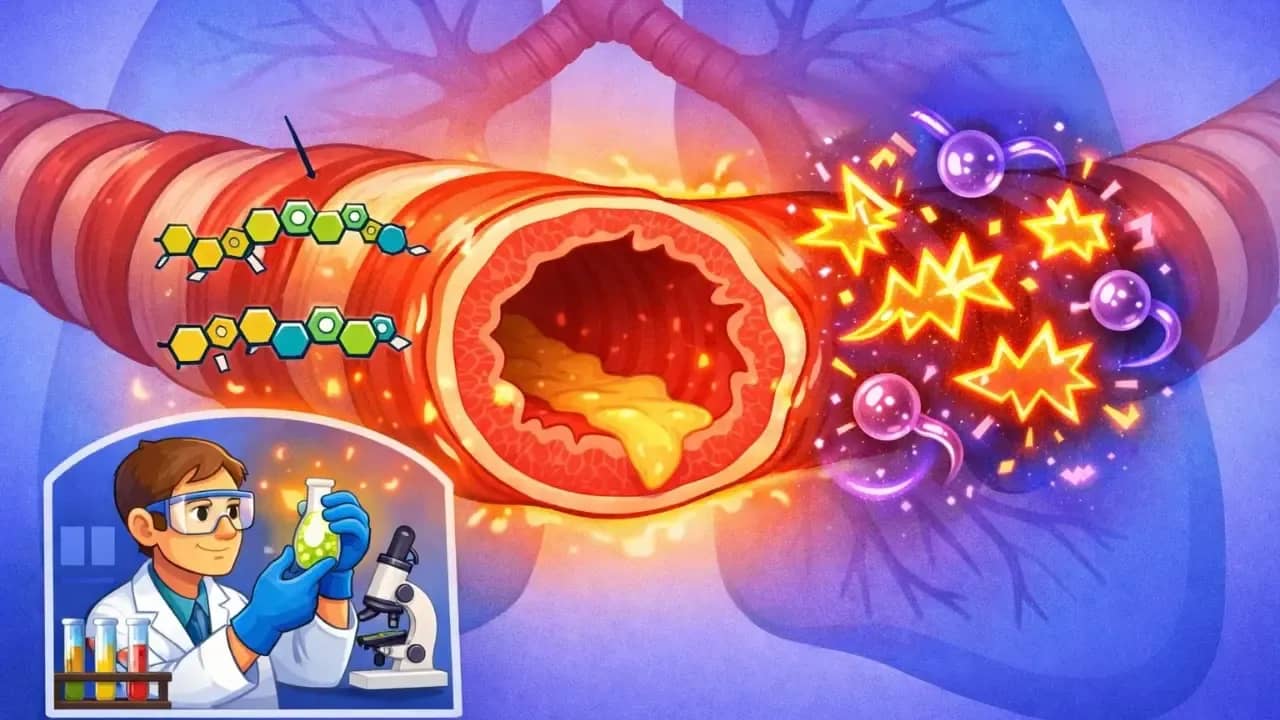
The discovery changes how scientists think about asthma. Instead of focusing only on drugs that block leukotriene receptors, researchers now believe the real problem may start earlier, in the chemical reactions that create pseudo-leukotrienes. In the Case Western Reserve lab, Robert Salomon’s team showed that these molecules form when free radicals attack lipids, creating leukotriene-like compounds through oxidative stress rather than normal enzyme pathways.
Working with experts at the University of Toledo and Cleveland Clinic Children’s Hospital, the team studied patient samples from multiple centers and found a clear pattern: higher pseudo-leukotriene levels matched more severe asthma. Public summaries, including ScienceDaily, highlight this growing evidence that these molecules not only drive airway inflammation but could also serve as a useful biomarker and a new target for future treatments.
A New Villain Emerges in Asthma
Inside the Case Western Reserve facility, Salomon’s group notes that pseudo-leukotrienes arise from free-radical lipid oxidation rather than the canonical enzyme steps that have dominated asthma narratives. This distinction matters: the same molecules that flame up during oxidative stress are the ones we may have been missing when we looked only at receptor signaling.
The discovery paper, co-authored with collaborators at the University of Toledo and Cleveland Clinic Children’s Hospital, builds a bridge between bench lipid chemistry and bedside testing, inviting clinicians to reconsider what they measure in airway samples and how they interpret inflammation. See the primary report in the Journal of Allergy and Clinical Immunology for the mechanistic details: Journal of Allergy and Clinical Immunology.
From Molecule to Meaning: How It Works
Mechanistically, pseudo-leukotrienes form when reactive free radicals rip through lipid membranes, yielding leukotriene-like species that can persist in airway secretions. In a multi-center dataset spanning dozens of patients, higher levels of these molecules align with greater airway hyperresponsiveness and clinical severity, suggesting biomarker potential for both diagnosis and tracking response to therapy.
If validated, this shifts the therapeutic target from simply blocking the receptor to intercepting the radical-oxidation pathway itself; meanwhile, clinicians could begin biomarker testing to stratify risk and guide treatment choices. See the ScienceDaily overview of the discovery for a lay briefing: ScienceDaily.
Implications for Care
In practical terms, the field could move toward integrating pseudo-leukotriene measurements into routine asthma assessment and directing early-stage trials for oxidation-prevention strategies. This reframes asthma care as a fight against radical chemistry in the lungs, not just a tug-of-war over receptor activity.
The evolving biomarker framework aligns with broader shifts toward biomarkers and precision medicine, offering clinicians a molecular fingerprint to guide therapy decisions now and into the near future.
Key Takeaways
- Pseudo-leukotrienes are leukotriene-like molecules formed by free-radical oxidation rather than enzyme pathways.
- Their levels correlate with asthma severity, making them a promising biomarker for diagnosis and monitoring.
- Therapies may pivot from leukotriene-receptor blockade toward preventing the radical-oxidation process itself and toward routine biomarker testing.
Now the era of chasing a receptor-blocking playbook ends; the era of preventing radical-oxidation pathways—guided by pseudo-leukotriene biomarkers—begins.
Related Reading
Scientists have developed a non-invasive brain–computer interface that can help people with paralysis move again using only their thoughts. This breakthrough could reshape future rehabilitation.
Read the Full StoryFrom obsession to clarity — one original question every week.
We answer one noisy topic at a time, in full. No daily roundup, no thread bait — just the question, the principles, and the system.