Alexander Arguelles Built a Discipline for Lifelong Language Study
Professor Alexander Arguelles developed rigorous routines for self-directed language study, extensive reading, shadowing, and maintenance.
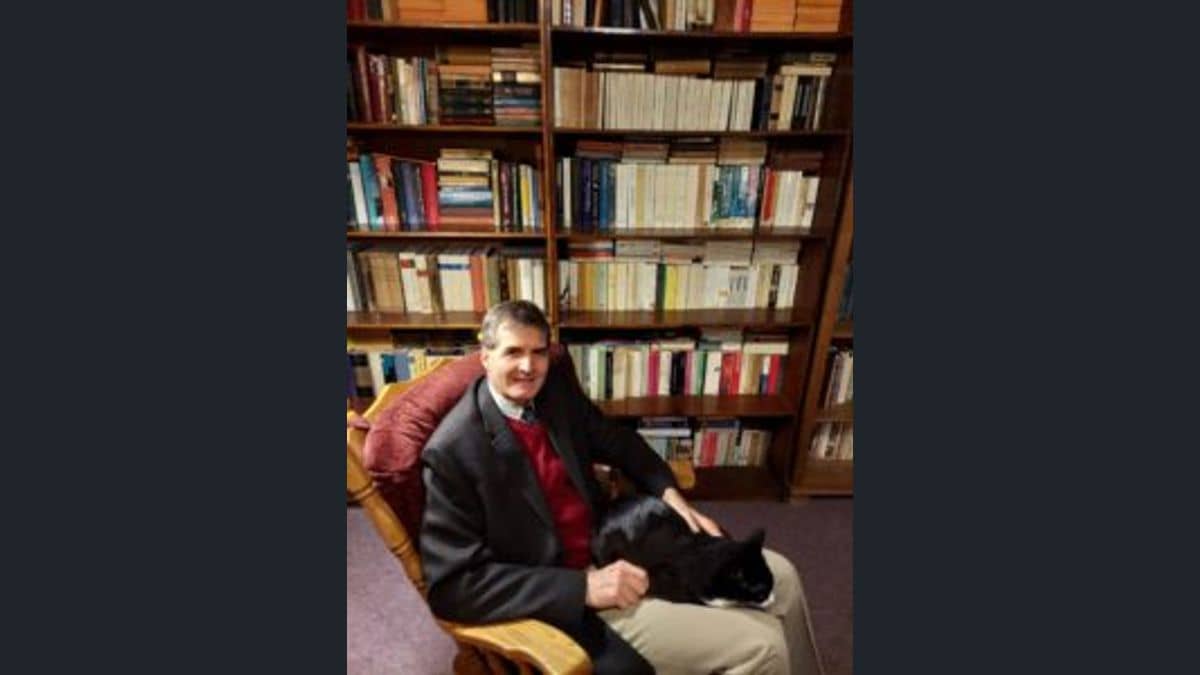
Alexander Arguelles treats language learning less like a short challenge and more like a lifetime intellectual practice.
The American scholar and educator became well known in polyglot circles for disciplined routines, extensive reading, and techniques such as shadowing and the scriptorium method.
From literature student to comparative scholar
Arguelles studied French and German literature at Columbia University and later earned graduate degrees at the University of Chicago in the comparative history of religions.
His formal studies brought him into Latin, Ancient Greek, Sanskrit, Old Norse, and other historical languages. International teaching work later placed him in Korea, Lebanon, Singapore, the United Arab Emirates, and the United States.
His official biography describes more than 25 years of international educational experience and sustained study across many language families.
The routine behind the reputation
Arguelles emphasizes regular, focused work rather than motivational shortcuts. At different periods, he organized his days around multiple language sessions, reading, listening, writing, and review.
The intensity is unusual, but the underlying principle is simple: languages improve when meaningful contact becomes scheduled rather than optional.
He also distinguishes between exploring a language and mastering it. Not every language he has studied sits at the same level.
25+
Years of international educational experience
150+
Languages represented in his study-resource collection
6
Languages with a solid foundation by age 22
Source: Alexander Arguelles official biography
What shadowing and scriptorium involve
In shadowing, a learner listens to continuous speech and repeats it aloud with minimal delay. The goal is to connect sound, rhythm, attention, and physical production.
His scriptorium practice combines reading a sentence aloud, writing it carefully, and speaking each word while writing. It slows the learner down enough to notice spelling, grammar, and structure.
Neither technique is magic. Their value comes from sustained attention and repetition with material appropriate to the learner's level.
Why reading matters so much
Arguelles has long advocated extensive reading, especially for learners who want lasting access to literature and complex texts.
Reading builds vocabulary through context and allows repeated contact with grammatical patterns. It also creates a reason to maintain older languages after the beginner stage has passed.
1980s
Studied French, German, Latin, Greek, and Sanskrit at Columbia
1986–1994
Expanded historical-language study at the University of Chicago
1996–2001
Pursued intensive polyglot study while teaching in Korea
Later career
Taught and directed language programs internationally
Today
Guides independent learners through courses and writing
What learners can realistically take from his method
Most people cannot copy an academic's most intensive schedule. They can still adopt its structure.
Choose defined materials. Work at a regular time. Read and listen beyond isolated exercises. Track which skills are active, and return to languages before they disappear.
Arguelles's real contribution is not a language count. It is a model of multilingualism as disciplined scholarship—patient, comparative, and designed to continue for life.
The weekly question
From obsession to clarity — one original question every week.
We answer one noisy topic at a time, in full. No daily roundup, no thread bait — just the question, the principles, and the system.