Alan Turing Turned Computability Into the Foundation of Modern Computing
Alan Turing transformed computer science through ideas that still shape modern technology.
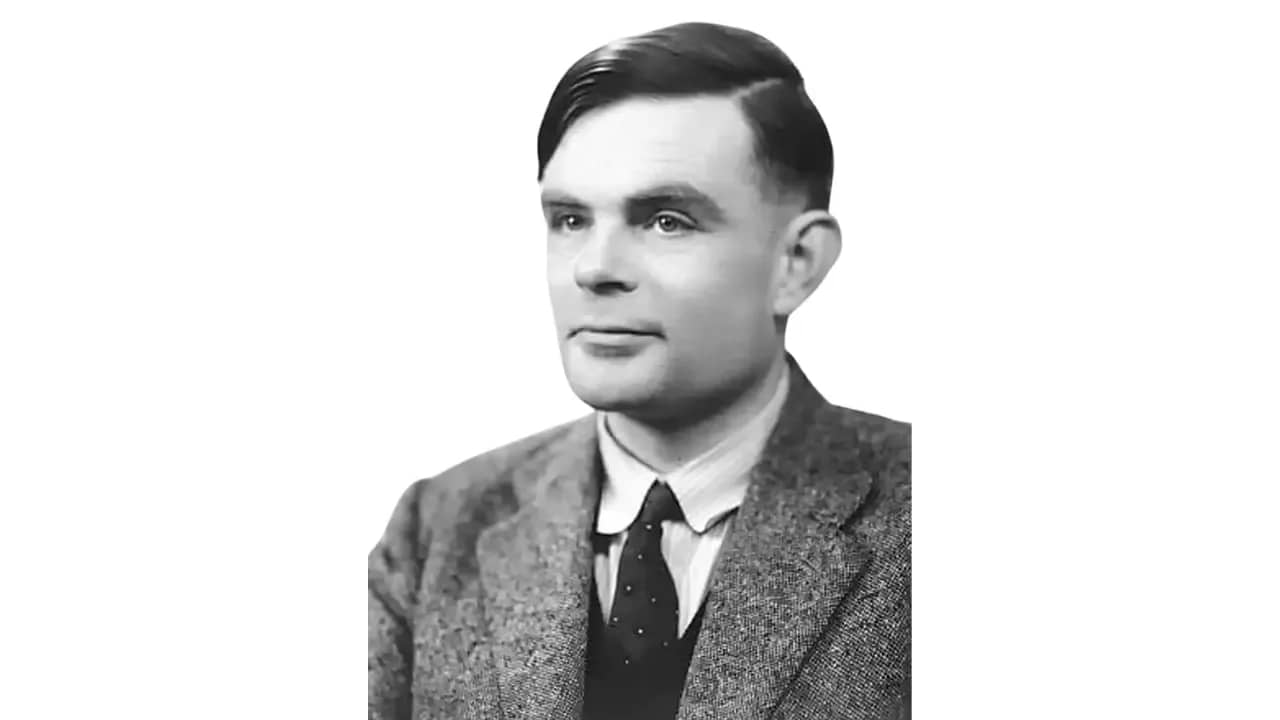
Alan Turing asked a deceptively simple question: what does it mean for a problem to be computable? His answer helped define the modern computer before electronic general-purpose machines existed.
1912–1954
Life
Computer science
Field
Turing machine
Defining milestone
A machine built from logic
In 1936, Turing described an abstract machine that reads and writes symbols according to rules. The “Turing machine” became a rigorous model of computation and a way to show that some problems cannot be solved by any algorithm.
Codebreaking under wartime pressure
During the Second World War, Turing worked at Britain’s Bletchley Park. His cryptanalytic ideas and work on the Bombe helped the Allies attack messages enciphered with Enigma. The achievement was collaborative, secret and historically consequential.
The question that anticipated AI
His 1950 paper “Computing Machinery and Intelligence” replaced the vague question “Can machines think?” with an operational imitation game, now called the Turing test. Turing was prosecuted for being gay in 1952, received a royal pardon in 2013, and remains a symbol of both scientific brilliance and institutional injustice.
Why Alan Turing still matters
Alan Turing’s work changed the questions engineers and researchers could ask—and the systems they could build. The clearest thread is an obsession with turning abstract ideas into durable tools.
The weekly question
From obsession to clarity — one original question every week.
We answer one noisy topic at a time, in full. No daily roundup, no thread bait — just the question, the principles, and the system.