Akira Haraguchi Turned 100,000 Digits of Pi Into Stories
Akira Haraguchi publicly recited 100,000 digits of pi in 16.5 hours by turning numbers into Japanese syllables and stories.
In October 2006, Akira Haraguchi sat down in a public hall near Tokyo and began reciting the digits of pi from memory.
He continued for 16 hours and 30 minutes. When he stopped, he had reached 100,000 decimal places.
The performance made the Japanese memory enthusiast famous around the world. It also came with an important qualification: Guinness World Records did not validate the attempt.
That distinction does not make the achievement ordinary. Haraguchi's story is less about a certificate than about the strange and deeply personal system he built to turn an endless stream of numbers into language, images, and meaning.
The Night Akira Haraguchi Reached 100,000 Digits
Haraguchi began his public recitation at 9 a.m. on October 3, 2006, in Kisarazu, east of Tokyo.
By nightfall, he had passed the 83,431 digits he had recited the previous year. He continued into the early hours of October 4 before reaching digit number 100,000.
News reports described short breaks during the performance. The event was filmed and witnessed, creating a record of the endurance required to speak a sequence that would fill hundreds of printed pages.
100,000
Digits recited
16.5 hours
Approximate duration
2006
Year of the public performance
Source: The Guardian and contemporary news reports
The Los Angeles Times reported that the performance took more than 16 hours. A later Guardian profile described the 100,000-digit recitation as a public event that lasted 16 hours and 30 minutes.
Why the Record Is Called Unofficial
Haraguchi's feat is often described online as a world record. But the wording needs care.
Guinness did not validate the 100,000-digit performance. At the time, the recognized record belonged to China's Lu Chao, who had recited 67,890 digits in 2005.
Haraguchi's recitation was longer, public, and extensively documented. Yet a witnessed performance and a Guinness-certified record are not automatically the same thing.
That is why the most accurate description is that Haraguchi publicly recited 100,000 digits of pi, while the attempt remained unofficial in Guinness terms.
This distinction also explains why lists of pi-memory achievements sometimes appear to contradict one another. Some rank the longest reported public performances. Others include only attempts completed under a particular organization's verification rules.
How He Turned Numbers Into Japanese Stories
Pi does not settle into a repeating decimal pattern. Memorizing it digit by digit would be extraordinarily difficult if every number remained abstract.
Haraguchi developed a system that connected digits with Japanese syllables. Those syllables could then become words, phrases, and stories.
Instead of experiencing pi only as a wall of numbers, he could move through a narrative.
A sequence might suggest people, places, actions, or scenes. Each image would help cue the next group of digits.
This is related to a broad principle used by memory athletes: information becomes easier to retrieve when it is connected to something vivid and structured.
Haraguchi's method was shaped by the sounds and flexibility of Japanese. It was not simply a universal code copied from a memory manual. It became his own elaborate language for navigating pi.
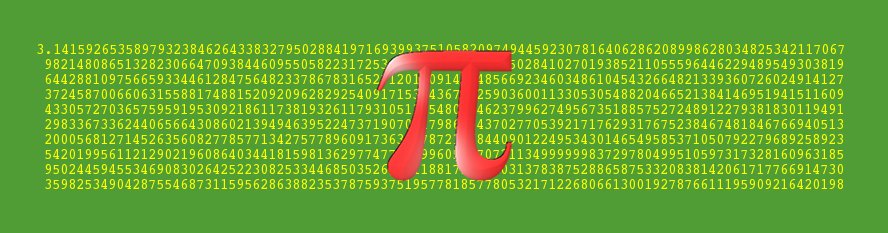
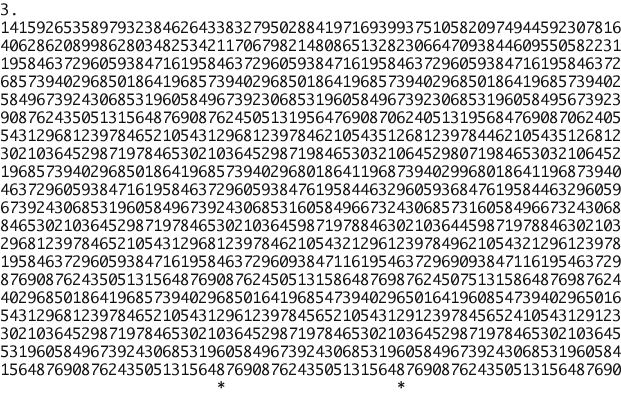
The first thousand digits of pi show the scale of the sequence Haraguchi extended one hundred times over. Source: Wikimedia Commons.
Why Pi Became More Than a Memory Test
For Haraguchi, memorizing pi was not only competitive.
In interviews, he described the practice as a way of searching for stories and meaning inside a number that never ends. He connected the work with Buddhist training and with a desire for peace of mind.
That helps explain why he kept expanding his target.
He publicly recited 54,000 digits in 2004, then 68,000 later that year. In 2005, he reached 83,431. The 100,000-digit performance followed in 2006.
September 2004
Recites 54,000 digits
December 2004
Reaches 68,000 digits
July 2005
Recites 83,431 digits
October 2006
Publicly reaches 100,000 digits
Each attempt required more than adding another block of numbers. It meant preserving the earlier sequence while building thousands of new associations onto it.
What His Performance Reveals About Memory
Haraguchi's achievement can look like evidence of a supernatural brain. His method suggests something more interesting.
Exceptional recall can be built from ordinary mental materials: language, imagery, rhythm, practice, and a reliable retrieval structure.
That does not mean anyone can quickly memorize 100,000 digits. The scale of his training was extreme. But the underlying lesson is accessible.
Abstract information is hard to hold. Meaningful information is easier.
Memory systems work by transforming one into the other.
Haraguchi's long recitations also show the role of endurance. Remembering a sequence is only part of the challenge. The performer must sustain concentration for hours, speak accurately, recover after breaks, and manage the physical strain of continuous recall.
What Akira Haraguchi's Story Teaches Us
Akira Haraguchi did not make pi shorter or simpler. He changed the way his mind met it.
A seemingly cold sequence of decimals became a landscape of syllables and stories. Through years of practice, he learned to move through that landscape for more than 16 hours.
His 100,000-digit performance was not certified by Guinness, and responsible accounts should say so clearly.
But the lack of a Guinness label does not erase the human achievement at the center of the story.
Haraguchi shows that obsession can become a craft—and that memory grows stronger when information is given structure, imagination, and personal meaning.
Featured image: Akira Haraguchi during a public pi recitation, via Loyayaya.
The weekly question
From obsession to clarity — one original question every week.
We answer one noisy topic at a time, in full. No daily roundup, no thread bait — just the question, the principles, and the system.