

Our eyes do a lot for us every day. They capture light, color, and detail, letting us read, drive, and recognize the people we love. But like every other part of the body, eyes also age. Scientists at the University of California first discovered that this process may be controlled by one tiny element inside our genes. It is called ELOVL2, and it works like an internal clock that determines how quickly our vision declines with age.
The initial discovery, led by researchers at UC San Diego in 2020 and published in Aging Cell, found that ELOVL2 helps produce special fatty acids that keep the retina healthy. These fats protect eye cells from damage caused by light and oxidation. When the ELOVL2 gene slows down, the retina loses its ability to stay clear and strong.

“These findings indicate that ELOVL2 actively regulates aging in the mouse retina, provides a molecular link between polyunsaturated fatty acids and visual function, and suggests new therapeutic strategies for treating age-related eye diseases,” said Dr. Dorota Skowronska-Krawczyk, senior author of the 2020 study at UC San Diego’s Shiley Eye Institute.
Fast Facts
- Study Focus: Scientists identified ELOVL2 as a gene that controls how quickly the eyes age.
- Breakthrough: Reactivating or supplementing fatty acids restored vision in aging mice.
- Institutions: Research conducted by the University of California, San Diego and UC Irvine.
- Impact: May lead to future treatments for age-related macular degeneration (AMD).
- Publication: Aging Cell (2020) and Science Translational Medicine (2025).
How Scientists Discovered the Eye’s Aging Gene
The team noticed something fascinating when they studied both human and mouse eyes. As the animals grew older, a chemical change called DNA methylation began to silence the ELOVL2 gene. This process adds small molecules, called methyl groups, onto the DNA. Once attached, these groups act like locks that prevent certain genes from working properly. Over time, this locking caused the eyes to age faster, leading to blurred vision and the buildup of waste deposits behind the retina.

The UC San Diego team emphasized that this was the first time a gene previously known only as an “aging biomarker” had been proven to play a direct, functional role in the aging process of an organ.
To test if they could reverse this, researchers used a compound called 5-Aza-2’-deoxycytidine, which removes methylation. When injected into the eyes of older mice, it reactivated ELOVL2 and restored visual performance. It was as if the researchers had turned the eye’s aging switch back on again.
From Gene Control to Real Therapy
Five years later, scientists at the University of California, Irvine, built on those findings with a new study published in Science Translational Medicine (October 2025). They discovered that aging vision could be restored by supplementing the retina with specific polyunsaturated fatty acids without directly modifying the ELOVL2 gene.
In older mice, this fatty acid treatment reversed both vision loss and molecular signs of aging. Researchers described it as a proof of concept for developing potential lipid-based therapies for age-related macular degeneration.
“We show the potential for reversing age-related vision loss,” explained Skowronska-Krawczyk, now an associate professor at UC Irvine’s Robert M. Brunson Center for Translational Vision Research. “It’s a proof-of-concept for turning lipid injection into a possible therapy.”
“What is important is that we didn’t see the same effect with DHA,” she added. “Our work confirms that DHA alone cannot do the work, but another fatty acid seems to improve vision and even reverse aging features.”
Why This Discovery Could Change How We Age
Together, these two studies reveal how ELOVL2 and lipid metabolism control eye aging. The gene does not simply measure time; it actively controls how fast cells in the retina deteriorate.
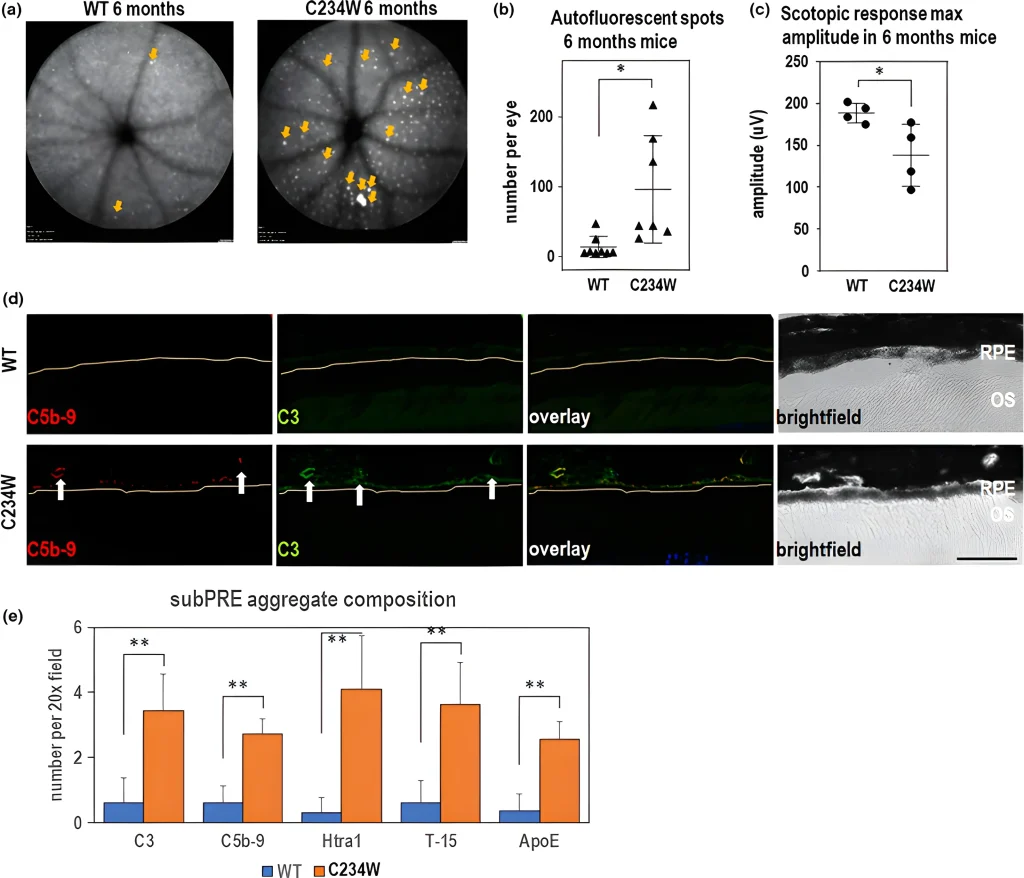
Understanding this mechanism could lead to new ways to prevent or treat age-related macular degeneration (AMD), the leading cause of blindness in people over 60. In mice that lacked ELOVL2, early signs of AMD appeared, including the buildup of drusen-like deposits.
“I have been asked whether I think ELOVL2 is the aging gene,” said Skowronska-Krawczyk. “After thinking about it, it is not unreasonable to believe that lower ELOVL2 expression might be at the root of many age-related conditions.”
The UC Irvine team went further, identifying genetic variants of ELOVL2 linked to faster AMD progression.
“Now we actually have a genetic connection to the disease and its aging aspect,” said Skowronska-Krawczyk. “We could potentially identify people at higher risk for vision loss progression.”
Who Could Benefit From This Discovery
The biggest impact could be for older adults who notice gradual vision decline that glasses or surgery cannot fix. If future treatments can maintain or restore ELOVL2’s function or replicate its effects with lipid therapy, they could delay or even reverse aging in the eye.
Eye specialists may eventually use genetic or lipid-based screening to detect declining fatty acid balance in the retina. Detecting this early could allow for simple interventions before permanent damage occurs.
Beyond vision, this discovery could influence how scientists study aging in the brain, liver, and immune system. In collaboration with UC San Diego and the Polish Academy of Sciences, researchers found that loss of ELOVL2 also accelerated aging in immune cells, suggesting that lipid metabolism might play a role in immune aging and even some blood cancers.
“Our first study explored a potential therapy to address vision loss,” said Skowronska-Krawczyk, “but with what we’ve learned about immune aging, we are hopeful the supplementation therapy will boost the immune system as well.”
Related Reading
Scientists recently discovered a molecular “switch” in the brain that may explain how addiction rewires human behavior. This study dives deep into how neural pathways adapt under addictive influence—and how that knowledge could lead to better treatments.
Read the Full StoryHow the Experiment Worked in Simple Terms
In both the UC San Diego and UC Irvine studies, scientists studied young and old mice to see how ELOVL2 and fatty acids changed over time. Older mice showed lower enzyme activity and fewer protective fatty acids in the retina.
They took two different approaches. The 2020 team reactivated the ELOVL2 gene using a chemical that removed methylation marks. The 2025 team bypassed the gene entirely by injecting long-chain polyunsaturated fatty acids directly into the eye. Both approaches produced the same result: sharper vision and younger-looking retinal cells.
“We have also shown on a molecular level that it actually reverses the aging features,” Skowronska-Krawczyk said.
The studies also proved that when ELOVL2 is missing, aging speeds up dramatically. Mice without the enzyme developed vision problems similar to human macular degeneration.
“Reversing promoter hypermethylation in the ELOVL2 gene recovered visual function in older mice,” the 2020 team wrote. “It shows that aging-related vision decline can be slowed at the molecular level.”
Turning Back the Clock in the Body
These discoveries offer hope that doctors could one day treat age-related vision loss without surgery or stem cell transplants. By targeting the body’s lipid metabolism or epigenetic switches, it might be possible to preserve vision naturally.
This research connects the epigenetic aging process with something tangible: how we eat, age, and heal. It shows that diet, lipid balance, and even light exposure can affect how genes like ELOVL2 behave over time.
If these results hold true in humans, something as simple as fatty acid supplementation could become a powerful tool against eye aging and possibly other age-related diseases.
What This Means for You and the Future
It will take time before these therapies reach human trials, but the message is clear. Eye aging is not just inevitable; it can be understood, slowed, and perhaps even reversed.
Imagine visiting your doctor and getting an eye age test based on your gene and lipid profile. If your eye shows early signs of aging, a personalized lipid therapy might help restore clarity before vision loss sets in.
For now, the work of Skowronska-Krawczyk and her collaborators across UC Irvine, UC San Diego, Poland, and Germany offers a new vision of aging: one that can be tuned, repaired, and possibly rewritten.
The Takeaway
Scientists have found that the ELOVL2 gene and its related fatty acids act like an aging switch for the eyes. When ELOVL2 is silenced or its fatty acid products decline, vision fades. When reactivated or supplemented, sight improves.
This evolving line of research could change how we understand both eye health and aging itself. One day, instead of accepting vision loss as a normal part of getting older, we might learn how to keep the lights on inside our biology.
Sources: Chen et al., “The lipid elongation enzyme ELOVL2 is a molecular regulator of aging in the retina,” Aging Cell (2020); Gao et al., “Retinal polyunsaturated fatty acid supplementation reverses aging-related vision decline in mice,” Science Translational Medicine (2025).
Related Reading
New research suggests that your gut bacteria may influence your sleep patterns. The study shows links between microbiome balance and rest quality, opening doors to novel sleep therapies.
Read the Full StoryFAQs
ELOVL2 helps produce long-chain fatty acids that protect retinal cells from oxidative stress and light damage. As people age, this gene becomes less active due to methylation, a process that “silences” DNA segments. When researchers reactivated ELOVL2 in mice, vision improved and aging markers in the retina reversed.
Early studies suggest that omega-3 and other polyunsaturated fatty acids may support similar protective pathways as ELOVL2. However, researchers emphasize that human clinical trials are still needed. Maintaining a diet rich in healthy fats, like those found in fish and nuts, may contribute to general eye health.
By understanding how ELOVL2 controls retinal aging, scientists can develop therapies that slow or even reverse conditions such as age-related macular degeneration (AMD). This could eventually lead to non-surgical treatments that preserve vision by keeping the “aging switch” in the eye turned off.
