
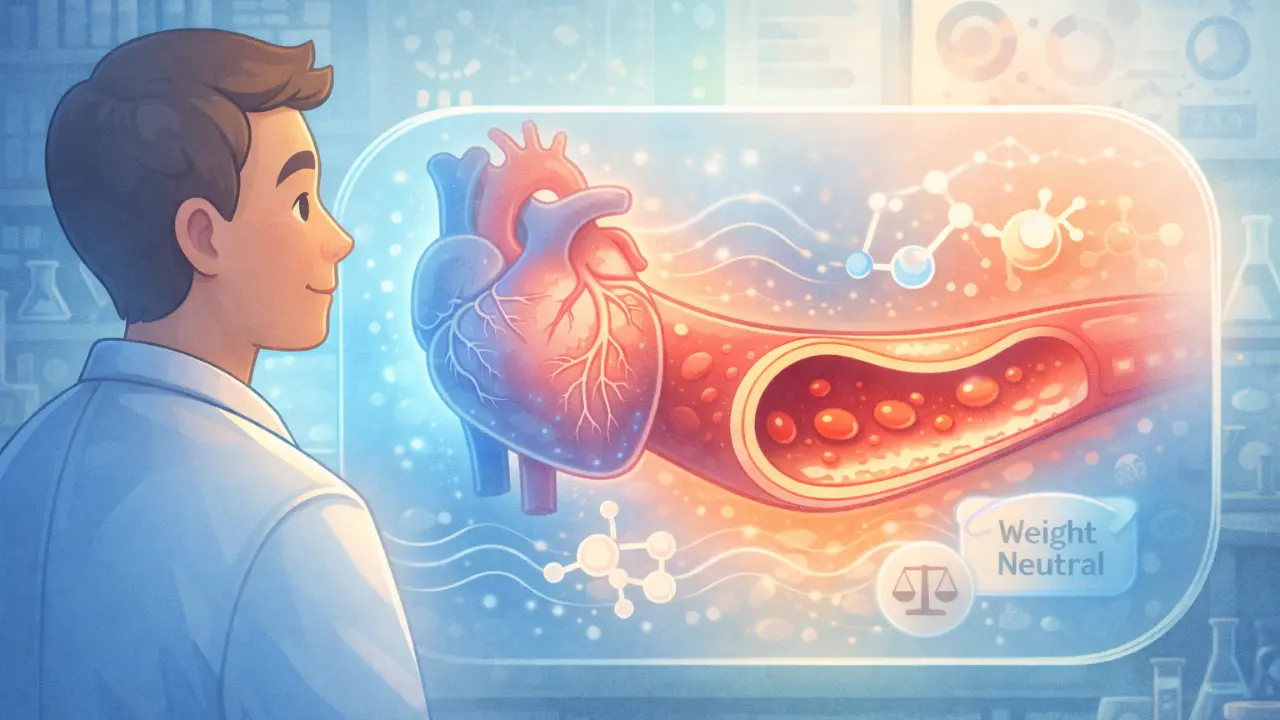
What began as a quiet observation in the lab quickly grew into something more meaningful. Researchers noticed that the mice were showing healthier arteries, even though their weight never changed. That detail mattered. It suggested that heart protection might not need to depend on weight loss at all.
The breakthrough came from an international team at Leiden University Medical Center and Monash University’s Institute of Pharmaceutical Sciences, led by Professor Mark A. Febbraio. In their 2025 Science Advances study, the team showed that a drug called IC7Fc reduced artery inflammation and slowed plaque buildup in lean mice. The findings point to a new way of thinking about heart and metabolic care, one that focuses on calming harmful inflammation rather than changing body weight.
The Weight-Neutral Heart Shield
The core finding is that weight-independent protection can accompany metabolic intervention: in lean mice, IC7Fc reduced cholesterol and arterial inflammation, and attenuated formation of plaques. The mechanism appears to involve dampening inflammatory pathways and improving lipid handling, offering a plausible route to dual-action therapies.
This challenges the conventional wisdom that heart protection must ride on weight loss and suggests a wider window for patient populations that remain lean.
From Mice to Dual-Action Therapies
Although not yet tested in humans, the study provides a roadmap for therapies that treat diabetes and cardiovascular risk in tandem. The authors caution that these findings are preclinical; human trials will be essential to assess safety, dosing, and long-term effects. If replicated in people, IC7Fc-like approaches could broaden the spectrum of cardio-metabolic protection beyond weight changes, informing drug development at researchers and pharmaceutical companies such as those collaborating across LUMC and Monash.
The bigger shift is toward dual-action strategies that address two major health burdens with one intervention, potentially reshaping clinical guidelines and patient expectations. Today, the field is testing what a diabetes drug can do for the heart; tomorrow, it could become a standard part of cardiovascular risk reduction for diverse populations.
The era of weight-centric heart protection may be ending. As researchers publish and translate these findings, the future points to a new class of therapies that safeguard heart health while treating metabolic disease—precisely what IC7Fc-like approaches promise to deliver.
Key Takeaways
- IC7Fc shows heart-protective effects in lean mice independent of weight loss.
- The findings point to dual-action metabolic-cardiovascular therapies, not just weight reduction.
- Human trials are needed to establish safety and applicability beyond mice.
Brain Health Insight
Hidden fat patterns in the brain may quietly raise long-term neurological risk.
Read the Full Story