
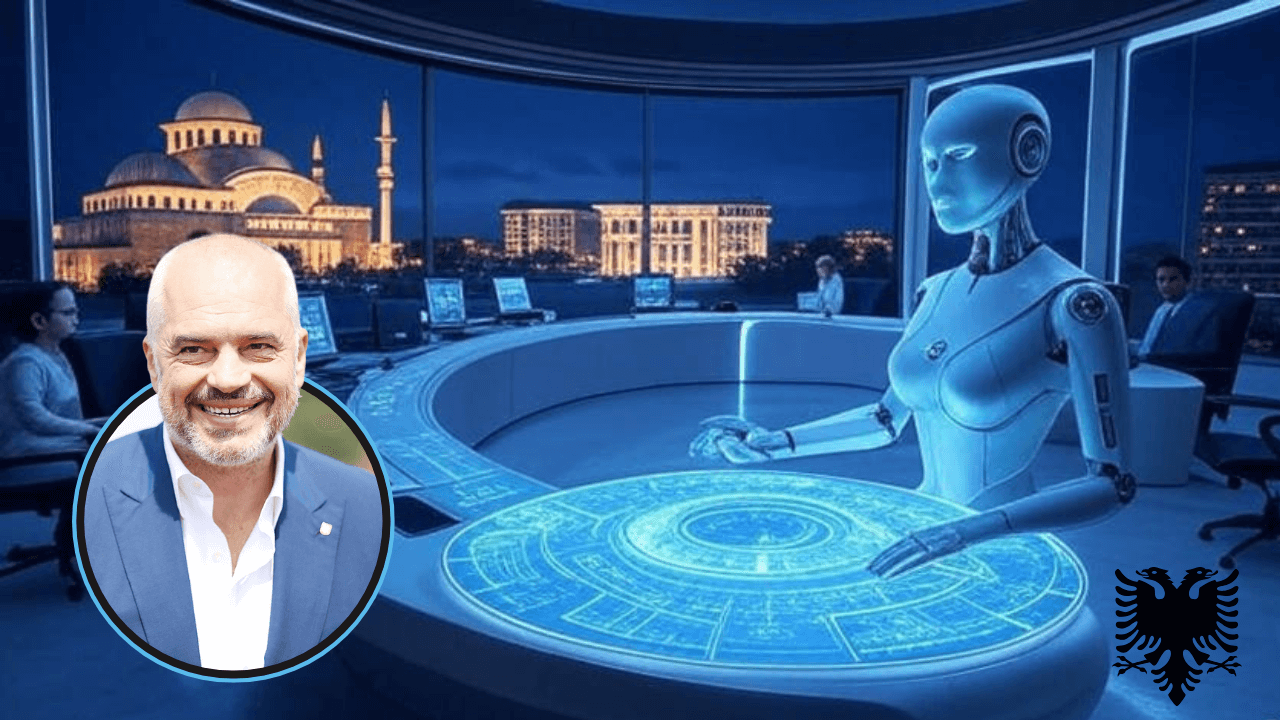
Imagine living in a country where corruption is so common, people actually cheer at the idea of a robot taking charge. That’s what’s happening in Albania.
In July 2025, Prime Minister Edi Rama stood before the press and made a bold announcement. He said AI could be the “most efficient member” of the government. Why? Because it doesn’t take bribes, doesn’t play favorites, and never gets tired.
“One day, we might even have a ministry run entirely by AI.”
– Edi Rama, July 2025
He added,
“That way, there would be no nepotism or conflicts of interest.”
This bold move isn’t just for headlines. It’s tied directly to Albania’s push to join the European Union. Rama believes that using AI to translate, align, and audit over 250,000 pages of EU law can help fast-track Albania’s entry, possibly as soon as 2027.
Fast Facts
- AI in Government: Albania uses AI for public services, law tracking, and fraud detection.
- EU Membership Goal: Albania aims to finish accession paperwork by 2027 with AI support.
- e-Albania Portal: Serves 3.3 million users and has saved over €300 million in time and costs.
- Corruption Reform: AI tools monitor contracts, flag irregularities, and support anti-corruption efforts.
- Public Reaction: Citizens praise convenience but critics warn of bias and lack of transparency.

How AI Already Runs Things in Albania
This isn’t just talk. Albania has already built a foundation of AI tools to support its digital government. At the heart of it all is the e-Albania portal, a one-stop website where citizens can file taxes, register for school, renew licenses, and more. With help from AI-powered assistants, users get services without waiting in lines or pushing paper.
So far, over 3.3 million people have used it. According to official data, it has saved citizens and businesses over €300 million in time and costs.
AI also helps behind the scenes. Machine learning tools monitor public contracts for signs of fraud. Algorithms flag strange tax transactions and customs entries. Smart drones fly over construction sites and rural areas to spot illegal buildings or cannabis farms.
Why Albanians Want a Machine Over a Minister
To understand this shift, you need to understand Albania’s history with corruption. For decades, shady backdoor deals, no-bid contracts, and political favoritism have slowed the country’s progress.
Ben Blushi, a former ruling party politician and author, summed up public sentiment:
“Societies will be better run by AI than by us because it won’t make mistakes, doesn’t need a salary, cannot be corrupted, and doesn’t stop working.”
For many citizens, the appeal is obvious. An AI minister doesn’t ask for favors. It doesn’t have a cousin in the construction business. It just works.
The Big Risks: Can AI Be Corrupted Too?
Still, not everyone is cheering. Members of the opposition and experts have raised serious concerns. Among them is Jorida Tabaku, a member of Parliament with the Democratic Party.
“AI is a tool, not a miracle.”
– Jorida Tabaku
She warns that without full transparency, AI could become a high-tech cover for the same old problems.
“If the same actors who benefited from corrupt tenders are the ones programming the algorithm, then we’re not heading into the future. We’re hard-wiring the past.”
Her concerns point to a deeper issue: governance. Who controls the AI? Who checks its data? Albania currently lacks strong oversight mechanisms for artificial intelligence. There’s also little public input into how these systems are being built.
Explore how this debate unfolded in Albania’s digital reform plans and public reactions
Could This Work in Other Countries?
While Albania is one of the first to go this far, it’s not alone. Estonia has used AI in public services since 2010. Singapore monitors public spending and policing with AI. The UAE uses smart city tech for legal and civic services.
But Albania is unique. It’s using AI not just for convenience, but as a weapon against corruption and a fast track to EU membership.
The European Union, surprisingly, seems open to the idea. In 2025 meetings, EU leaders praised Albania’s innovation. The country is aligning laws faster than expected. Its partnership with Mira Murati, former OpenAI CTO, is seen as a major asset.

To understand the wider risks and best practices for government automation, it helps to look at OECD’s guidance on AI in the public sector, which highlights global standards Albania may aim to follow.
What Do Albanians Really Think?
For most people, the changes are personal. The e-Albania portal has made life easier. No more waiting at government offices. No more paperwork lost in the system. Just quick clicks and faster results.
Still, there’s a divide. Rural communities and elderly citizens struggle with digital access. Social media reflects this mix of hope and doubt.
Gerond Taçi, a local AI expert, offered a grounded view of what’s next:
“The adaptation must go forward, and the Albanian people must be aware of this and be ready for the transition.”
So, Can AI Fix a Broken Government?
Not completely. But it can help.
Albania’s story shows both the promise and the danger of giving machines more power in politics. AI can cut red tape, flag corruption, and speed up legal work. But without oversight, it can also hide flaws and automate injustice.
The real lesson? Technology works best when guided by strong values, clear rules, and public trust.
Albania is betting big on AI. Whether it becomes the first country with a truly digital government or just another cautionary tale will depend on how wisely that power is used.