
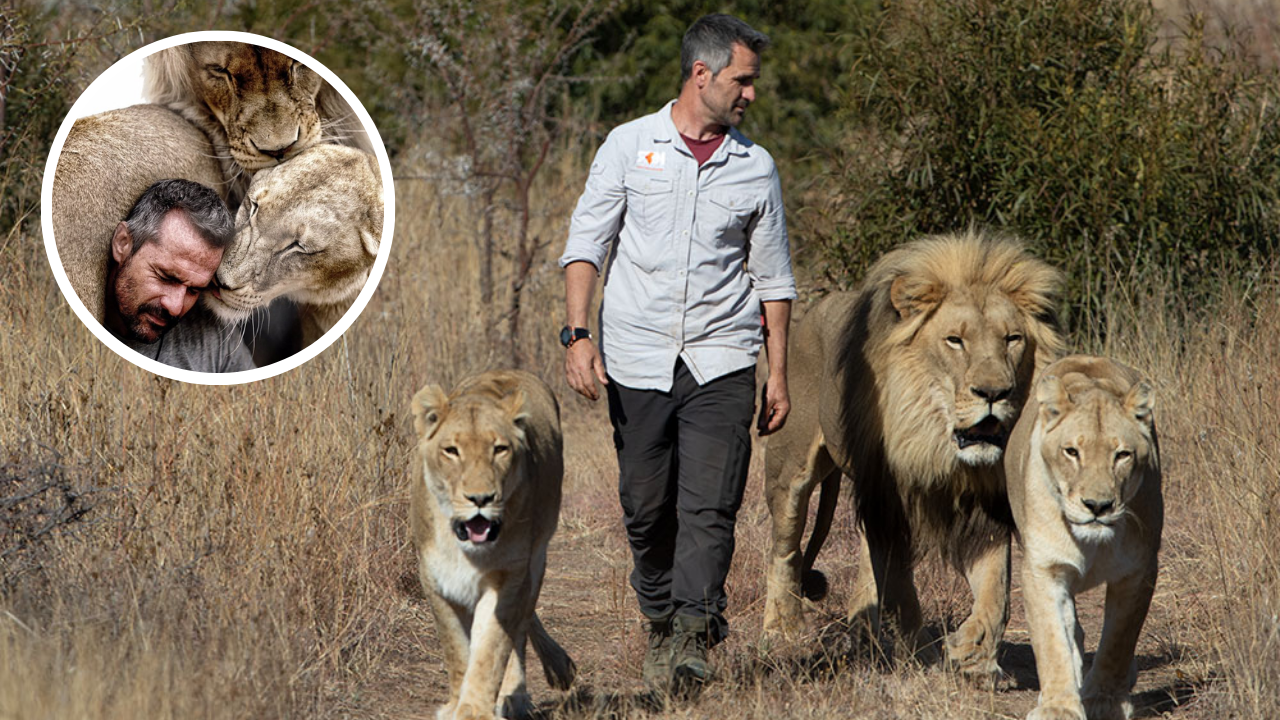
Most people run from lions. Kevin Richardson walks toward them. He’s known across the internet as The Lion Whisperer, a man who has built such deep trust with lions that they play, cuddle, and even nap beside him. Videos of Kevin hugging and wrestling with full-grown lions have shocked millions on YouTube, TikTok, and Instagram. But behind these viral moments lies a powerful lesson about empathy, science, and respect.
Fast Facts
- Name: Kevin Richardson, known as “The Lion Whisperer.”
- Profession: South African animal behaviorist and wildlife conservationist.
- Known For: Building trust-based relationships with lions and sharing viral videos of human–lion interaction.
- Foundation: Runs the Kevin Richardson Wildlife Sanctuary and Foundation to protect African predators.
- Viral Moment: The 2014 “GoPro: Lion Hug” video, viewed by millions worldwide.
The Beginning of a Wild Friendship
Kevin Richardson was born in Johannesburg, South Africa, in 1974. As a child, he was fascinated by animals, especially lions. While most people saw danger, he saw emotion and intelligence. That curiosity shaped his life’s work.
He began his career in wildlife parks, but he grew frustrated with the traditional approach. Many trainers used dominance and punishment. Kevin wanted another way. He believed lions could respond to care and understanding, just like humans do.
Today, he runs the Kevin Richardson Wildlife Sanctuary, located inside the Dinokeng Game Reserve near Pretoria. The sanctuary rescues lions and other predators from abusive captivity and helps them live out their lives in natural conditions.
How He Earned the Lions’ Trust
Kevin’s connection with lions didn’t happen overnight. He spent years living near them, observing every move and sound. He learned to read the tiniest signs, a flick of the tail, the tone of a growl, the angle of an ear.
He says,
“A lion is not a possession. It’s a sentient being. You have to develop your bond like any relationship.”
Kevin rejects fear-based control. Instead, he builds trust through familiarity and empathy. Each lion he interacts with has grown up with him since it was a cub. They recognize his scent, his voice, and his calm behavior.
What might look like magic on screen is actually the result of years of patience and careful observation, a real-world version of understanding a new language.
The Moment That Went Viral
In 2014, a video titled “GoPro: Lion Hug” exploded online. In it, a massive lion runs full speed toward Kevin. Instead of attacking, it leaps into his arms like an oversized cat. The video gathered millions of views across YouTube and social media.
Since then, Kevin’s sanctuary videos have continued to circulate, gaining fresh attention every few months as new viewers discover “the man who hugs lions.” His YouTube channel, LionWhispererTV, has more than 3 million subscribers, while his Instagram reels are shared across wildlife and inspiration pages worldwide.
Why This Story Keeps Going Viral
Kevin’s videos trigger powerful emotions. They combine fear, awe, and warmth in a single frame. Seeing a human hug a predator challenges everything we think we know about nature. It’s both terrifying and beautiful.
Psychologists call this an awe response. Studies show that awe-inspiring videos are 30% more likely to be shared on social media because they spark conversation and curiosity.
Another reason for his continued virality is timing. Kevin’s clips fit perfectly into today’s short-form video world. His 15-second reels on TikTok and YouTube Shorts are easy to watch and impossible to forget.
The Debate Around Safety and Ethics
Not everyone agrees with Kevin’s methods. Some conservationists warn that showing close contact with wild predators might give people the wrong idea. It could make others believe it’s safe to approach lions.
Kevin acknowledges these concerns. In interviews, he emphasizes that his lions are not wild strangers but animals he’s raised and bonded with since birth. He also discourages anyone from trying to imitate his interactions. His goal is education, not entertainment.
In 2018, tragedy struck when a visitor was killed by a lioness at the Dinokeng reserve. Kevin was not present during the incident, but he released a heartfelt statement urging for stronger safety standards and public understanding of lion behavior.
That event made him double down on his mission to teach respect for predators, not to normalize human interaction with them.
From Viral Fame to Real-World Impact
Kevin didn’t stop at internet fame. He founded the Kevin Richardson Foundation, which fights against canned hunting, a cruel practice where captive-bred lions are shot in enclosures for sport.
His foundation funds land conservation, education, and awareness campaigns to protect African predators in the wild. Every click, share, and donation from his online audience now fuels a real-world cause.
Through his videos, Kevin shows that lions aren’t monsters. They’re creatures capable of love, loyalty, and trust. And through his foundation, he proves that viral attention can drive meaningful change.
The Science Behind His Success
Kevin’s methods reflect principles from animal behavior science known as positive reinforcement and bond-based learning. Instead of punishing, he rewards calm, trustful behavior.
Dr. Sarah Bexell, a conservation behavior expert at the University of Denver, notes that
“animals form emotional memories, not just survival reactions. When you remove fear, learning and trust become possible.”
That science explains why Kevin’s lions treat him like one of their own. They associate him with safety, not threat.
What His Story Teaches Us
Kevin Richardson’s journey isn’t just about lions. It’s about how far empathy can reach when paired with knowledge and patience.
His story reminds us that real understanding, whether with animals or people, doesn’t come from control. It comes from trust.
In his own words, “You can’t make a lion love you. You have to earn it.”