
Thin Gloss After Shark Tank: Why the Lip Gloss Didn’t Get a Deal
Thin Gloss left Shark Tank without a deal. Explore April Morris’s pitch, reported discontinuation and what her current work reveals.

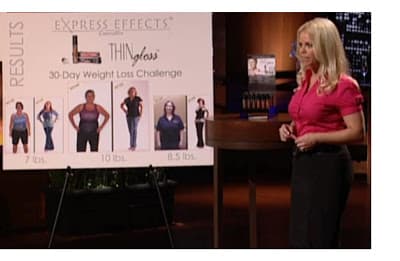
Applying lip gloss takes seconds. April Morris wondered whether that familiar routine could carry another purpose: a cosmetic marketed around appetite and mood. That idea became Thin Gloss, also styled THINgloss, and brought her to Shark Tank in 2011.
The pitch raised a difficult business question. A beauty product can show its color and finish immediately. A claim about appetite needs a different kind of evidence. Thin Gloss attracted attention through that additional promise, but the Sharks did not invest.
For viewers finding the episode years later, the next question is practical: did the product survive? Historical reporting says Morris stopped selling it in 2012. Her professional website now promotes speaking and still identifies Thin Gloss as her Shark Tank product.
This case file separates the founder’s story, the television outcome and what can actually be established about the business afterward. It also explains why old sales targets and investment requests should not become current net-worth estimates. Thin Gloss belongs to the varied group of companies in our Shark Tank Season 2 guide, where a memorable appearance did not always lead to a lasting product.
Thin Gloss After Shark Tank: Quick Answer
April Morris sought $80,000 for Thin Gloss and left Shark Tank without a deal. The pitch centered on lip gloss marketed with appetite-related benefits. Investor objections focused on the claims and the business case. Published accounts differ on the equity offered, so this article does not present a disputed percentage as settled fact.
Historical reporting describes Morris ending sales in 2012. Her current professional presence uses the name April Yvette and emphasizes speaking. That later career is separate from evidence that the cosmetics business continued operating.
Current status: Thin Gloss is reported discontinued. We could not verify an active official store or current production as of November 18, 2026. Its present value and the founder’s personal net worth are not publicly established.
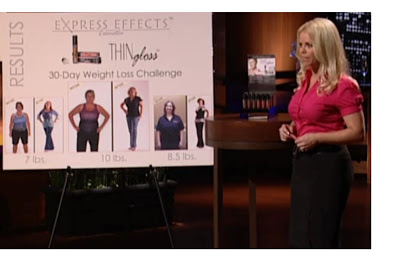
April Morris with the original Thin Gloss promotional display. The pictured claims are historical marketing, not verified results. Image: ABC/Shark Tank, via Shark Tank Blog.
What Was Thin Gloss, and Who Created It?
Thin Gloss was a lip gloss created by April Morris under Express Effects. Its distinguishing pitch involved appetite-related ingredients and aromas. Those were product claims; describing them does not establish that the finished gloss caused weight loss.
Morris explained the origin in a March 2011 interview with Women’s Life Link. She recalled wanting an alternative after an unhappy experience with diet pills. While reapplying lip gloss in her car, she began considering whether an aroma or herb could be incorporated into it. She said the product launched in 2008.
The interview also describes the early marketing constraint: she had no advertising budget and had to find ways to spread awareness. It provides a useful account of her thinking before the broadcast. It does not independently validate the product’s benefits.
From a business perspective, the proposition connected an existing habit with an additional hoped-for outcome. Customers already understood how to use lip gloss. The harder task was establishing why this particular gloss deserved their money.
That distinction matters when comparing Thin Gloss with another product from the same episode, Clip N Go. A clip-on container could demonstrate its attachment mechanism. Thin Gloss’s more ambitious marketing promise could not be established through a quick physical demonstration.
What Happened During the Shark Tank Pitch?
Morris requested $80,000, but no Shark agreed to invest. A detailed pitch recap describes concern about implied weight-loss claims and the company’s sales expectations.
The broad outcome is consistent across the historical accounts reviewed. Some investment details are less consistent, particularly the equity requested. That uncertainty is why there is no calculated pitch valuation here.
Thin Gloss Deal Snapshot
| Pitch question | Supported answer |
|---|---|
| Founder presenting | April Morris |
| Product | Lip gloss marketed with appetite-related claims |
| Season | Shark Tank USA Season 2 |
| Investment requested | $80,000 |
| Equity requested | Conflicting published accounts; omitted |
| On-air result | No deal |
| Shark investor from the pitch | None |
There was no accepted television offer to track through a later closing process. That makes this different from businesses where a handshake appeared on screen but the investment never closed.
The business lesson is also more specific than “the Sharks disliked the product.” For a cosmetic sold on appearance, investors can evaluate shade, packaging and customer demand. If the pitch adds a physiological benefit, the supporting evidence becomes part of the investment question.
This is editorial analysis of the proposition, not a finding that a regulator took action against Thin Gloss. We did not establish such an enforcement event. Investor reservations should not be rewritten as a legal ruling.
How Was the Thin Gloss Business Supposed to Work?
The basic model was selling a consumable cosmetic. A satisfied customer could buy another tube after using the first. The appetite-related positioning was intended to make the product stand apart from ordinary gloss.
That creates two different tests. The first is whether customers like the cosmetic itself. The second is whether the additional promise is supported and gives them a reason to return. Television attention can introduce the product, but it does not answer either question on its own.
Business Model: The Customer Promise and Its Limits
| Business element | How it applied to Thin Gloss | Question an investor would need answered |
|---|---|---|
| Customer routine | Applying lip gloss | Would shoppers want this formula and finish? |
| Differentiation | Appetite-related marketing | What evidence supports the finished product’s claims? |
| Revenue | Sales of cosmetic units | What remains after manufacturing, marketing and delivery costs? |
| Repeat purchases | A consumable product can be replenished | Did customers actually reorder? |
| Promotion | Founder-led publicity and television exposure | Did attention convert into durable demand? |
This table is our analysis of the business structure, not a reconstruction of private financial records. We did not obtain verified margins, repeat-purchase rates or customer acquisition costs.
Those gaps make it impossible to diagnose the eventual discontinuation from a single financial metric. The product may have attracted curiosity, but curiosity and repeat buying are different things. The available evidence does not support inventing a precise reason sales ended.
What Happened to Thin Gloss After Shark Tank?
Latest update — November 18, 2026: April’s professional website promotes speaking and identifies THINgloss as her Shark Tank product. We did not verify a current official Thin Gloss storefront, active production or a relaunch. Current company revenue and valuation remain unverified.
The strongest historical discontinuation lead comes from Supplement Clarity’s Thin Gloss coverage. It reports that Morris announced she would stop selling the product in a video dated August 3, 2012. An August 2020 update on that page also states the gloss was no longer sold.
The underlying founder video was not independently available for verification in this review. We therefore describe the 2012 ending as reported, rather than claiming to have directly confirmed a company dissolution on that date. Ending product sales and legally dissolving a business are different events.
Her current speaking page uses the name April Yvette Sedun. It links her public identity to Thin Gloss and promotes her work with audiences and entrepreneurs. This supports a change in professional focus. It does not establish that proceeds from Thin Gloss funded that career.
Thin Gloss Timeline and Evidence
| Date | Event | What the evidence establishes |
|---|---|---|
| 2008 | Product launch | Date given by Morris in her March 2011 interview |
| March 2011 | Founder interview published | Contemporary account of the origin and early marketing |
| April 2011 | Shark Tank appearance | Pitch resulted in no deal |
| August 2012 | Sales reportedly discontinued | Historical coverage cites a founder video |
| August 2020 | Discontinuation reiterated | Supplement Clarity updated its earlier coverage |
| November 2026 review | Speaking website remains accessible | Founder’s professional presence continues; product relaunch unverified |
A founder can remain professionally active after a product ends. That is also why a current biography mentioning Shark Tank should not be treated as proof of current retail operations.
Other companies from the episode took different paths. Fridge Fronts has an identifiable later business connection to Best Appliance Skins. Thin Gloss needs its own evidence of continuity; another company’s survival cannot fill that gap.
Can You Buy Thin Gloss, and What Was It Worth?
We could not verify a current official place to buy the original Thin Gloss. Historical product references are useful for identifying the company, but they do not establish current stock, manufacturing or order fulfillment.
There is also no verified current net-worth figure for the brand. An investment request represents proposed terms. It is not an independent valuation, and it says even less about what a discontinued product is worth years later.
The distinction extends to the founder’s biography. Her professional materials describe a broader sales career. A headline sales figure from that career should not be relabeled as Thin Gloss revenue or personal wealth.
The financial questions readers often ask therefore have limited answers: no verified present company valuation, no established lifetime sales total and no reliable personal net-worth figure from the sources reviewed. Publishing a precise number would create certainty the evidence does not provide.
What Can Founders Learn From Thin Gloss?
The useful lesson is about the relationship between a product’s promise and the evidence needed to sell it. Adding a more ambitious benefit can make a familiar item stand out. It also creates another question customers and investors need answered.
A practical way to examine a similar business is to separate three decisions:
- Would customers buy the core product for its ordinary function?
- What evidence supports the additional claimed benefit?
- Are buyers returning after the first burst of attention?
Thin Gloss’s public history does not answer all three. It does show why a memorable founder story cannot substitute for product evidence or operating results.
The ending deserves the same precision as the pitch. Historical reporting describes discontinued sales; the founder’s current site documents a later speaking focus. Neither justifies declaring her entire career a failure. The durable takeaway is to assess the product, the company and the person separately.
Thin Gloss FAQs
Did Thin Gloss get a Shark Tank deal?
No. April Morris left without an investment offer being accepted.
Who founded Thin Gloss?
April Morris, who now uses April Yvette professionally. Her current speaking site uses the name April Yvette Sedun.
When did Thin Gloss launch?
Morris said it launched in 2008 in an interview published in March 2011.
Is Thin Gloss still in business?
The product is reported discontinued. We did not verify a current official store or relaunch.
Did Thin Gloss prove that lip gloss could cause weight loss?
The sources reviewed did not establish that benefit. Historical promotional claims should not be presented as demonstrated results.
What is Thin Gloss’s net worth?
No reliable current valuation is established. We also could not verify the founder’s personal net worth.
The weekly question
From obsession to clarity — one original question every week.
We answer one noisy topic at a time, in full. No daily roundup, no thread bait — just the question, the principles, and the system.


