Talbott Teas After Shark Tank: The Jamba Deal Explained
Talbott Teas accepted Kevin O’Leary’s offer, then completed a Jamba asset deal before the episode aired. Here is the SEC-backed timeline.


Shane Talbott and Steve Nakisher brought premium blended teas to Shark Tank, accepted Kevin O'Leary's offer and then completed an unusual post-filming path: Jamba acquired certain Talbott Teas assets before the episode was broadcast.
Quick answer: Talbott Teas accepted $250,000 for 35% from Kevin O'Leary on television. After filming, O'Leary, Daymond John and Barbara Corcoran helped with the Jamba transaction. An SEC filing dates the asset acquisition to January 27, 2012—three weeks before the pitch aired.

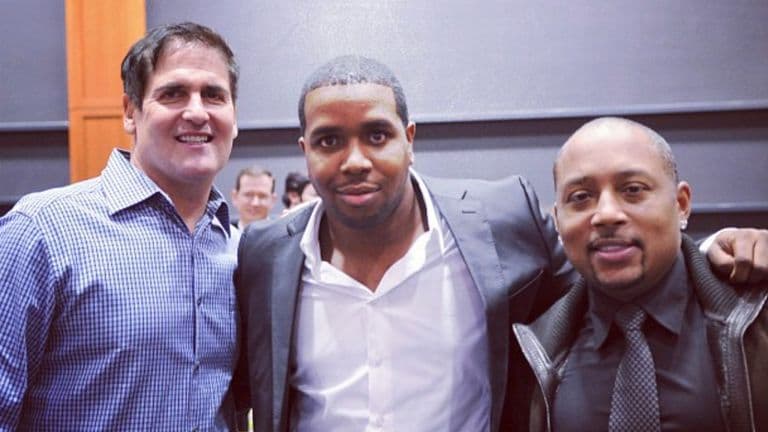
Shane Talbott, Steve Nakisher and the Talbott Teas collection. Photo: ABC/GAG
Talbott Teas at a glance
| Detail | Verified information |
|---|---|
| Founders | Shane Talbott and Steve Nakisher |
| Product | Premium blended teas |
| Shark Tank season | Season 3 |
| Ask | $250,000 for 20% equity |
| Accepted offer | $250,000 for 35% |
| On-air Shark | Kevin O'Leary |
| Later transaction | Jamba acquired certain Talbott Teas assets |
| Acquisition date | January 27, 2012 |
| Current status | Current retail availability and ownership chain not verified |
The timing is important: the acquisition happened after filming but before the February 17, 2012 broadcast. It did not occur because viewers saw the episode and then Jamba made an offer.
See the complete lineup in our Shark Tank Season 3 products, deals and updates guide.
What was Talbott Teas?
Talbott Teas developed premium tea blends with an emphasis on flavor combinations, presentation and gift-ready packaging.
Shane Talbott brought product and hospitality experience, while Steve Nakisher helped build the business. Together they positioned the tea above mass-market bags, aiming at customers interested in distinctive blends and a more polished brand experience.
The product fit a category that could sell through several channels: direct orders, specialty retail, hospitality and food-service partnerships. That flexibility became significant when the business attracted Jamba's interest.
What happened during the Shark Tank pitch?
Talbott and Nakisher asked for $250,000 in exchange for 20% equity, implying a $1.25 million valuation.
Kevin O'Leary offered $250,000 for 35%, and the founders accepted. The accepted terms implied a valuation of about $714,286.
| Pitch figure | On-air result |
|---|---|
| Amount requested | $250,000 |
| Equity initially offered | 20% |
| Accepted offer | $250,000 for 35% |
| Shark | Kevin O'Leary |
| Implied valuation of accepted offer | About $714,286 |
The episode also featured The Last Lid, Ledge Pillow and M3 Girl Designs.
Did the Kevin O'Leary deal close?
The post-filming relationship extended beyond the on-air handshake, but the exact final ownership structure is not public in the sources reviewed.
A Jamba acquisition announcement republished by Daymond John describes O'Leary, John and Barbara Corcoran assisting with the transaction. Contemporary Windy City Times reporting also interviewed the founders about the acquisition.
Those sources support meaningful Shark involvement after filming. They do not establish that the exact $250,000-for-35% television terms remained the final capitalization or specify how ownership was divided among the Sharks.
The responsible conclusion is that the founders worked with Shark investors after the pitch and moved toward the Jamba asset sale, without assigning unsupported final equity percentages.
What did Jamba acquire?
Jamba's SEC filing records an acquisition of certain Talbott Teas assets on January 27, 2012.
The accounting disclosure reported approximately $0.4 million in cash at closing and recognized a $1.4 million fair-value contingent liability. Those amounts should not be simplified into a claim that the founders received $1.8 million in cash.
A contingent liability represents the estimated fair value of potential future payments under specified conditions. The filing excerpt does not establish that every contingent dollar was ultimately paid.
It is also more accurate to call this an asset acquisition than to say Jamba necessarily purchased every element of the original company.
Why did the acquisition happen before the episode aired?
Shark Tank episodes are filmed well before broadcast. Founders can negotiate contracts, work with investors or complete transactions during that gap.
Talbott Teas aired on February 17, 2012, but the SEC filing dates Jamba's asset purchase to January 27. The acquisition therefore followed filming while preceding the public broadcast.
This chronology prevents a common reporting error. Television viewers learned about the company after the transaction had already closed, even though the episode presented the pitch as a new negotiation.
Is Talbott Teas still in business?
The historical Jamba transaction is verified, but the original brand's present retail status is less clear.
During this review, the former Talbott Teas domain was not accessible, and we did not verify a current official catalogue or a complete ownership chain after the Jamba acquisition.
Current assessment: Talbott Teas was acquired through an SEC-documented asset transaction. Current original-brand sales and ownership were not established, so the company should not be described as actively selling today without fresh evidence.
The acquisition itself remains a significant outcome, even if the original branded products are no longer easy to find.
Talbott Teas valuation and net worth
Several different figures belong to separate moments:
- The founders' ask implied a $1.25 million valuation.
- O'Leary's accepted offer implied about $714,286.
- Jamba's filing reported $0.4 million cash at closing and a $1.4 million contingent liability at fair value.
None of these numbers is a verified present-day net worth. The accounting values do not prove a $1.8 million cash payout, and the pitch valuations do not establish current company value or the founders' personal wealth.
Older claims of $3 million in annual revenue or a $4.2 million company value were not supported by the primary documents reviewed and have been removed.
What founders can learn from Talbott Teas
Talbott Teas shows how investor value can extend beyond the check offered on television. O'Leary, John and Corcoran were connected to a strategic transaction that placed the tea assets with a larger food-and-beverage company.
It also demonstrates why transaction language matters. Buying selected assets is not automatically the same as purchasing all shares of a company. Cash paid at closing is not the same as contingent consideration, and announced potential value is not necessarily the amount ultimately received.
Finally, founders and editors must track filming, closing and broadcast as separate dates. Otherwise, a transaction completed before airtime can be mistakenly attributed to post-broadcast exposure.
Frequently asked questions
Who founded Talbott Teas?
Shane Talbott and Steve Nakisher founded and pitched Talbott Teas.
How much did Talbott Teas ask for?
The founders asked for $250,000 for 20% equity.
What deal did Kevin O'Leary offer?
O'Leary offered $250,000 for 35%, and the founders accepted on television.
Did Sharks work with Talbott Teas after filming?
Yes. A published acquisition announcement describes Kevin O'Leary, Daymond John and Barbara Corcoran assisting with the Jamba transaction.
When did Jamba acquire Talbott Teas?
Jamba's SEC filing dates the acquisition of certain assets to January 27, 2012.
Did Jamba pay $1.8 million in cash?
The filing reports about $0.4 million cash at closing and a $1.4 million fair-value contingent liability. It does not establish a $1.8 million cash payment.
Is Talbott Teas still sold?
We could not verify a current official product catalogue or complete present-day ownership chain.
What is Talbott Teas worth today?
No reliable public evidence establishes a current valuation, revenue figure or founder net worth.
The weekly question
From obsession to clarity — one original question every week.
We answer one noisy topic at a time, in full. No daily roundup, no thread bait — just the question, the principles, and the system.