
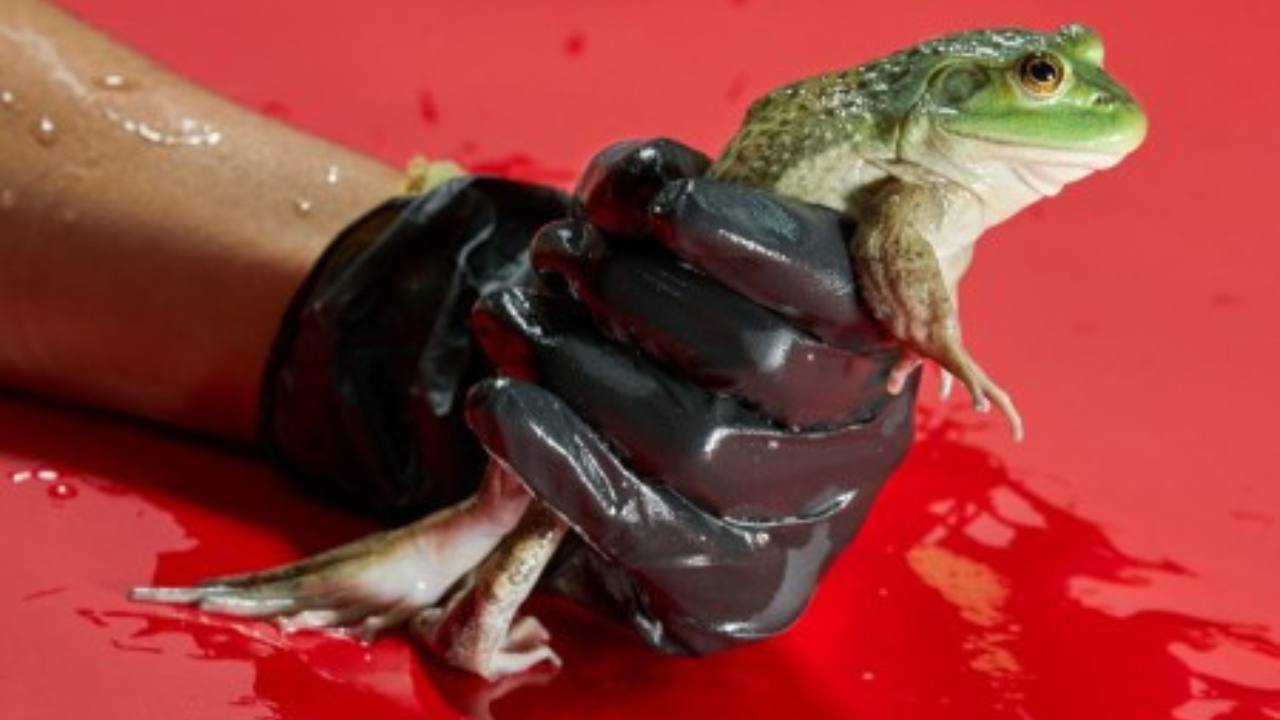
A new study has traced the origin and worldwide spread of a deadly amphibian fungus to the commercial bullfrog trade. By combining museum specimens, DNA analysis, and global trade records, scientists uncovered how bullfrogs transported the pathogen across continents. The findings reveal how wildlife markets quietly helped move one of the most damaging diseases in amphibian history.
Who Did the Research
The research was conducted by a team of disease ecologists and conservation biologists at the Universidade Estadual de Campinas in Brazil.
The group collaborated with international partners in the United States, France, and Taiwan who contributed expertise in genomics, amphibian pathology, and global trade analysis. Together, the team combined historical museum work with modern DNA sequencing to map the movement of the fungus across continents. The study was published in the journal Biological Conservation in October 2025.
The Problem Scientists Needed to Solve
For decades, researchers have known that Batrachochytrium dendrobatidis (Bd), the fungus behind the devastating amphibian disease chytridiomycosis, exists in several genetic lineages. One of them, called Bd BRAZIL, appears far less widespread than the globally dominant pandemic lineage.
But scientists could not answer key questions about where Bd BRAZIL originated, how it traveled between continents, and why it appears in distant places such as the United States, South Korea, and Japan. Without these answers, it has been difficult to understand how global trade influences wildlife pandemics.
How the Discovery Was Made
The research team combined three types of evidence to uncover the historical spread of the fungus.
Historical Museum Specimens
They examined more than 2,000 preserved amphibians collected from the 1800s onward. Using non invasive DNA testing, they identified when and where Bd first appeared.
Genetic Sequencing
Scientists sequenced fungal DNA from infected bullfrogs and compared it with known Bd lineages. This allowed them to map which frogs carried Bd BRAZIL and how samples were genetically related.
Global Bullfrog Trade Records
Researchers analyzed more than 3,600 international trade routes involving live bullfrogs. These records showed how animals moved between Brazil, the United States, East Asia, and other regions.
What Is New in This Study
This is the first study to show strong evidence that Bd BRAZIL originated in Brazil, based on the earliest detections in museum specimens and native species. The findings link the lineage’s international spread directly to the expansion of bullfrog farming and trade beginning in the early 1990s.
The team also showed that bullfrogs often carry the fungus without dying, allowing them to spread the pathogen quietly across borders. Genetic analysis revealed that Bd BRAZIL strains in the United States, South Korea, and Japan closely match samples from Brazilian farms.
Measured Evidence and Key Findings
Testing showed that 51 percent of bullfrogs from Brazilian farms carried the Bd BRAZIL lineage. Some historical Bd BRAZIL samples in Brazil date back to 1916, decades before bullfrog farming began. Trade records show 3,617 documented routes for live bullfrogs, with the United States and Taiwan serving as major distribution hubs.
Bullfrog genotypes in East Asia and U.S. markets matched those from Brazilian farms, supporting a Brazil to Asia spread pattern. Overall, fungal DNA patterns and trade movement data align closely.
Why This Matters Now
This research arrives at a critical moment for global biodiversity. Chytridiomycosis has caused declines in more than 500 amphibian species worldwide, making it one of the most destructive wildlife diseases ever documented.
Understanding how Bd lineages move across borders can improve wildlife trade policies, prevent future pathogen spread, and strengthen screening programs for live animal shipments. The findings show that trade, not only ecology, drives wildlife pandemics.
Lead author Luisa Ribeiro explains why the team focused on bullfrogs:
“Bullfrogs tolerate the fungus and move around the world in high numbers. That combination makes them ideal carriers.”
The statement highlights how animals that survive infection can still spread the pathogen, creating hidden pathways for global transmission.
Real World Applications
Stronger Import Controls
Countries may need mandatory testing of live amphibians before shipment or entry.
Clean Trade Programs
Farms could adopt environmental DNA screening and water treatment systems to limit fungal spread.
Conservation Planning
Wildlife agencies can identify regions at highest risk of new introductions and act earlier.
Pathogen Monitoring
The study’s methods can help detect and track other wildlife diseases affecting reptiles, bats, and fish.
What Comes Next
The researchers note the need for more genetic testing of museum specimens in Asia, improved genomic tools for degraded samples, and expanded sampling of bullfrog farms worldwide. They also recommend stricter regulations on amphibian transport, including quarantine systems similar to those used for livestock.
This study reshapes our understanding of how a deadly amphibian fungus traveled the world. The evidence strongly supports that Bd BRAZIL began in Brazil and spread internationally through the bullfrog trade. As global wildlife markets expand, the findings show that regulating live animal transport is essential to preventing future biodiversity crises.
Related Reading
New research shows that extreme heat can disrupt the finely tuned cooling system inside honey bee hives. Smaller colonies are at the greatest risk as rising global temperatures intensify these dangerous heat events.
Read the Full Story