

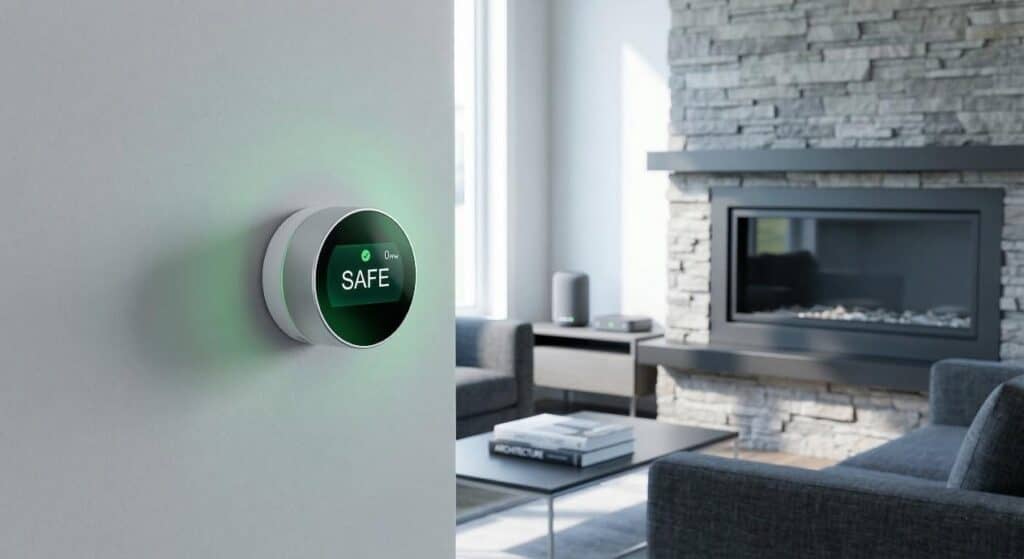
Smart Safety: High-Tech Sensors Every Fireplace Owner Needs
Smart safety for fireplaces helps homeowners detect carbon monoxide, monitor chimney heat, track moisture, and improve airflow for a safer, more efficient home.
For many of us, the fireplace is the ultimate low-tech comfort. It is a simple combination of wood, stone, and fire that has kept humans warm for thousands of years. But even this ancient feature can benefit from a modern upgrade. If you love technology and want to make your home as safe as possible, there are several “smart” gadgets and sensors that can take the guesswork out of chimney maintenance.
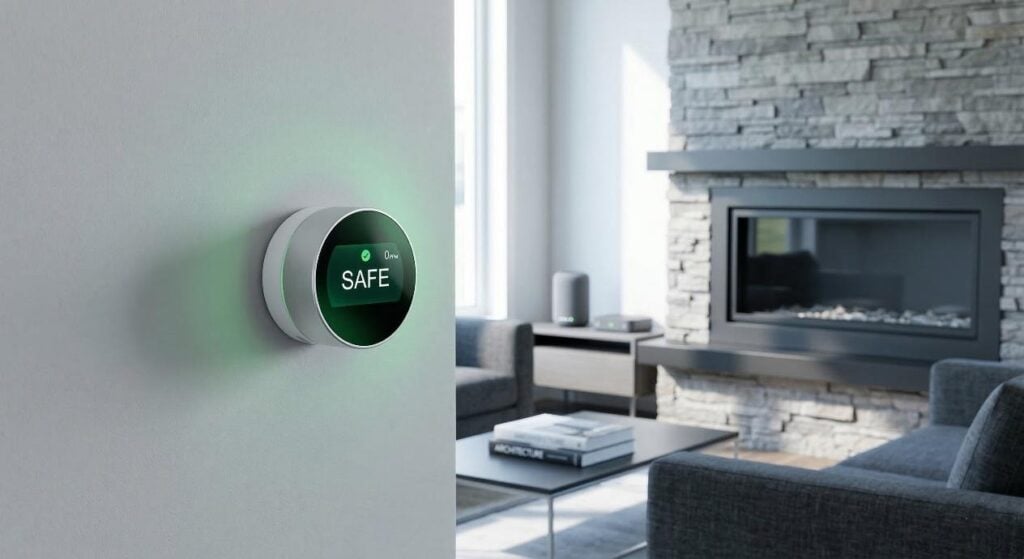
In a modern smart home, we have sensors for our front doors, our water pipes, and our light bulbs. It only makes sense to apply that same level of intelligence to our fireplaces. By installing a few key pieces of technology, you can detect invisible threats like carbon monoxide, monitor moisture levels in your masonry, and even get an early warning if your chimney is getting too hot. Here is how to use technology to create a safer, smarter hearth.
The Essential Carbon Monoxide Monitor
Every home with a fireplace must have a carbon monoxide (CO) detector. This is not optional. Carbon monoxide is a byproduct of burning wood, and it is known as the “silent killer” because it has no smell, no taste, and no color. If your chimney is blocked or if your house is too airtight, this gas can build up inside your living space.
While basic CO detectors are fine, a smart version is much better. Smart CO monitors connect to your home’s Wi-Fi and send an alert to your phone the second they detect a problem. This is critical because it protects your family even if you are not in the room or even if you are away from home. If your smart alarm goes off while you are at work, you can call for an emergency chimney sweep to investigate the blockage immediately. This high-tech early warning system provides a layer of security that traditional alarms simply cannot match.
Smart Heat Sensors for the Chimney
One of the biggest risks of owning a wood-burning fireplace is a chimney fire. These fires happen when creosote inside the flue ignites. Often, these fires start small and quiet, burning inside the walls where you cannot see them. By the time you notice the smell or the roaring sound, the damage might already be done.
A smart chimney heat sensor is a game-changer for fire prevention. These devices use a probe or an infrared sensor to monitor the temperature inside the flue. You can set a “safe” temperature range on your smartphone app. If the sensor detects that the heat is rising too fast or has reached a dangerous level, it will trigger an alarm. This allows you to extinguish the fire or call for help before a small spark turns into a structural disaster. It is like having a digital fire marshal watching your chimney twenty-four hours a day.
Moisture Meters for Masonry Health
If you live in a place with heavy snow and rain, water is a constant threat to your chimney. Moisture is the number one cause of masonry failure. When water gets into the bricks, it can cause them to crack and crumble. Most homeowners do not realize they have a moisture problem until they see a leak on their ceiling.
A digital moisture meter is a simple tool that every “techy” homeowner should own. You can use it to check the moisture levels of the bricks around your hearth and the exterior stack. If the meter shows high levels of water retention, it is a sign that your chimney crown is cracked or your bricks need a new waterproof seal. Catching moisture issues early prevents the need for a total chimney rebuild later on. By using data instead of just looking for visible drips, you can fix structural issues while they are still small and affordable.
Automated Dampers and Airflow Tech
The damper is the “door” of your chimney. If you leave it open when the fire is out, you are essentially leaving a window open, letting all your heated air escape. Smart home enthusiasts are now looking toward automated damper systems that can be integrated into home automation platforms.
These systems can use sensors to detect when a fire is lit and automatically open the flue. More importantly, they can detect when the fire is completely out and the temperature has dropped, safely closing the damper to save on energy costs. This prevents human error—like forgetting to open the flue before lighting a match—and ensures your home remains energy efficient. It is a perfect example of how small pieces of technology can make a big difference in the daily operation of your home.
Inspection Cameras and Scopes
Technicians have been using specialized cameras for years, but now high-quality inspection scopes are becoming more accessible to homeowners who like to do their own basic checks. A Wi-Fi-enabled borescope can be attached to your phone, allowing you to peek up into the smoke chamber or check the condition of the damper.
While a homeowner’s scope does not replace a professional inspection, it is a great tool for mid-season checkups. You can take photos of the interior and compare them year-over-year to see how much soot is building up. Having this visual data makes it much easier to decide when it is time to call in the professionals for a deep clean. It turns the “mystery” of the chimney into a clear, manageable part of your home’s data profile.
Creating a Connected Safety System
The ultimate goal of adding tech to your fireplace is integration. Ideally, your CO detector, your heat sensors, and your smart cameras should all talk to the same hub. When your home automation system knows that a fire is burning, it can adjust your HVAC system to prevent negative pressure, ensuring a perfect draft every time.
Smart technology takes the worry out of the fireplace experience. Instead of wondering if the flue is clean or if the bricks are dry, you have real-time data on your phone. It allows you to enjoy the traditional, rustic comfort of a wood fire while benefiting from the most advanced safety protocols available today.
Conclusion
A fireplace does not have to be a dangerous or high-maintenance feature. By embracing smart sensors and digital monitors, you can protect your property and your family with precision. From detecting invisible gases to monitoring the health of your bricks, technology provides the insights you need to be a responsible and tech-savvy homeowner. Invest in these smart safety tools this year and enjoy the peace of mind that comes with a truly connected home.
From obsession to clarity — one original question every week.
We answer one noisy topic at a time, in full. No daily roundup, no thread bait — just the question, the principles, and the system.