See.Shell Waste Shark Tank Dubai: Turning Seafood Waste Into Living Reefs
Seashell West Shark Tank Dubai revealed how seafood waste could rebuild oceans and spark a new business opportunity.
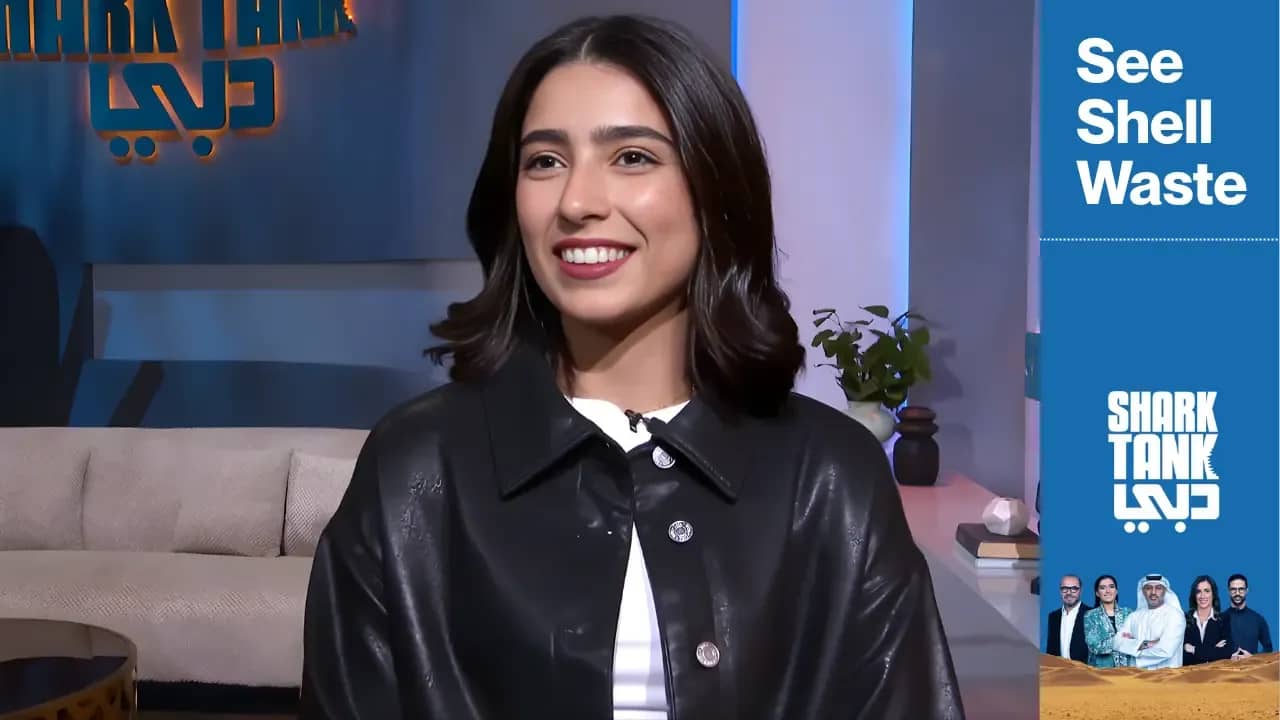
Every seafood meal hides a problem most people never see. Millions of discarded shells end up in landfills every year, quietly damaging the environment.
For Dalal Jaber, this wasn’t just waste. It was a childhood memory turned into a bold business idea. Growing up by the coast with her fisherman father, she saw shells differently.
When she entered Shark Tank Dubai, she didn’t just pitch a product. She pitched a new way to rebuild oceans.
Shark Tank Pitch Summary: See.Shell Waste
| Category | Details |
|---|---|
| Founder | Dalal Jaber |
| Business | See.Shell Waste |
| Ask | 700,000 AED |
| Equity Offered | 15% |
| Product | Eco-material made from recycled seashells |
| Core Idea | Turn seafood waste into reef-building material |
| Outcome | No deal |
This pitch stood out because it blended sustainability, science, and business potential. But it also revealed a key gap that many Dubai founders face.
The 7 Million Shell Problem (And Why It Matters)
Here’s the shocking reality: around 7 million shells are wasted globally every year. Most restaurants treat them as useless waste.
Dalal flipped that idea completely. Instead of seeing disposal costs, she saw hidden value.
She explained her vision clearly:
“I want to take this wealth and turn it into a natural material.”
This is what made her idea powerful for a Dubai audience. It wasn’t just eco-friendly. It was a new business model hidden inside waste.
In a region like the UAE, where sustainability is rising fast, this kind of thinking creates real opportunity.
How See.Shell Waste Actually Works
The idea sounds simple, but the process is highly engineered.
Dalal collects discarded shells from restaurants. These shells are then ground into a fine powder rich in calcium.
This powder is mixed with natural materials to create a strong, eco-friendly composite. The result is a material that can safely go back into the ocean.
The real innovation lies in biological compatibility. Unlike traditional materials, this one allows coral and marine life to grow naturally.
- Reduces waste from seafood industries
- Rebuilds damaged marine ecosystems
This dual impact makes it both environmentally and commercially attractive.
From Ocean Floors to Luxury Markets
Dalal didn’t stop at environmental impact. She built a vision that connects sustainability with business growth.
Inspired by underwater museums like those in Cancun Underwater Museum, she proposed creating reef-based attractions.
These structures could attract divers, boost tourism, and support marine life. That’s a powerful combination for Dubai’s tourism-driven economy.
But the immediate revenue strategy was even smarter.
- Commercial furniture
- Home décor products
This allows the business to generate income first. Then, it can reinvest into large-scale reef restoration.
For investors, this approach answers a critical question: How does this idea make money now, not later?
Why the Sharks Said No (And Why It Matters)
Despite the strong concept, the Sharks walked away.
This wasn’t about the idea. It was about execution.
They pointed out three key issues:
1. No Clear Business Model
The concept was strong, but the revenue path was still unclear. Investors need predictable returns.
2. Too Early Stage
The project required more research, testing, and scientific validation. It wasn’t market-ready yet.
3. Missing Business Partner
Dalal is a talented designer. But the Sharks wanted to see a co-founder focused on business growth.
“You have excelled in the product, but there is no clarity in the business case.”
This moment is important for Dubai entrepreneurs. Many ideas fail not because they are weak, but because they are not ready.
The Bigger Lesson for Shark Tank Dubai Founders
Dalal’s journey highlights something every UAE founder should understand.
In Dubai, investors are not just buying ideas. They are buying execution, scalability, and clarity.
- Waste can become wealth if you rethink the system
- Sustainability alone is not enough without a business model
- The right team can make or break a startup
Even without a deal, her pitch achieved something valuable. It brought global attention to a new way of thinking about marine conservation.
A Beginning, Not an Ending
Dalal Jaber didn’t leave Shark Tank with funding. But she left with something more important.
She now has clear direction.
Her next steps include building a scientific team and finding the right business partner. With those pieces in place, See.Shell Waste could move from concept to scalable company.
In your business, are you throwing away value without realizing it?
Because sometimes, the biggest opportunity is hidden in what everyone else ignores.
Related Reading
Milkapp startup journey and Shark Tank outcome
Read the Full StoryThe weekly question
From obsession to clarity — one original question every week.
We answer one noisy topic at a time, in full. No daily roundup, no thread bait — just the question, the principles, and the system.