
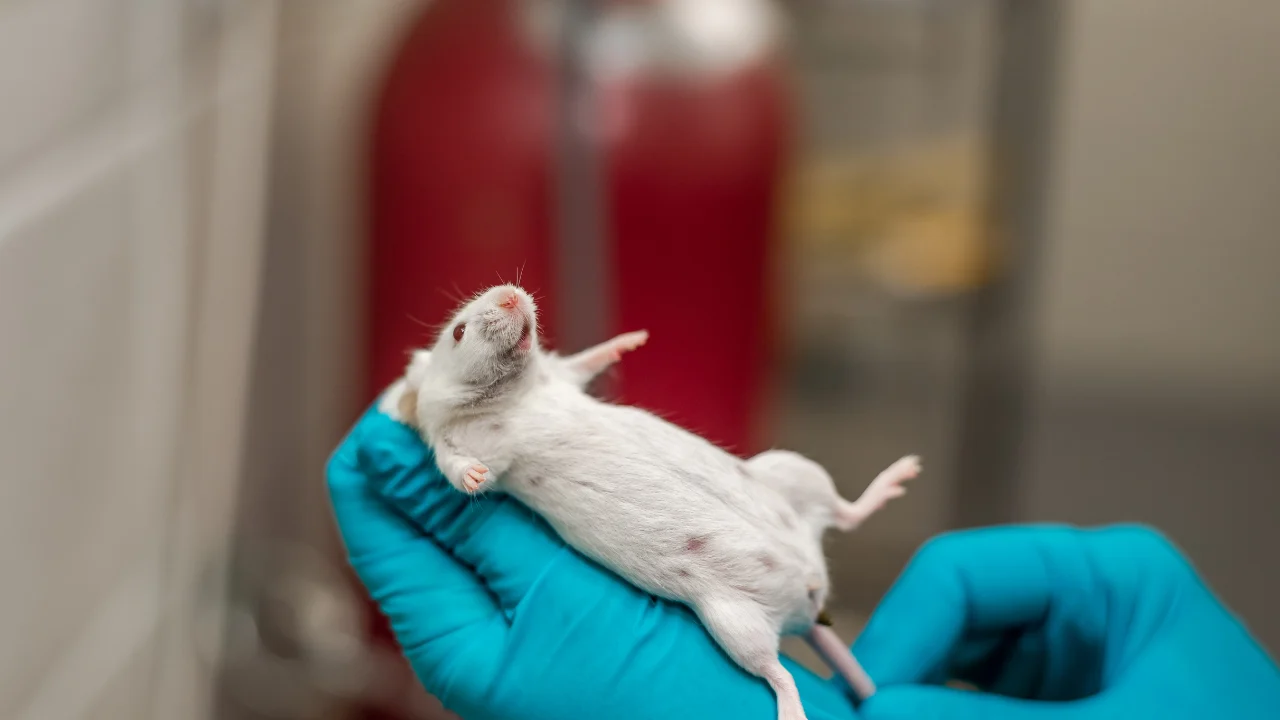
The new research lands with unusual urgency because it focuses on mice already deep into old age. Scientists at the University of California, Berkeley tested a combination of oxytocin and an Alk5 inhibitor, a drug that softens a harmful aging pathway. They report that this mix reversed key signs of aging and boosted lifespan in old male mice by more than seventy percent, a result rarely seen so late in life.
Study: Researchers tested a two-drug approach targeting aging signals in old mice. Finding: The combination improved mobility, strength, memory, and survival. Why it matters: The results suggest aging can be shifted toward a more youthful state. Next: Scientists plan deeper tests to understand safety, timing, and long-term effects.
The core discovery is simple but powerful. Aging pushes certain molecular signals in opposite directions. One pathway called TGF-beta becomes too active and drives inflammation and tissue decline. Another hormone, oxytocin, shrinks with age and weakens repair. The researchers showed that correcting both at once restored the balance young bodies naturally maintain. This dual-action approach created stronger gains than past single-drug attempts.
To prove it, the team ran one of the most demanding tests in longevity research. They took 25-month-old mice, roughly equal to 75-year-old humans, and treated them with oxytocin plus an Alk5 inhibitor in repeating cycles. They measured movement, strength, memory, and hundreds of new proteins made in the blood. They also used a technique similar to tagging new proteins with a molecular highlight marker so they could track how the animals’ internal chemistry changed in real time.
The results matter because they go far beyond simple life extension. The treated mice moved better, remembered objects longer, ran farther on treadmills, and stayed healthier even after reaching frailty. Their risk of death dropped almost threefold. These changes suggest that aging is not a slow fade but a set of shifting signals that can be pushed back toward youthful levels. That insight may guide new therapies for diseases tied to inflammation, tissue decline, or impaired repair.
Researchers say the surprise came from the strong sex difference. Old male mice improved dramatically, while old females showed no life- or health-span gains. Yet in middle-aged females, the same drug mix boosted fertility. The team believes hormonal interactions may explain the split, and they emphasize that these differences need more study before any human testing begins. The contrast adds scientific tension and raises new questions about how aging works in each sex.
The study also links to bigger issues in modern science. Many age-related diseases involve chronic inflammation and miscommunication between cells. The treated mice showed youthful shifts in networks such as JAK-STAT, MAPK, and TNF, which also play roles in cancer, metabolic disease, immune aging, and even how the body responds to infections. If these pathways can be safely tuned in humans, the approach could influence far more than longevity.
Next, the team will focus on why female mice lost responsiveness after four months, how long the benefits last, and whether low-dose, periodic treatment could maintain youth-like signaling. They also want to test whether similar results appear in other strains of mice or animals with different genetic backgrounds. Importantly, both components of the therapy already exist in medical settings, which may speed future research.
Taken together, this study points to a clear takeaway. Aging may not be a one-way decline but instead a shift in competing signals that can be rebalanced. The findings suggest that targeting two opposite aging pathways at once may offer a practical path toward aging reversal, healthier lives, and new treatments for age-linked diseases.
Story Source:
Materials provided by University of California, Berkeley. Content may be edited for style and length.
Journal Reference:
Kato C, Zheng J, Quang C, Siopack S, Cruz J, Robinson ZR, Fong N, Zhang ZA, Young P, Conboy MJ, Conboy IM. Sex-specific longitudinal reversal of aging in old frail mice. Aging (Albany NY), 2025. 17(9). DOI: 10.18632/aging.206304