
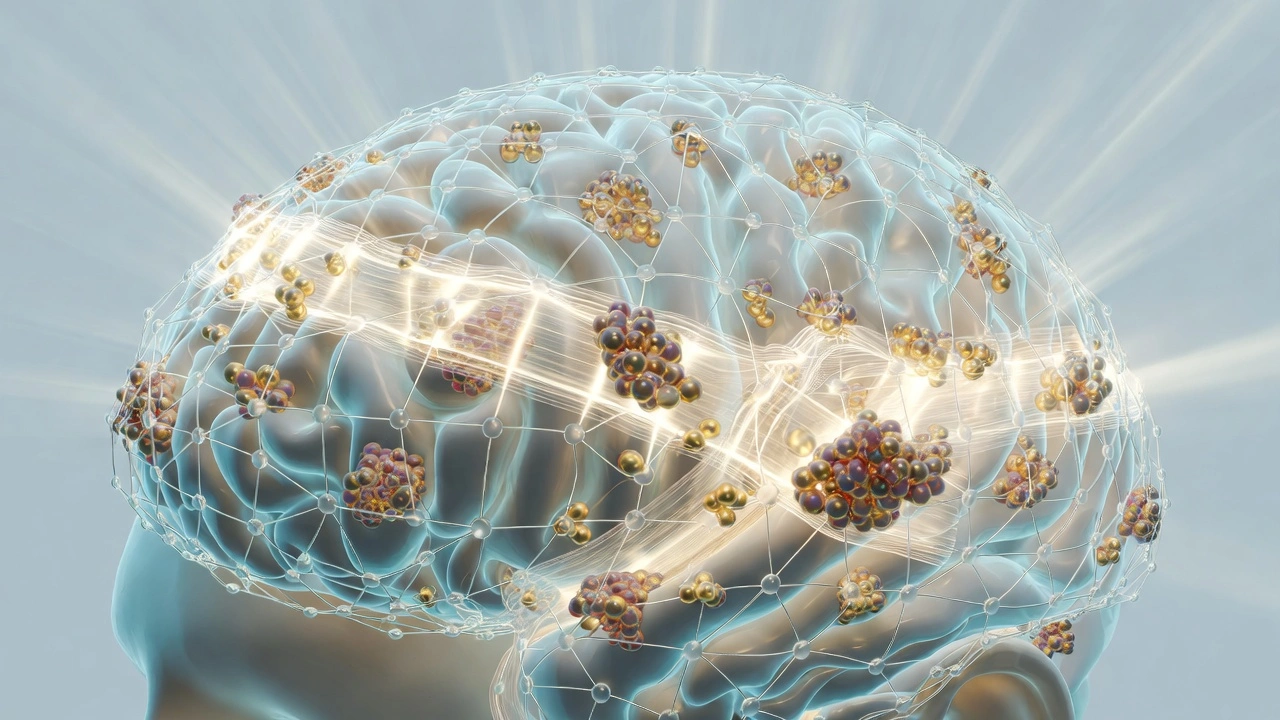
Alzheimer’s has challenged science for decades. Many treatments have slowed symptoms, but very few have changed the biology of the disease. A new study now suggests that researchers may have found a promising new path. Instead of trying to attack the plaques inside the brain, the study focused on something that protects the brain every second of our lives. It is the blood brain barrier, which acts like a filter and a security gate. When this barrier breaks down, harmful proteins stay inside the brain and start to form plaques that affect memory and thinking.
This new research shows that repairing this barrier allowed the brain to clear nearly half of these toxic proteins in only a few hours. Even more surprising, a single treatment restored memory and learning in Alzheimer’s mice for half a year. For a disease that affects millions of families, this discovery could change everything about how we understand and treat Alzheimer’s.
“Most current Alzheimer’s treatments try to remove amyloid beta or protect neurons once damage has already occurred. But by that stage, the brain’s protective barrier is already breaking down. We focus on repairing this barrier because it sits at the root of the problem.”
Professor Giuseppe Battaglia, lead researcher
Fast Facts
The Breakthrough That Cleared Alzheimer’s Plaques in Hours
Researchers discovered that a key receptor called LRP1 plays a major role in removing amyloid beta from the brain. Amyloid beta is the protein that forms the sticky plaques linked to Alzheimer’s. In a healthy brain, LRP1 works like a cleaning crew that moves this protein out of the brain and into the bloodstream.
In Alzheimer’s, this cleaning system breaks down. LRP1 becomes damaged and the blood brain barrier loses its ability to transport harmful proteins. This failure acts like a broken filter that cannot clear debris. As a result, plaques form and continue to build.
To solve this problem, scientists created tiny nanocarriers called A40 PO polymersomes. These nanocarriers are designed to bind to LRP1 with just the right strength. Instead of overwhelming the receptor or blocking it, the nanocarriers guide LRP1 back into normal activity. This process trains the barrier to restart its natural cleaning function.
In the study, Alzheimer’s mice that received the treatment showed a rapid drop in amyloid beta. Within two hours, almost 45 percent of the toxic protein had moved out of the brain. The rise of amyloid beta in the mice’s blood confirmed that the brain had pushed the protein out through the repaired barrier.
“The results are surprisingly durable. Once the barrier’s transport system is restored, the brain can clear harmful proteins on its own. Even months later, we see better memory performance and brain function.”
Professor Giuseppe Battaglia
What This Discovery Means for the Future of Alzheimer’s Treatment
For many years, Alzheimer’s drugs have targeted the plaques themselves. These drugs often struggle because they cannot cross the blood brain barrier. Even when they do, the barrier sometimes sends the drugs back into the bloodstream before they reach the brain. This has limited the success of many treatments.
“In Alzheimer’s disease, the protective blood brain barrier can become less effective, which harms the brain. This study showed that restoring the barrier allowed the removal of amyloid from the brain in mice. It adds to the growing evidence that repairing the barrier itself may offer a new way to treat Alzheimer’s.”
Dr. Julia Dudley, Alzheimer’s Research UK
This new study takes a different approach. Instead of forcing treatments through the barrier, it repairs the barrier’s own transport system. This shift may help scientists treat the disease earlier, before plaque buildup becomes severe.
The findings suggest that Alzheimer’s may not only be a problem of plaque formation. It may begin when the brain’s filter stops working correctly. When the filter breaks, harmful proteins accumulate, and the brain begins to lose its ability to protect itself. Fixing this system helps the brain clear these proteins naturally, which is why the results of the study were so fast.
If these results translate to humans, future treatments could help people long before memory loss becomes permanent. More research is needed, but the idea of repairing the barrier instead of removing plaques directly gives scientists a fresh direction.
How the Treatment Works Inside the Brain
The blood brain barrier exists to protect the brain from dangerous substances in the blood. It allows nutrients to pass through but blocks toxins. LRP1 is one of the receptors that moves waste out of the brain. When its normal cycle breaks, the brain loses an important cleaning tool.

Source: Battaglia et al., Cell Research (2025), Springer Nature. Reproduced for educational reporting.
The nanocarriers in the study are designed to give LRP1 a gentle signal that restores this natural cycle. As a result, the barrier can move amyloid beta out again. Researchers found that the treatment also increased the overall amount of LRP1 in the barrier. Higher levels of this receptor made the transport system stronger and more stable.
“By restoring blood brain barrier function and clearing amyloid beta efficiently, we were able to reverse Alzheimer’s pathology in our models.”
Dr. Lorena Ruiz Perez, IBEC and University of Barcelona
The approach avoids forcing drugs through the barrier. Instead, it improves the barrier’s own ability to clear toxins. This makes it different from many Alzheimer’s drug strategies tested in the past.
What Happened in the Mouse Trials
The results of the mouse study were clear and impressive. After receiving the treatment, the mice cleared a large amount of amyloid beta in a very short time. Blood tests confirmed that the protein had been moved from the brain into the bloodstream.

Source: Battaglia et al., Cell Research (2025), Springer Nature. Reproduced for educational reporting.
The most important finding appeared in the behavioral tests. The mice regained learning and memory abilities and performed as well as healthy mice. This improvement lasted for six months, which is a long time in the life of a mouse. The results suggest that repairing the barrier may help the brain recover important functions.
Related Reading
A new copper based Alzheimer’s therapy is showing strong early results in restoring brain function and improving memory in preclinical tests. This research offers another promising path toward slowing or reversing early cognitive decline.
Read the Full StoryWho Could Benefit From This Discovery
If this therapy works in humans, it could help patients in several ways. People in the early stages of Alzheimer’s could receive a treatment that slows or even reverses plaque buildup. Families could gain more time with loved ones while maintaining quality of life. Healthcare systems could shift toward earlier treatment and prevention rather than late stage care.
The discovery also affects scientists who study Alzheimer’s. It supports a growing belief that the disease involves more than plaques. Many researchers now think that vascular health, transport systems, and barrier stability play central roles.
Drug developers may also use this research to design new nanomedicines that work with the barrier instead of against it. This approach could help treat other brain diseases where transport problems appear, such as Parkinson’s disease and ALS.
What We Still Need to Learn
This study brings hope, but more research is needed. The treatment has not been tested in humans yet. Scientists must confirm that the nanocarriers are safe, effective, and long lasting in people. They also need to understand the correct dosage and how often the therapy should be given.
Even with these questions, experts see this study as an important step forward. It highlights the power of repairing core systems instead of only attacking symptoms.
A Future Where the Brain Can Clean Itself Again
“Repairing the brain’s protective barrier may open the door to earlier and more effective Alzheimer’s treatments.”
Dr. Julia Dudley
This discovery shifts the focus of Alzheimer’s research in an exciting new direction. The idea that the brain can learn to clean itself again brings new hope to families and scientists. If future studies succeed, repairing the brain’s broken filter may become one of the most important breakthroughs in the fight against Alzheimer’s.
FAQs
Repairing the blood brain barrier restores its ability to move waste materials, including amyloid beta, out of the brain. In Alzheimer’s, this barrier becomes damaged and stops transporting harmful proteins. The new treatment reactivates a receptor called LRP1, which helps the brain begin clearing toxic plaques on its own. This approach may work earlier and more naturally than current plaque-targeting drugs.
Not yet. The results so far come from controlled mouse studies, which showed fast plaque removal and improved memory. Before the treatment can move to human trials, scientists must confirm safety, dosage, and long-term effects. While the findings are promising, it will take additional research and clinical testing to determine whether the treatment is safe and effective for people.
Most Alzheimer’s drugs aim to dissolve or reduce plaques inside the brain, but many struggle to cross the blood brain barrier. This new method focuses on repairing the barrier itself so the brain can clean out harmful proteins naturally. Instead of forcing medicine through the barrier, it improves the barrier’s transport system, which may lead to faster and longer lasting benefits.