
Every year, thousands of lives are impacted by roadway collisions. Countless people turn to experts in motor vehicle accident cases when they face injuries, property damage, and an uncertain future. While these accidents remain a sobering issue globally, there is hope for real change. By prioritizing safer roadway designs, leveraging modern vehicle safety technology, and encouraging responsible behavior behind the wheel, communities can dramatically reduce both the frequency and severity of motor vehicle crashes.
Comprehensive road safety requires a joint effort by government agencies, urban planners, automakers, and drivers. In recent years, technological advances have enabled advanced vehicle safety systems, and municipalities are reimagining streets for greater protection. Just as vital are the decisions individuals make each time they drive, demonstrating that reducing crashes is truly a shared responsibility.
Moreover, cities benefit when they implement targeted public awareness campaigns to reinforce good habits and build a strong culture of safety. Laws are only effective if people understand their importance and how adherence impacts everyone’s wellbeing. Addressing hazards like distracted driving and excessive speeds, combined with infrastructure improvements, creates environments where everyone, whether motorist, cyclist, or pedestrian, is safer.
To fully understand the multifaceted approach needed for safer roads, it is crucial to examine how modern technologies, urban planning, behavioral change, and education work together to reduce accidents and save lives.
Advanced Vehicle Safety Technologies
In the past decade, automakers have transformed the driving experience by integrating state-of-the-art safety technologies. Features like automatic emergency braking, adaptive cruise control, and lane departure warning systems have gained widespread adoption. These advancements reduce human error, which is a leading cause of roadway incidents. According to the Consumer Reports automotive safety guide, advanced features can significantly lower crash rates and make injuries less severe when incidents occur. Many insurers even offer discounts for vehicles equipped with these life-saving tools, highlighting their effectiveness in everyday life.
Importance of Responsible Driving Habits
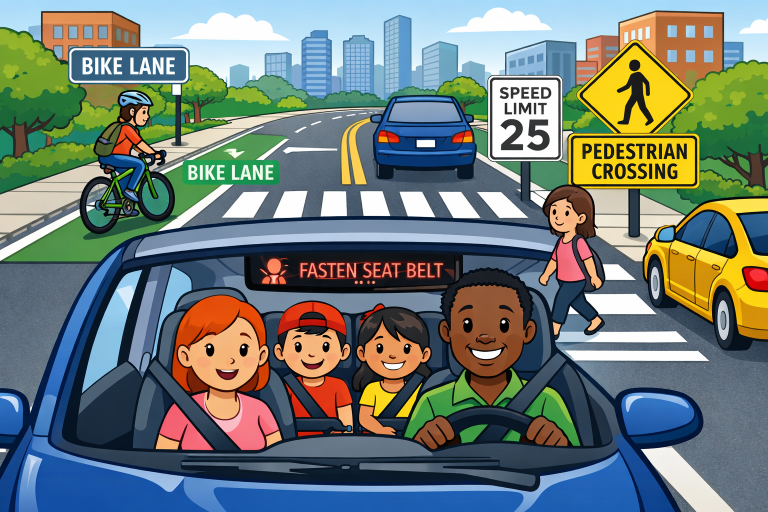
Innovative technology can only go so far; safe driving still relies heavily on driver choices. Proper seat belt usage, respectful sharing of the road, and obeying posted signs make a dramatic difference in reducing vehicle-related tragedies. The Centers for Disease Control and Prevention points out that seat belt use alone can cut the risk of fatal injury by over half. Likewise, steering clear of aggressive maneuvers and adapting to road conditions are crucial steps every motorist can take to protect their own lives and those of others.
Role of Urban Planning in Road Safety
Urban infrastructure strongly influences driver behavior and public safety outcomes. Modern road design incorporates multiple safety-focused elements: clear signage, pedestrian crossings, and protected bike lanes, all of which help prevent unnecessary collisions. Intelligent traffic management, including real-time traffic monitoring and adaptive signal control, further streamlines vehicle movement, reduces bottlenecks, and prevents dangerous conditions. Cities worldwide have begun investing in these strategies, with evidence from the World Economic Forum’s urban mobility research showing that these measures make travel safer for everyone.
Impact of Distracted Driving
Distracted driving, often involving mobile device use, remains a leading cause of road crashes. Simple distractions, such as adjusting a GPS or texting for a moment, are linked to a sharp increase in collision risk. Studies published by The New York Times reveal that distracted driving can make a person several times more likely to be involved in a serious incident. This underscores the importance of putting away devices and focusing on the road at all times. Enforcement of hands-free laws and ongoing education about the real dangers of multitasking while driving are effective steps toward meaningful change.
Benefits of Speed Limit Enforcement
Driving above the posted speed limits not only elevates the likelihood of losing control but also worsens the outcome of any resulting crash. Automated enforcement systems, such as speed cameras, are increasingly used in cities to reduce habitual speeding. According to the Insurance Institute for Highway Safety, communities that implement strict speed enforcement protocols experience measurable drops in severe crashes and fatalities. Such efforts save lives and help reinforce the norm that speed limits exist for good reason.
Influence of Weather Conditions on Driving Safety
Challenging weather conditions, such as heavy rain, snow, ice, and fog, complicate driving by reducing visibility and traction on the pavement. Experts recommend slowing down, increasing following distances, and turning on headlights in poor weather to boost reaction times and reduce the probability of collisions. As emphasized by the National Weather Service, adapting driving behavior to current weather conditions is crucial for preventing avoidable accidents when Mother Nature strikes.
Educational Campaigns and Driver Awareness
Widespread awareness initiatives are vital tools for fostering lasting improvements in road safety. Comprehensive campaigns teach drivers about the dangers of impaired or distracted driving, the necessity of seat belt use, and the perils of ignoring speed limits. These programs, often highlighted by national agencies like the NHTSA, show that informed communities make safer choices. Developing a proactive safety culture can ripple through society, creating habits that persist across generations.
Conclusion
Safer roads result from strategic investments in vehicle technology, responsible driving habits by every driver, and public and private sector leadership in urban development and education. Through a blend of advanced safety features, vigilant behaviors, thoughtful planning, and continuous public education, the devastating effects of roadway accidents can be greatly reduced. Everyone has a part to play in this vital mission to protect lives and ensure every journey ends safely.