

Experiencing a personal injury can turn your life upside down in an instant. Whether you have been hurt in a car accident, slip and fall, or workplace incident, taking prompt and informed steps directly after the event is crucial for your physical, emotional, and legal recovery. Beyond seeking healthcare, it is essential to understand that your actions in these early moments can significantly affect your ability to pursue a fair settlement. Consulting with legal professionals, such as a Denton injury lawyer, can provide crucial support and guidance throughout this process.
Understanding how to protect your rights after an injury is not just about legal strategy. It is about preserving your long-term well-being and ensuring you are not taken advantage of by other parties or insurance companies. Being proactive, thorough, and cautious are the keys to avoiding unnecessary complications and setbacks.
Many individuals make mistakes early on that jeopardize their claims or delay their recovery. This step-by-step guide is here to help you make informed decisions and avoid common pitfalls that can hinder your case. Legal experts agree that the right actions immediately following an injury can make the difference between a failed claim and a successful outcome.
By following the comprehensive approach outlined below, you will give yourself the best chance of protecting your interests, securing fair compensation, and ultimately moving forward with confidence after a personal injury event.
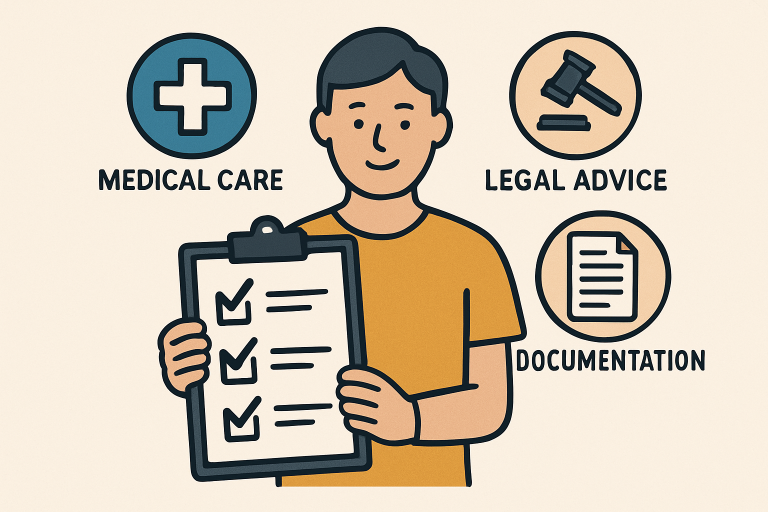
Seek Medical Attention Immediately
Your health should always be your first concern after a personal injury. Even if you feel fine or believe your injuries are minor, it is vital to see a doctor right away. Injuries sustained in accidents can sometimes have delayed symptoms, and a thorough medical evaluation will provide both the treatment you need and the documentation necessary to substantiate your claim. Make certain you describe all your symptoms, even if they seem insignificant. Relevant medical records will serve as a cornerstone of any future legal actions you may take.
Document the Incident Thoroughly
It is critical to write down every detail about what happened as soon as you are able. Record the time, date, and precise location of the incident. Create a written account describing what you were doing, what led up to the event, and exactly how it transpired. Take plenty of clear photographs of your injuries, the scene, and any property damage. Keeping a journal of your pain, symptoms, and doctor visits will also support your case and clarify the trajectory of your recovery. Thorough documentation is a crucial foundation for demonstrating the facts to insurers or a court if needed.
Report the Incident to Authorities
Depending on the setting of your injury, reporting the event to the proper authorities or parties is an important step. For example, contact law enforcement to report vehicle accidents or unsafe public conditions. If the injury occurs at work, promptly inform your employer and complete the required workplace incident forms. Official reports create a record that can legally support your claim.
Preserve Evidence at the Scene
If it is safe to do so, gather as much evidence as possible from the scene before conditions change or are cleaned up. In addition to photos, collect contact information for any eyewitnesses who can corroborate your account. Safeguard physical items that may be relevant, such as damaged clothing or personal belongings. All of this evidence will help paint a clear picture for your attorney and insurance providers, and may be decisive if a legal dispute arises.
Be Cautious When Dealing with Insurance Companies
Insurance companies look for ways to minimize the amount they pay on claims. Always remember that their representatives are not working for you. Do not provide any recorded statements, sign any releases, or accept any settlement offers until you have consulted with an attorney. Anything you say can potentially be used to devalue or deny your claim. Insist that all communication be documented and reviewed, preferably with professional legal guidance on your side.
Consult a Personal Injury Attorney
As soon as possible, schedule a consultation with a personal injury attorney who understands the laws in your state and has a strong track record with similar cases. A qualified lawyer can guide you through negotiations, ensure critical deadlines are met, and help you avoid costly mistakes. They will also manage communications and negotiations with insurance companies, giving you a crucial advocate as you recover.
Avoid Discussing Your Case on Social Media
In the digital age, insurance adjusters and opposing counsel routinely monitor social media for posts that can be used to challenge or undermine claims. Do not post about the incident, your injuries, or your recovery process. Share details only with your attorney and avoid discussing your case with friends or extended family online or offline.
Understand the Statute of Limitations
Each state sets a strict deadline for filing personal injury lawsuits, known as the statute of limitations. If you fail to file within the prescribed period, you may permanently lose your right to compensation, no matter how valid your claim. Know the timeframe for your jurisdiction and let your attorney help ensure all legal requirements are met well in advance of any deadlines.
Final Thoughts
Being methodical and proactive in the aftermath of a personal injury will not only heighten your odds of a successful case but also allow you to focus on recovery. These steps are supported by legal professionals and are essential for anyone hoping to ensure their rights and interests remain secure throughout the process.