
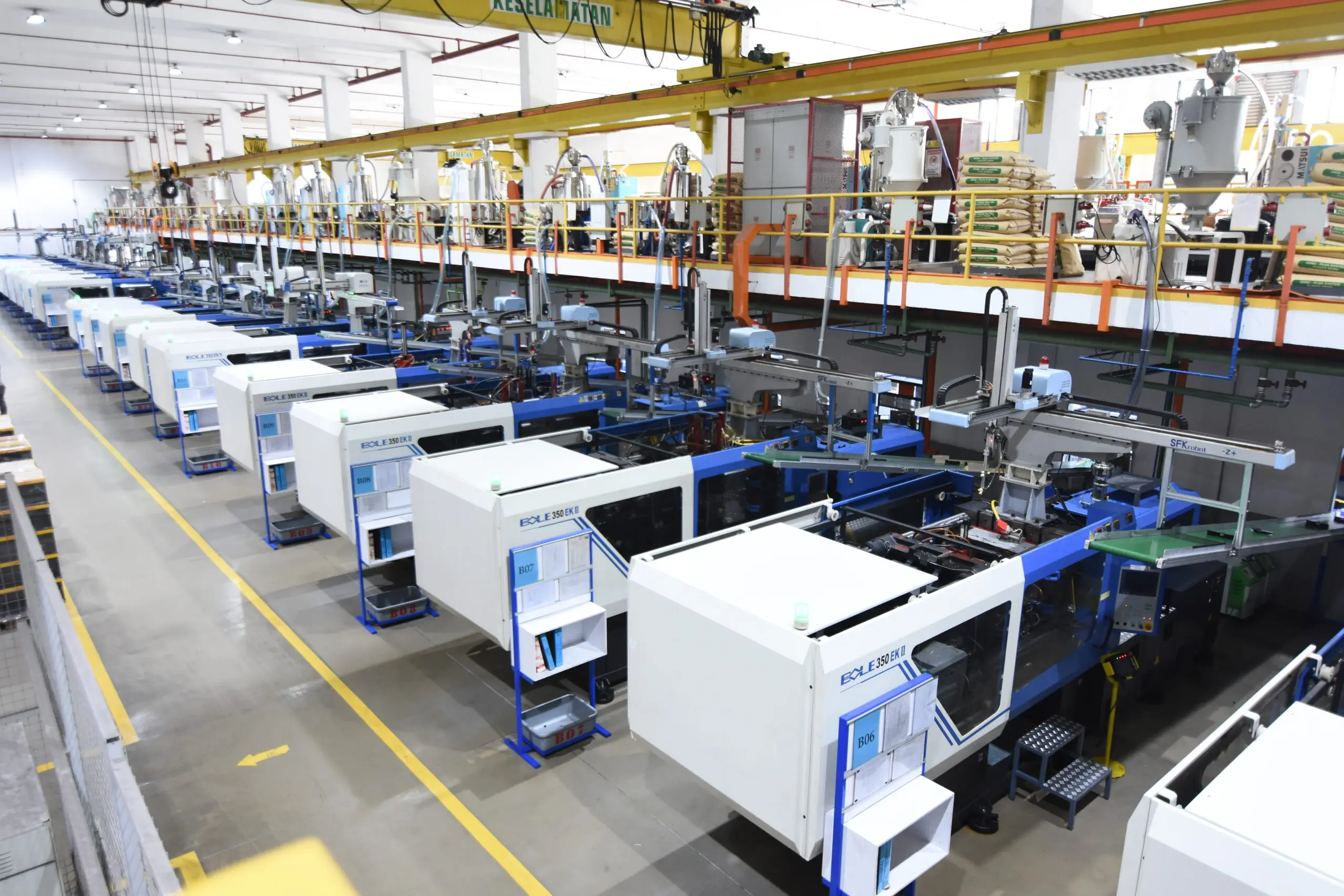
For a long time, many companies treated molding suppliers as the last stop in the process. The product team handled the design, engineering worked through the specs, purchasing found a manufacturer, and production began once everyone hoped the major decisions were already behind them.
That old sequence still exists, but it no longer works very well for products that need to launch faster, perform better, and stay profitable under real market pressure. Today, the strongest manufacturing relationships often start much earlier. They begin while the product is still being shaped, questioned, simplified, and improved.
When that happens, the supplier is no longer just a vendor. It becomes part of the thinking behind the product itself.
1. A plastic molding company starts influencing cost before the first part is made
The biggest cost decisions in a molded product are usually made long before production starts. Part geometry, wall thickness, material choice, tolerances, undercuts, draft angles, and assembly requirements all affect tooling complexity, cycle time, waste, and labor. That is why an early manufacturing partner changes the conversation so much. A plastic molding company with in-house mold design, tooling support, design-for-manufacturability experience, Moldflow and warpage analysis, and very tight tolerance capabilities can help shape a better path before expensive mistakes get baked into the design.
This is where many teams save money without cheapening the product. They are not slashing quality. They are removing avoidable complexity.
A part that looks fine on a screen can become expensive in the real world. It might need more labor than expected. It might require secondary handling that nobody planned for. It might create unnecessary scrap. Once tooling is built, those problems become harder and more expensive to fix.
When manufacturing input arrives early, teams get a more honest picture of what the product will really cost to make, not just what it seems to cost in a meeting.
2. Product development moves faster because fewer decisions have to be undone
Speed matters, but rework kills speed. That is one reason early manufacturing support has become so valuable. A molding partner that supports projects from concept and prototyping through production and assembly can help teams avoid the stop-start cycle that drags launches off schedule. The manufacturer behind this article positions its role that way, with support spanning engineering, mold design, production, and assembly rather than simple part output.
That changes the rhythm of product development. Instead of handing work off from one group to the next and waiting for bad news downstream, the team can solve manufacturability issues while there is still time to solve them cleanly.
A good partner also tends to speak up sooner. That matters more than many businesses realize. Silence during early development often turns into expensive urgency later.
The companies that launch well are often the ones that reduce handoff friction. They do not treat development like a relay race. They treat it like a connected process.
3. Reliability improves because design and manufacturing stop working against each other
Plenty of products fail in small, frustrating ways. Parts warp. Assemblies drift out of alignment. Cosmetic issues show up too late. Tolerances stack up. Components work in isolation but create problems once they come together in the field.
That is why reliability is not just about quality inspection at the end. It starts with better decisions upstream.
A manufacturer with strong design and tooling expertise can help teams think through how the part will actually behave in production and in use. On this site, that includes mold design intended to improve manufacturability and performance, material selection support across a wide resin range, and attention to reducing rework while improving assembly accuracy and automation potential.
In practical terms, that often means fewer surprises. The part is easier to mold consistently. It is easier to assemble. It performs more like the team expected it to. That kind of stability is easy to underestimate until a launch depends on it.
4. Assembly gets simpler when the molding partner is involved early
One of the most underrated benefits of early supplier involvement is assembly improvement. Many product teams focus heavily on the molded part itself and not enough on what happens after it leaves the press.
That is a mistake. A part that is hard to handle, orient, join, label, inspect, or package creates cost far beyond tooling.
When the molding company has experience with parts, assemblies, finishing services, and turnkey support, it can help spot design choices that create extra effort later. Some of the most useful changes are not dramatic. They are the kind of adjustments that make life easier across the line:
- reducing the total part count
- improving fit between components
- making part orientation more obvious
- preventing handling damage
- simplifying inspection
- supporting more accurate downstream assembly
These are not glamorous improvements, but they add up fast. They save labor. They reduce mistakes. They make scale less painful.
5. Automation readiness becomes part of the design conversation, not an afterthought
A lot of businesses say they want automation. Fewer design products that are truly ready for it.
That gap matters. A product can look great on paper and still be awkward for robotic handling, insert loading, in-mold labeling, automated transfer, or consistent downstream processing. When manufacturing joins the product team sooner, automation becomes something the team plans for rather than something it tries to force later.
The molding company behind this brief specifically highlights automation and robotics for high-volume requirements, including part loading, insert loading, part handling, overmolding transfers, custom fixtures, and full automation cells. It also frames mold design as a factor that improves the chance to automate the process. That matters for three reasons.
- First, automation can reduce labor pressure on repetitive tasks.
- Second, it helps improve consistency from part to part.
- Third, it often makes growth easier once volume picks up.
Companies that involve manufacturing earlier tend to make cleaner decisions about all three.
6. Material selection gets smarter and more realistic
Material conversations often start with performance requirements, which makes sense. The trouble begins when teams stop there.
The right resin does not just need to perform in theory. It has to mold well, hold tolerances, support the application, meet regulations where needed, and make financial sense over time. A strong molding partner can help narrow those tradeoffs before the product is locked in.
This manufacturer notes that it works with more than 80 resins in stock, spanning engineering and commodity plastics, and helps customers identify the most cost-effective method to meet performance goals and regulatory needs.
That kind of input matters more than ever in markets where product teams are balancing durability, weight, finish, cost, and availability all at once.
The best material choice is rarely the most impressive one on a spec sheet. It is the one that fits the product, the process, and the business case at the same time.
7. The product is better prepared for scale
A design that works in small quantities is not automatically ready for serious production. That is another place where an early manufacturing partner earns its place.
The company site emphasizes a broad production range, including short-run work, prototype-to-production support, quick-mold-change systems, more than 800 molds for economical shorter projects, presses up to 1,500 tons, and capacity for scalable production in the millions. It also serves industries such as medical, automotive, aerospace, defense, technology, and consumer products.
Those details point to something important. Product development is not just about getting to first parts. It is about building toward a stable, repeatable, supportable production future. That is especially true for companies facing one of these situations:
- a launch that starts small and ramps quickly
- a transfer from another supplier
- a need for both short-run flexibility and long-run scale
- regulated or high-performance applications where consistency matters
- a product roadmap that will expand into multiple versions later
When manufacturing is part of the development team, scale becomes something the product is designed for, not something everyone scrambles to survive.
8. Regulated and high-stakes products get the upstream discipline they need
Some products leave less room for sloppy thinking. Medical components, defense parts, aerospace applications, and other demanding products need a development process that respects quality from the start.
That is why early partner involvement is especially valuable in these categories. The manufacturer here highlights ISO 9001:2015 registration, ITAR registration, PPAP and SPI compliance, automated inspection, repeatable tight tolerances, and a Class 7 ISO-compliant, FDA-approved clean room that is also approved for assembly for medical devices and complex medical parts.
Those capabilities are not just production details. They influence how teams think about risk during development.
A product team working with that kind of environment earlier in the process is more likely to make design decisions that match the realities of quality control, inspection, documentation, contamination control, and delivery expectations. That does not just protect the product. It protects the launch.
In Conclusion
The old view of a molding supplier is getting outdated. Businesses that still treat the manufacturer as the last step often leave savings, speed, and product performance on the table.
When the right partner joins the process earlier, the benefit is bigger than having better parts. Costs become clearer and development moves faster. Assembly gets simpler, automation becomes more realistic and scale feels more manageable.
That is what happens when manufacturing stops acting like the end of the story and starts becoming part of how the product is built from the beginning.