
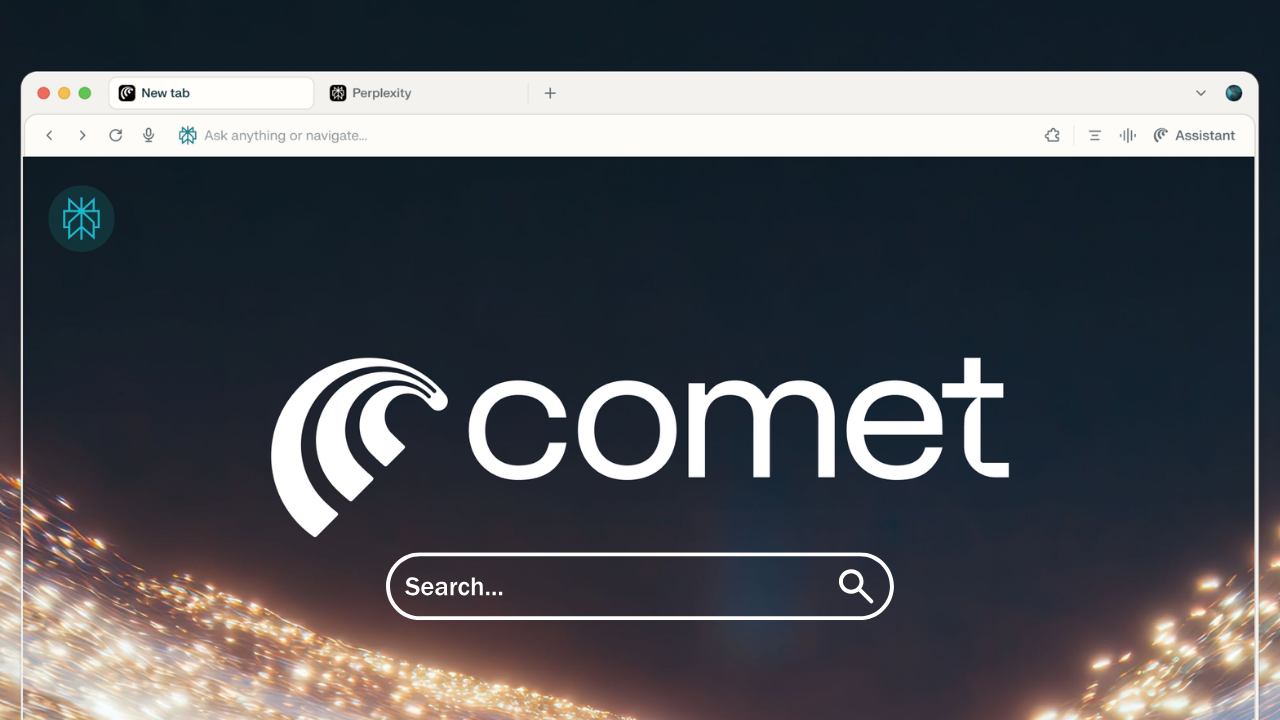
When Google refused to add Perplexity as a default search engine, the company didn’t back down. They built their own browser instead.
That’s the bold message from Aravind Srinivas, CEO of Perplexity, in a viral post that has sparked excitement and serious curiosity in the tech world. The post reads:
“I reached out to Chrome to offer Perplexity as a default search engine option a long time ago. They refused. Hence we decided to build @PerplexityComet browser.”
This decision has now turned into a major product launch: the Perplexity Comet browser, an AI-powered web experience that may finally offer a real alternative to Google Chrome.
Fast Facts
- Project: Perplexity Comet Browser Launch
- Goal: Redefine web browsing with built-in AI assistant and smart workflows
- Built On: Chromium for compatibility with Chrome extensions
- Privacy: Local data storage and no training on personal activity
- Access: Available to Perplexity Max users, wider rollout planned
The Backstory: A Rejected Search Engine Offer
Perplexity has quickly grown into one of the most popular AI search engines. It offers fast, factual answers with links and sources, powered by a mix of large language models. Many people now use it instead of traditional Google Search, especially when looking for quick summaries, citations, or comparisons.
But when Srinivas approached Google to make Perplexity a default search engine inside Chrome, they declined.
Rather than accept defeat, Perplexity took a radical step. They decided to build their own browser from scratch, one where their AI isn’t just part of the search bar, but part of every task you do online.
That browser is Comet.
Comet is here.
— Perplexity (@perplexity_ai) July 9, 2025
A web browser built for today’s internet.pic.twitter.com/cFPeghl2YM
What Makes Comet So Different?
Comet is not just a regular browser with a chat window on the side. It is built to be “agentic,” meaning it behaves more like a smart assistant than a passive tool. The goal is to turn the browser into a thinking partner.
According to Perplexity’s official blog, the vision behind Comet is to “turn your web browser into a cognitive companion.”
1. AI Sidebar Assistant
Comet includes a built-in Perplexity sidebar that can do more than answer questions. It can help you:
- Summarize web pages in real time
- Plan trips or purchases across multiple tabs
- Automate workflows (like scheduling meetings or writing emails)
- Maintain context across websites you visit
This means the assistant doesn’t just help with search. It actively helps you complete tasks.
Automated Tasks on Perplexity that can be set with simple natural language is quite underrated. We will be bringing this feature on Comet. So, your browser will turn into a mini-OS with smart cron jobs that run your life while removing cognitive burden. The Cognitive OS. pic.twitter.com/BWJOPOig63
— Aravind Srinivas (@AravSrinivas) July 10, 2025
2. Cognitive Workflows
Most browsers just show tabs. Comet organizes your tasks like a digital notebook. It groups tabs by topic, removes clutter, and remembers what you were working on.
This feels more like working with an assistant than clicking around on your own.
3. Privacy by Default
Unlike some other AI tools, Comet promises not to train its models on your personal data. The browser stores your activity locally on your device, not in the cloud.
It also includes built-in ad and tracker blocking for extra protection.
Built on Chromium but With a Twist
Comet is based on Chromium, the same open-source platform used by Google Chrome, Microsoft Edge, and Brave. This allows it to support:
- Chrome extensions
- Syncing bookmarks and history
- Familiar browsing experience
But Perplexity has layered its own smart tools on top, tools that Chrome doesn’t offer natively.
The goal is to offer all the compatibility of Chrome while giving you a much smarter way to browse.
Early Access: Who Can Use Comet Now?
As of July 2025, Comet is in early access. Here’s who can try it:
- Perplexity Pro or Max subscribers
- Selected users on the waitlist
- Available on Mac and Windows initially
- Mobile apps (iOS, Android) and Linux versions are coming soon
This slow rollout is likely intentional. Perplexity wants to test the experience, refine the AI workflows, and avoid overwhelming new users.
Who’s Behind It? Big-Name Backers and $14 Billion Valuation
Perplexity is not some unknown startup. It’s already valued at $14 billion and is backed by tech giants like:
- Jeff Bezos
- Nvidia
- SoftBank
The company reportedly handles over 780 million searches per month, and it’s growing fast.
Comet is a major move not just for Perplexity, but for the entire AI browser space.
Google Should Be Worried, Here’s Why
Google Chrome controls around 65 to 70 percent of the global browser market. It’s fast, stable, and deeply integrated with Google services. But Chrome hasn’t changed much in the past decade.
Comet, on the other hand, is betting on a whole new way of browsing:
- Not just searching, but completing actions
- Not just tabs, but organized workflows
- Not just privacy promises, but real local storage and user-first design
By making AI the center of the experience, not an add-on, Comet could change what users expect from browsers.
If Comet succeeds, it may force Chrome and other big names to follow or fall behind.
Controversies and Challenges
Perplexity’s rapid growth has also brought criticism. Several news outlets and publishers have accused the company of scraping and summarizing their content without permission.
To address this, Perplexity announced a publisher partnership program, aiming to build better relationships with content creators. This will be important if Comet expands its AI reading and summarizing features across the web.
Another challenge is user habits. Most people are very comfortable with Chrome or Safari. Getting them to switch to a new browser, even a smart one, won’t be easy.
And with the high $200 month price tag for Perplexity Max (which gets full access to Comet), the early user base may stay small for now.
Will Comet Take Off?
Comet isn’t just a browser. It’s Perplexity’s answer to being shut out of Chrome.
And it’s not a weak answer.
It’s smart, clean, fast, and deeply tied to one of the best AI search engines on the market. With strong privacy features and real task-solving ability, it feels like the next step in how we use the web.
But its success depends on a few key things:
- Can it scale beyond early tech adopters?
- Will users trust its AI assistant with real tasks?
- Can it solve content licensing issues before lawsuits arise?
Still, this much is clear. Chrome’s rejection gave rise to a serious challenger. And for the first time in years, it feels like the browser world has something new to be excited about.