
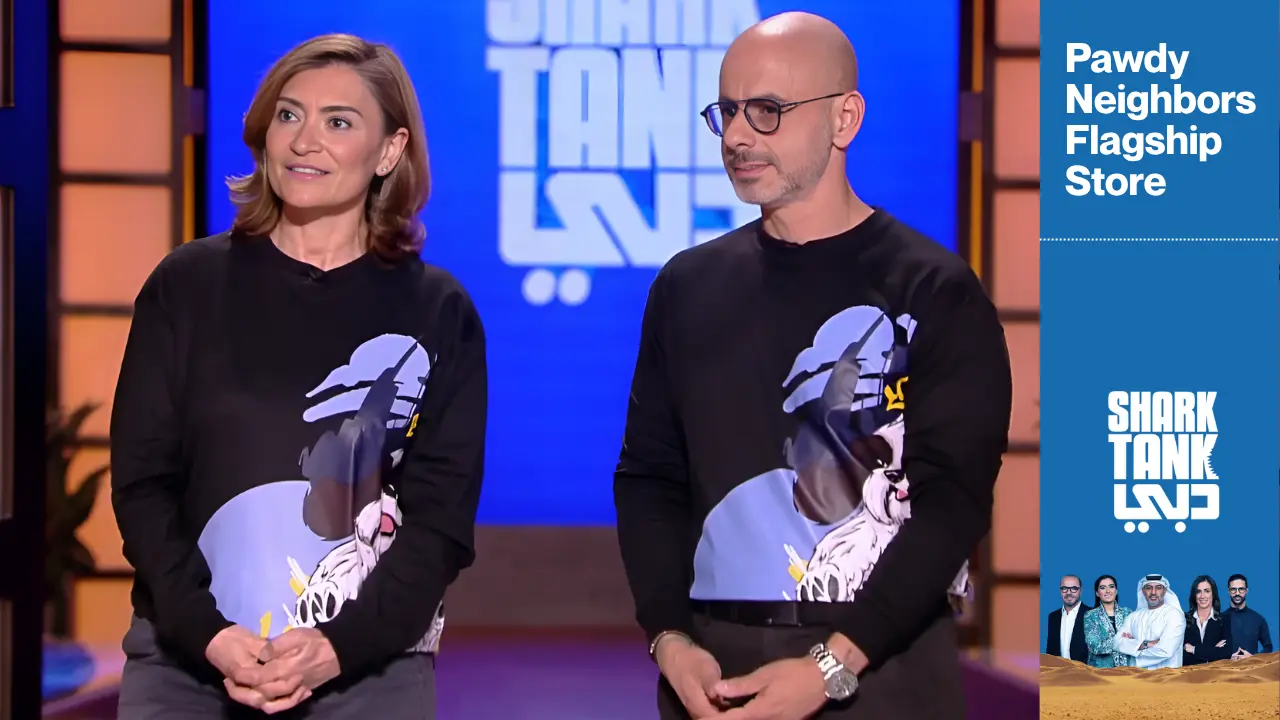
Dubai’s luxury lifestyle hides a quiet emotional problem. Many pet owners feel guilt when leaving their pets behind during grooming or spa visits. This feeling creates a real gap in the market, especially in a city where premium experiences are expected in every industry.
Entrepreneurs Rita Abou Obeid and Elie Raad saw this clearly. With over 20 years of business experience together, they designed a bold solution. Their idea was the Pawdy Neighbors Flagship Store, a 4.2 million AED concept that combines luxury pet care with a social, high-end lifestyle experience.
The concept was powerful and highly relevant. But what happened next shocked everyone watching Shark Tank Dubai.
The Pitch That Collapsed in Seconds
The most surprising moment came almost instantly. All five Sharks rejected the deal without hesitation. This was not a debate. It was a unanimous decision based on a critical flaw.
Before understanding the mistake, here is a clear breakdown of the pitch:
Shark Tank Dubai Pitch Summary
| Company | Pawdy Neighbors Flagship Store |
| Founders | Rita Abou Obeid & Elie Raad |
| Concept | Luxury pet care + social lifestyle experience |
| Investment Asked | 4.2 million AED |
| Equity Offered | 70% |
| Existing Business | Kept separate from the deal |
| Shark Response | Immediate rejection from all five Sharks |
At first glance, the offer looked generous. Giving away 70% equity might seem like a strong incentive. But in reality, it raised serious concerns.
The Hidden Deal Breaker: Conflict of Interest
The biggest issue was not the idea. It was the structure of the deal. The founders wanted investment only for the Pawdy Neighbors Flagship Store while keeping their existing successful businesses completely separate.
This created what investors call a conflict of interest. It means the founders had more personal incentive to focus on their original businesses rather than the new one funded by investors.
In simple terms, the Sharks would be backing a side project, not the main engine of the brand. One Shark summed it up clearly:
“هناك خلل رئيسي في تركيبه الشركه الهيكلية”
There is a major flaw in the structural composition of the company.
For investors in Dubai, fully committed to the same outcome matters deeply. They want to know that founders are aligned. Without that, even a great idea becomes too risky.
When Passion Becomes a Weakness
Rita Abou Obeid and Elie Raad defended their decision emotionally. They explained that their original business was “dear to their hearts.” While this is understandable, it created a major red flag for investors.
In business, passion is powerful at the start. But at the scaling stage, decisions must be driven by strategy, not emotion. Investors expect founders to prioritize growth, efficiency, and long-term returns.
This situation reflects what many call the Founder’s Dilemma. Holding onto emotional attachments can slow down expansion and limit opportunities. It signals that the founders may resist change, even when it is necessary.
For the Sharks, this raised a critical question. Would these founders make tough decisions when money and growth are on the line?
The 70% Equity Paradox Explained
Offering 70% equity should attract investors. But in this case, it did the opposite. It created what can be called the “70% Equity Paradox.”
By offering a majority stake in a new, isolated business, the founders unintentionally signaled low confidence. It felt like they were giving away control of something unproven while protecting what truly mattered to them.
At the same time, the 4.2 million AED budget raised doubts. In Dubai’s premium market, luxury fit-outs often cost more than expected. This made the deal look underfunded from the start.
For investors, this created a double risk. They were being asked to invest heavily in a business that might need more money later. On top of that, the founders were not fully aligned with the new venture.
This combination made the deal unattractive, even with a high equity offer.
A Missed Opportunity Worth Millions
The most important lesson from this pitch is simple. The market opportunity was real. Dubai’s pet industry is growing fast, and luxury services are in high demand.
The founders even presented data showing strong spending power among pet owners. However, their projected return was only 15% over five years. For high-risk startups, this is considered low.
In investment terms, this is called a “hurdle rate.” It is the minimum return expected from safer opportunities. If the return is modest, the structure must be perfect. In this case, it was not.
The Sharks did not reject the idea. They rejected the execution. They saw a strong concept trapped inside a weak business structure.
Still, the founders remained confident. They believed they could succeed without external investment. That confidence may help them move forward, but scaling without strategic partners will be much harder.
What Shark Tank Dubai Teaches Founders
This pitch reveals something unique about Shark Tank Dubai. Investors in this market are not just looking for ideas. They are looking for alignment, clarity, and scalability.
If you want to win in this space, you must offer more than a great concept. You must present a structure that makes sense, removes risk, and shows full commitment.
The real question every founder must ask is this.
Would you rather keep full control of a small business, or own a smaller piece of a global opportunity?
That choice often determines who gets the deal and who walks away empty-handed.