
Melody Road Japan: The Tunnel That Plays a Song When You Drive at the Speed Limit
Drive through Japan's Kawate Tunnel at exactly 50 km/h and the road plays a children's song. It was built to stop crashes, not to entertain tourists.

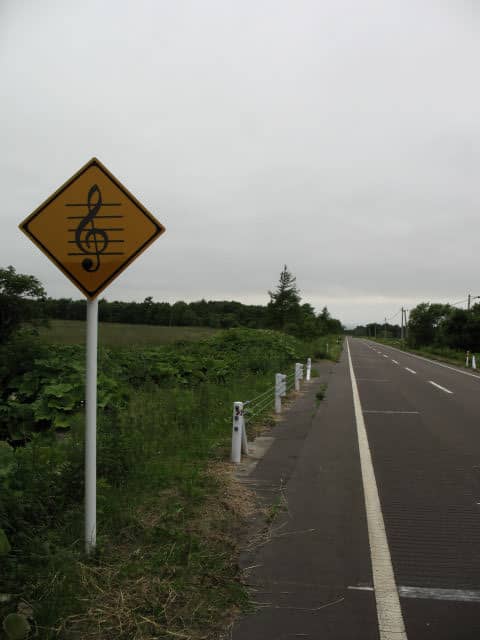
Deep in the mountains of northern Aichi Prefecture, there is a tunnel where the road itself sings. Drive into it at exactly 50 km/h and your tyres start playing "Donguri Korokoro" — a children's song about a rolling acorn that almost everyone in Japan learned in kindergarten.
It sounds like a tourist gimmick. It isn't. The Kawate Melody Tunnel was built to solve a dangerous problem: drivers who would not slow down inside a tunnel where engineers could not install a single speed bump.
This is the story of Japan's most unusual melody road — and the origin question behind it: how do you change a driver's behaviour without touching the brakes for them?
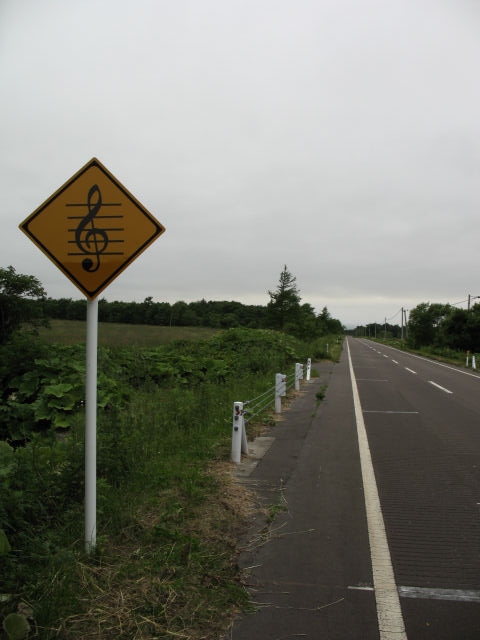
A melody road in Hokkaido, Japan. Photo: Wikimedia Commons
What is a melody road?
A melody road (メロディーロード) is a stretch of road with grooves cut across the surface at carefully measured intervals. When a tyre rolls over the grooves, each one produces a small thump. At a steady speed, those thumps arrive at a fixed rate — and a fixed rate of vibration is a musical pitch.
Japan has more than 30 of these musical roads, spread from Hokkaido to Okinawa. Most were built to draw tourists to rural areas. A handful were built for something more serious.
Where is the Kawate Melody Tunnel?
The Kawate Tunnel sits on the National Route 257 bypass in Kawate-cho, Toyota City (formerly Inabu Town), Aichi Prefecture — roughly 90 minutes' drive from Nagoya.
407 m
Tunnel length
300 m
Grooved melody section
50 km/h
Speed the song is tuned for
20 sec
Approximate playing time
Source: Nishi-Mikawa Navi
The melody plays only in the northbound lane, toward Ena in Gifu Prefecture. Before the entrance, signs read "Donguri Korokoro — safe driving 50 km/h," and the musical-note markings on the road are drawn as little acorns. Drive the other way, toward Inabu, and you will hear nothing.
Here's what it sounds like from inside a car:
Why was a musical road built inside a tunnel?
After the bypass opened, drivers took the new, straighter road too fast. Speeding led to rear-end collisions, and the road authority needed a way to bring speeds down.
The usual tools did not fit. A speed hump inside a tunnel is a bad idea — a car jolted at speed in a confined space with concrete walls has nowhere to go. Painted warnings are cheap, but drivers learn to ignore them.
A melody road offered something different: it doesn't force a driver to slow down. It rewards them for driving at the right speed. Go too fast and the song plays too quickly and sounds wrong. Hit 50 km/h and the tune clicks into place. Most drivers instinctively adjust their speed until the music sounds right.
Tourist melody roads already existed in Hokkaido, Wakayama and Gunma. Kawate was the first in Japan built specifically to control speed inside a tunnel — and it is widely described as the only melody road inside a tunnel anywhere in the world. The enclosed space also works in its favour: the sound echoes off the walls, so the tune is unusually clear.
Why "Donguri Korokoro"?
The song choice is not random. Acorns from the Jōmon period — Japan's prehistoric hunter-gatherer era — were excavated in the old Inabu area, so a song about a rolling acorn became a local signature. The nearby roadside station is even called Michi-no-Eki Donguri no Sato Inabu ("Acorn Village Inabu").
How do musical roads work?
The physics is simple, which is what makes it clever.
- Pitch comes from spacing. Grooves cut close together are hit more times per second, giving a higher note. Wider spacing gives a lower note.
- Volume comes from groove width. Wider cuts create a stronger thump and a louder note.
- Length comes from groove count. More grooves mean a longer phrase.
- Speed is the key. The whole road is calculated for one speed. Change speed and every note shifts — too fast and the song goes sharp and rushed; too slow and it drags and goes flat.
Your car becomes the instrument: the tyres strike the grooves, and the body of the vehicle acts like a sounding board. That's why the melody is best heard with the windows closed.
Does the Kawate melody road actually reduce speed?
Researchers at the National Institute of Technology, Toyota College studied the tunnel in a 2009 paper and measured traffic before and after the grooves went in. The results were modest but real.
| Share of cars driving over 60 km/h in the Kawate Tunnel | |
|---|---|
| Before melody road | 13% |
| After melody road | 4% |
Source: Yoshino & Ogino, Toyota College, JSCE 2009
- Average speed fell by about 2 km/h.
- The share of cars going over 60 km/h dropped from 13% to 4%.
- Noise rose by about 1.5 dB beside the tunnel, and about 1.4 dB inside the test car.
That second number is the one that matters. A melody road doesn't change how the average careful driver behaves very much — it pulls in the outliers, the drivers going fast enough to cause rear-end crashes.
The noise trade-off is also why melody roads stay out of cities: the same sound that entertains a driver annoys anyone living next to the road.
Who invented the melody road?
Japan's melody roads began with an accident. Shizuo Shinoda, a road-works engineer in Shibetsu, Hokkaido, scraped some marks into the asphalt with his bulldozer and noticed that driving over them made tones. Hokkaido's Industrial Research Institute refined the idea, working out how to space grooves to produce exact notes, and the first melody roads appeared in the mid-2000s.
Shinoda's local company went on to develop the cutting machines and design software with partners, turning a happy accident into a road-safety and tourism product.
Other melody roads in Japan worth driving
- Chōdō Fruits Road, Hiroshima — plays "Sanpo" from My Neighbor Totoro
- Ashinoko Skyline, near Mount Fuji — two melody sections on one scenic route
- Lake Biwa Bridge, Shiga — plays the "Lake Biwa Rowing Song"
- Route 389, Nagashima, Kagoshima — one of the newest, playing AI's 2011 pop hit "Happiness"
Musical roads have since spread to South Korea, China, Hungary and the United States, where the Lancaster Musical Road in California and the Tijeras Musical Road on old Route 66 in New Mexico are the best-known examples.
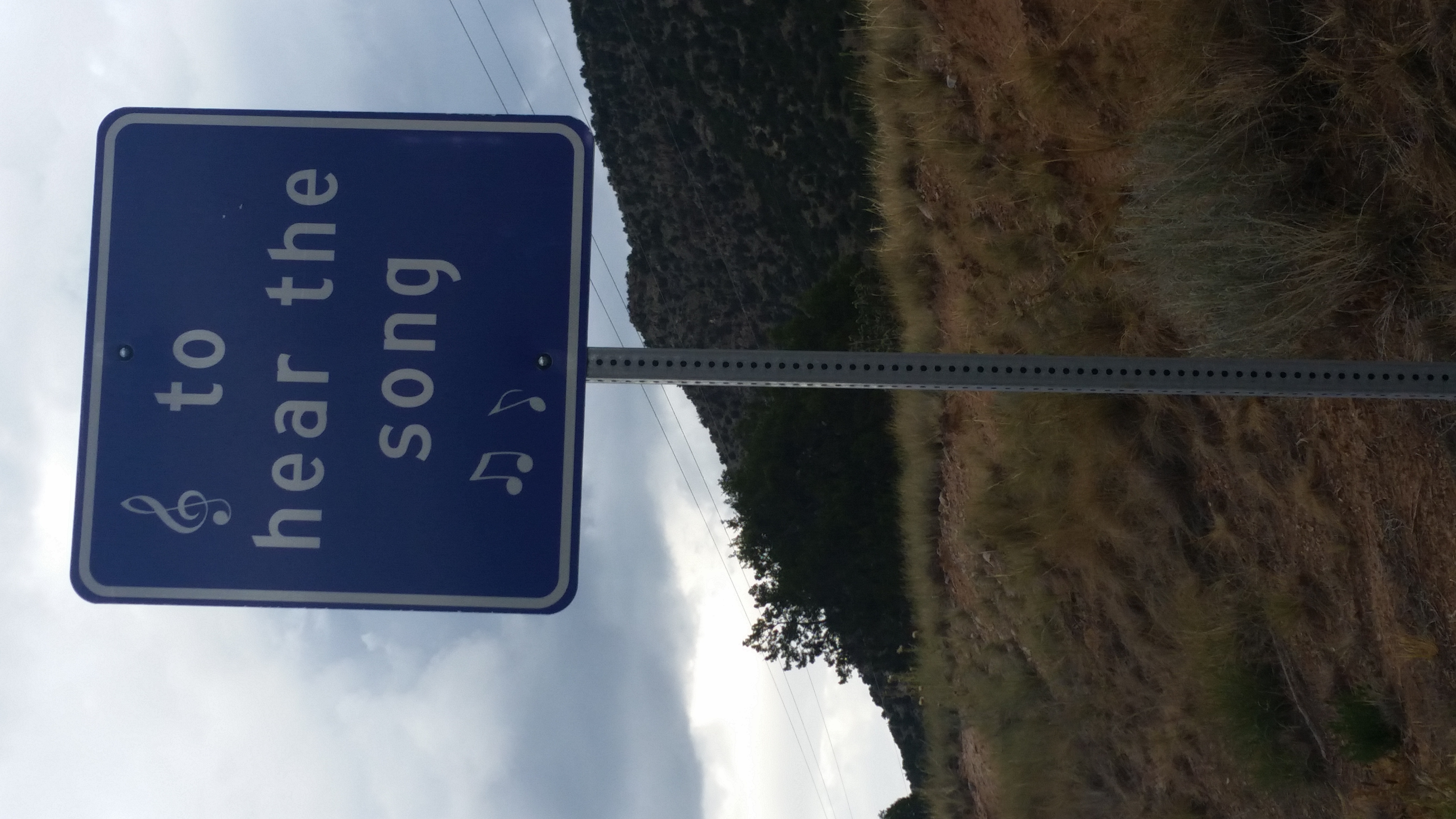
The musical road at Tijeras, New Mexico. Photo: Wikimedia Commons
The bigger idea: design that nudges instead of forces
The Kawate Melody Tunnel is a small lesson in behavioural design. Engineers couldn't physically slow drivers down, and warnings didn't work. So they gave drivers a reason to want to drive at 50 km/h — a familiar song that only sounds right when you do.
It's road safety you can hum.
FAQ
Where is the melody road tunnel in Japan? The Kawate Melody Tunnel is on the National Route 257 bypass in Kawate-cho, Toyota City, Aichi Prefecture. The melody plays only in the northbound lane toward Ena.
What song does the Kawate tunnel play? "Donguri Korokoro," a Japanese children's song about a rolling acorn.
What speed do you need to drive on a melody road? It depends on the road. Kawate is designed for 50 km/h. Most Japanese melody roads are tuned for speeds between about 40 and 60 km/h.
Why was the melody road built in the tunnel? To reduce speeding after the bypass opened, because rear-end crashes were happening and speed humps are unsuitable inside tunnels.
Do melody roads really reduce accidents? A 2009 study of the Kawate Tunnel found average speeds fell by about 2 km/h and the share of cars over 60 km/h dropped from 13% to 4%.
How many melody roads are there in Japan? More than 30, spread from Hokkaido to Okinawa.
Sources
The weekly question
From obsession to clarity — one original question every week.
We answer one noisy topic at a time, in full. No daily roundup, no thread bait — just the question, the principles, and the system.


