
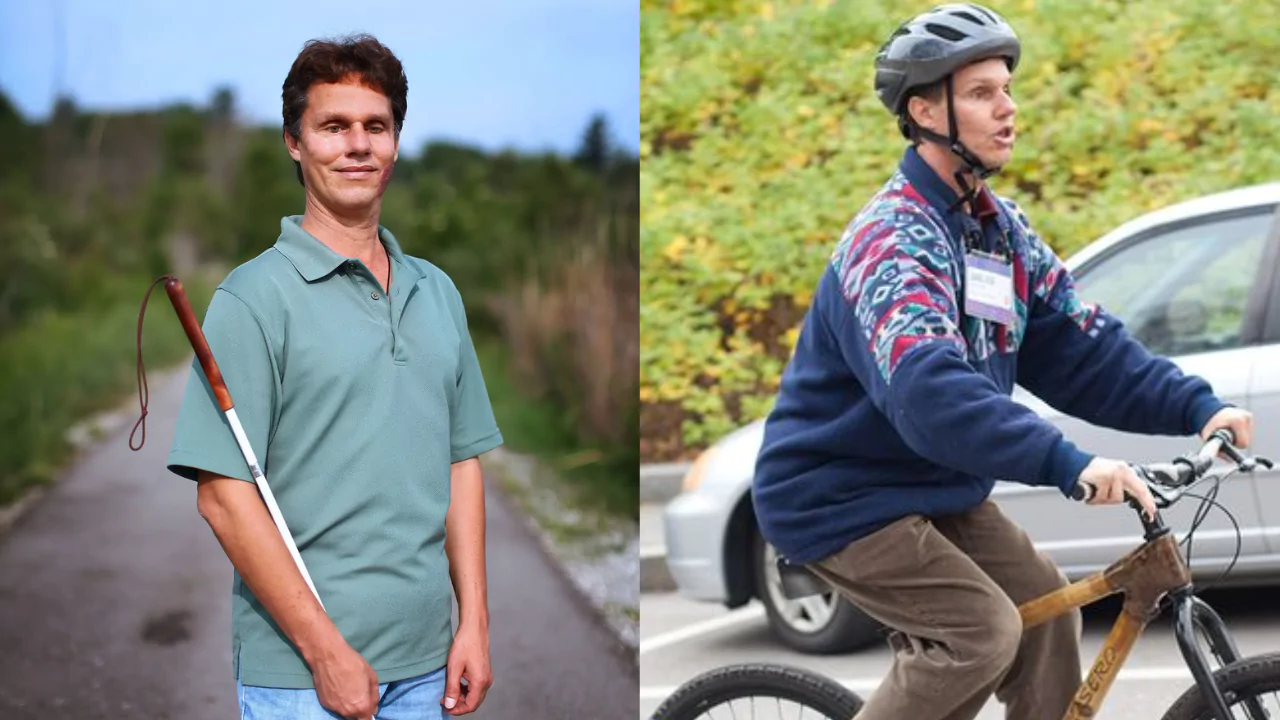
Imagine navigating a rocky trail or mountain biking through a dense forest, all without seeing the path in front of you. For most of us, sight is crucial to moving through the world. But for Daniel Kish, a man who has been blind since infancy, vision has never been the key to independence. Instead, he has learned to “see” the world through sound. Daniel Kish’s ability to hike, mountain bike, and perform other activities using only echolocation has made him an inspiring figure. Let’s explore how he does it and what makes his story so powerful.
Daniel Kish’s Journey: Overcoming Blindness with Sound
Daniel Kish was born with retinoblastoma, a rare form of eye cancer that led to the loss of both of his eyes when he was just a baby. While this would stop many people from living a fully active life, Daniel was determined to experience the world in his own way. As a young child, he began using echolocation, a technique of using sound waves and echoes to detect objects around him.
Echolocation works by making sounds, usually clicks or taps, and listening to how the sound bounces back. The returning sound tells the listener important information about the shape, distance, and size of objects nearby. Daniel’s ability to use echolocation allowed him to move through the world with ease, navigating sidewalks, trails, and even mountain bike courses with a skill that many people find impossible to imagine.
How Echolocation Works: FlashSonar Explained
Echolocation is not just for bats and dolphins, it’s something humans can use as well. Daniel Kish uses a technique called FlashSonar, which involves making high-pitched tongue clicks. When these clicks hit a surface, they bounce back, and Daniel listens to the echoes to form a mental picture of his surroundings.
To explain it simply, think of it like a game of ping pong. When you hit a ball, you can tell where it’s going by listening to the sound it makes when it bounces. In Daniel’s case, the sound gives him details about the size and shape of nearby objects. This is how he is able to ride a bike or hike in places where other blind individuals might need help from a guide dog or a cane.
According to researchers, human echolocation is not just a trick. Studies show that some blind individuals, like Daniel, can use their brains to process sound in a way that helps them perceive the environment in a similar manner to sight. In fact, a study published by the Journal of Vision Research showed that blind individuals who practice echolocation can perceive objects up to 30 feet away.
The Viral Moment: How Daniel Kish Went Global
Daniel Kish’s use of echolocation caught the public’s attention after he gave a TED Talk, where he demonstrated his skill in front of thousands. The viral moment wasn’t just about his ability to ride a bike through the woods or walk down a city street. It was about how this ability challenged common perceptions of blindness. People were amazed to see someone who had been blind since birth doing things that many sighted individuals could never imagine.
The TED Talk was shared widely across social media platforms, such as YouTube, Reddit, and Twitter. Viewers were shocked, fascinated, and inspired. This viral content brought Kish’s skills to a global audience and ignited conversations about the capabilities of blind individuals. It also raised awareness about how people with disabilities can lead active, independent lives.
Read more : Meet the ‘Armless Archer’ Who Just Made Paralympic History and Came Close to Shooting a Perfect Game
Can Others Do This Too? Learning Echolocation
The idea that anyone can use echolocation might sound far-fetched. But with practice and the right training, it’s a skill that many blind individuals can learn. Daniel Kish himself teaches others how to use FlashSonar through his organization, World Access for the Blind.
If you’re interested in trying something similar, it’s important to know that learning echolocation is not as simple as snapping your fingers. It requires consistent practice and guidance. Many people begin by practicing tongue clicks or tapping objects to get used to hearing the sounds. Kish’s organization provides resources, including training programs, to help blind people develop their echolocation skills.
It’s a powerful reminder that the ability to adapt is something we all have. As Daniel often says,
“If I can do it, anyone can learn to navigate with sound.”
Daniel Kish, TED Talk
The Emotional Impact: More Than Just a Skill
What makes Daniel Kish’s story even more powerful is the emotional impact it has on people. For many, blindness means a life of dependence and limitations. But Daniel’s achievements show that blindness doesn’t have to limit what you can do.
As Kish demonstrates his ability to navigate trails and mountain bike, he shows us all what’s possible when we look beyond what seems impossible. He’s an inspiration to blind individuals around the world, especially those who feel restricted by their disability. His story isn’t just about overcoming physical barriers, it’s about challenging societal views of what the blind can accomplish.
Public reactions to Kish’s videos and TED Talk are filled with support and admiration. One viewer wrote, “Daniel Kish’s story proves that with the right mindset and training, we can overcome anything. It’s an inspiring reminder that no matter what life throws at us, we can find a way.”
Why Is This Important Now? The Bigger Picture
Daniel Kish’s viral moment isn’t just about one man’s incredible skill, it’s a part of a larger trend focused on accessibility and inclusion. As technology and understanding of disabilities evolve, more people are starting to see that individuals with disabilities can be just as independent and capable as anyone else. Kish’s story has sparked global discussions on how society can better support people with disabilities, opening doors for them to live more independently.
His work with World Access for the Blind is helping to spread this message, showing that it’s not about what a person lacks, but how they adapt. The movement for inclusivity and empowerment for the blind is gaining momentum, and Kish is leading the charge.
What’s Next for Daniel Kish? The Future of Echolocation
Daniel Kish’s journey is far from over. He continues to work on expanding his training programs through World Access for the Blind, helping more individuals learn echolocation. His mission is clear: to give blind people the tools they need to lead independent lives.
As his story continues to inspire and go viral, it’s likely that more people will begin using echolocation in their own lives, helping them achieve a greater sense of freedom. Kish’s next steps might involve more collaborations, funding for further research, and possibly creating even more training resources for those eager to learn this skill.
Empowering the Blind and Redefining Possibilities
Daniel Kish’s incredible use of echolocation has not only shattered misconceptions about what blind people can achieve, it’s a beacon of hope for anyone who feels limited by their circumstances. His story is a powerful reminder that no matter what challenges we face, we can always find ways to adapt and move forward.
Through his work, Daniel Kish continues to inspire thousands, showing that with creativity and determination, any barrier can be overcome. His ability to “see” the world through sound is just one example of how human potential has no limits.
Disclosure: We may earn a commission when you make a purchase through the ads.