

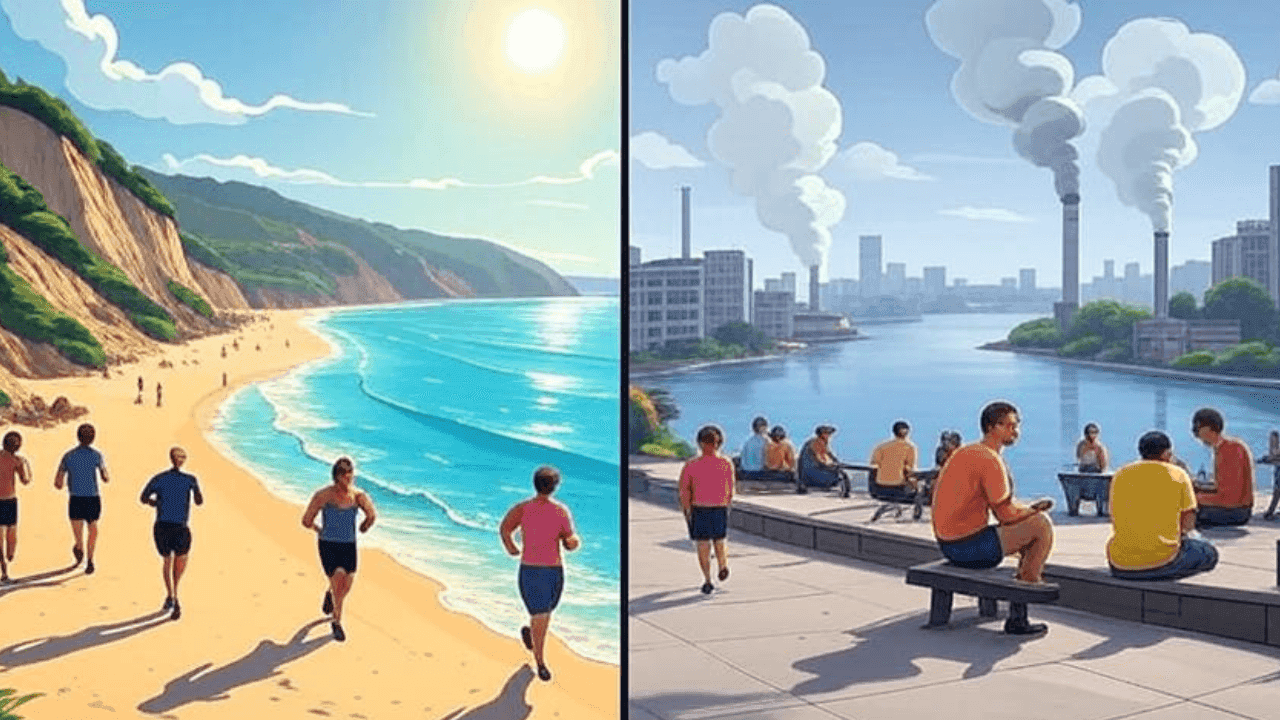
Living by the Ocean Could Add Years to Your Life, But Lakes Might Do the Opposite
A new study reveals that living near the ocean may help you live longer, while lakeside living might do the opposite.
Scientists studied over 1.4 million deaths across the United States to learn how where we live affects how long we live. They focused on people living near oceans and lakes. Many believe that being close to any body of water is good for health. But this study tested that idea.
Researchers compared how long people lived in areas near oceans, lakes, or no water at all. They also looked at air quality, income, race, age, and temperature to make sure the results were fair. The data came from more than 66,000 census tracts and was collected between 2011 and 2016. This makes the study one of the most detailed and comprehensive efforts ever done in the U.S. on this topic.
“Not all water is the same,” said Dr. Kelsey Aura Stokes-Draut, one of the study’s lead authors.
“We found that living near the ocean comes with health advantages, while some lakeside locations may pose risks depending on pollution and climate.”
Fast Facts
- Living near oceans is linked to longer life expectancy, up to 1+ years above the U.S. average.
- Lake proximity showed a higher risk of early death in some polluted, urban, or cold regions.
- Air quality, income, and climate played major roles in amplifying or reducing health benefits.
- Study analyzed 1.4 million deaths across 66,000+ U.S. regions from 2011 to 2016.
- Oceans offer more consistent health perks than lakes due to cleaner air and more activity options.

Source: Environmental Research (2024).
What They Found
The results were surprising. People who lived near the ocean were less likely to die early. They tended to be healthier and lived longer, especially in sunny places like Florida and Southern California.
Overall, coastal residents were expected to live a year or more longer than the U.S. average of 79 years. This was linked to several factors. Oceans tend to provide a more moderate climate, fewer extremely hot days, and lower maximum temperatures. These areas also often have cleaner air, more chances to be physically active, and better income levels.
But for people living near lakes, the news wasn’t as good. In many areas, especially in colder regions with more air pollution, lake living was linked to a higher risk of dying early. This was especially true in urban areas where lakes are surrounded by buildings, roads, and industry.

Source: Environmental Research (2024).
“Living near lakes might still be relaxing and beautiful,” said lead researcher Dr. Stephen J. Beckett,
“but if those lakes are in polluted urban areas, the air and surroundings can cancel out the benefits of water proximity.”
Why the difference? Oceans have bigger beaches, more chances for exercise, and cleaner, salty air. They also reflect more sunlight, which may help with mental health and vitamin D. Lakes, especially in cities or colder climates, often don’t offer the same benefits. They might even trap pollution. Some lakes in cities are also prone to flooding and don’t have enough space for outdoor recreation.
“This is really about the broader environment,” Dr. Beckett added.
“It’s not just the lake or the ocean, it’s what’s around it. Urban density, green space, and air quality all matter.”
Related Reading
Scientists have discovered that bacteria in a mother’s stomach may shape how her baby’s brain develops in the womb.
Read the Full StoryWhy This Matters
This research challenges the common idea that all waterfront living is healthy. While both oceans and lakes look beautiful, they don’t offer the same health perks. That means real estate ads and city plans may need to rethink how they talk about “blue space.”
City planners and public health leaders can use this data to make smarter choices. It suggests that just building homes near lakes won’t automatically improve health. But improving ocean access and keeping beaches clean could.
It also sheds light on broader questions about health in the U.S. Compared to other wealthy nations, the U.S. has seen faster drops in life expectancy and slower rebounds. The study’s authors believe that these findings could help explain part of that gap. Environmental factors, income levels, and health inequities play a big role in shaping how long people live.
“Understanding how place affects health is key to closing life expectancy gaps,” said co-author Dr. Rachel Morello-Frosch.
“This research can help guide policy that supports longer, healthier lives for everyone.”
Who This Affects
This study affects many people, including:
- Homebuyers and renters choosing where to live
- City planners and developers designing future neighborhoods
- Public health officials working to reduce early deaths
- People living near lakes, especially in colder or polluted areas
- Older adults, lower-income families, and people in high-pollution zones who may face the greatest risk
But the impact reaches even further. People with existing health issues, like asthma, heart conditions, or weakened immune systems, may be more sensitive to the negative effects of lake environments with poor air quality. Children who grow up in these areas might also be affected by long-term exposure to pollution or lack of access to clean outdoor spaces.
Healthcare providers and local governments should also take note. Knowing that not all waterfronts are equally healthy can help guide better investments in public spaces, green infrastructure, and clean-up efforts.
Even vacationers and seasonal residents might think twice. Choosing where to spend time based on long-term health data, not just the view, can make a real difference.
“These results matter for short-term visitors too,” said Dr. Stokes-Draut.
“Whether you’re choosing where to retire or just where to go for the summer, the surrounding environment affects your well-being.”
In short, this study matters to anyone making choices about where to live, where to build, or how to improve community health.
Related Reading
Scientists have developed new sodium‑ion batteries that are cheaper, safer, and longer-lasting than many current options.
Read the Full StoryWhat You Can Do
If you live near the ocean, take advantage of it. Go for walks along the beach. Breathe in the clean, salty air. Spend time in the sun, but wear sunscreen. These small steps may help you enjoy some of the health benefits the study found.
If you live near a lake, learn about your area’s air quality and pollution levels. You can also speak up for cleanup efforts, better walking paths, and access to green space. This could help make urban lakes safer and more beneficial to residents.
If you don’t live near water at all, don’t worry. The key to better health is staying active, breathing clean air, and enjoying time outdoors. Your overall environment, including walkability and air quality, still matters just as much.
Final Thought
Lakes and oceans both offer beautiful views, but they don’t give the same health benefits. This study shows that where you live can quietly affect how long you live.
Oceans may help extend your life. Lakes, in certain areas, could shorten it.
By understanding the difference, we can make better decisions, for ourselves, our families, and our communities. We can also push for better planning that supports healthy living for everyone, no matter where they are.
From obsession to clarity — one original question every week.
We answer one noisy topic at a time, in full. No daily roundup, no thread bait — just the question, the principles, and the system.