
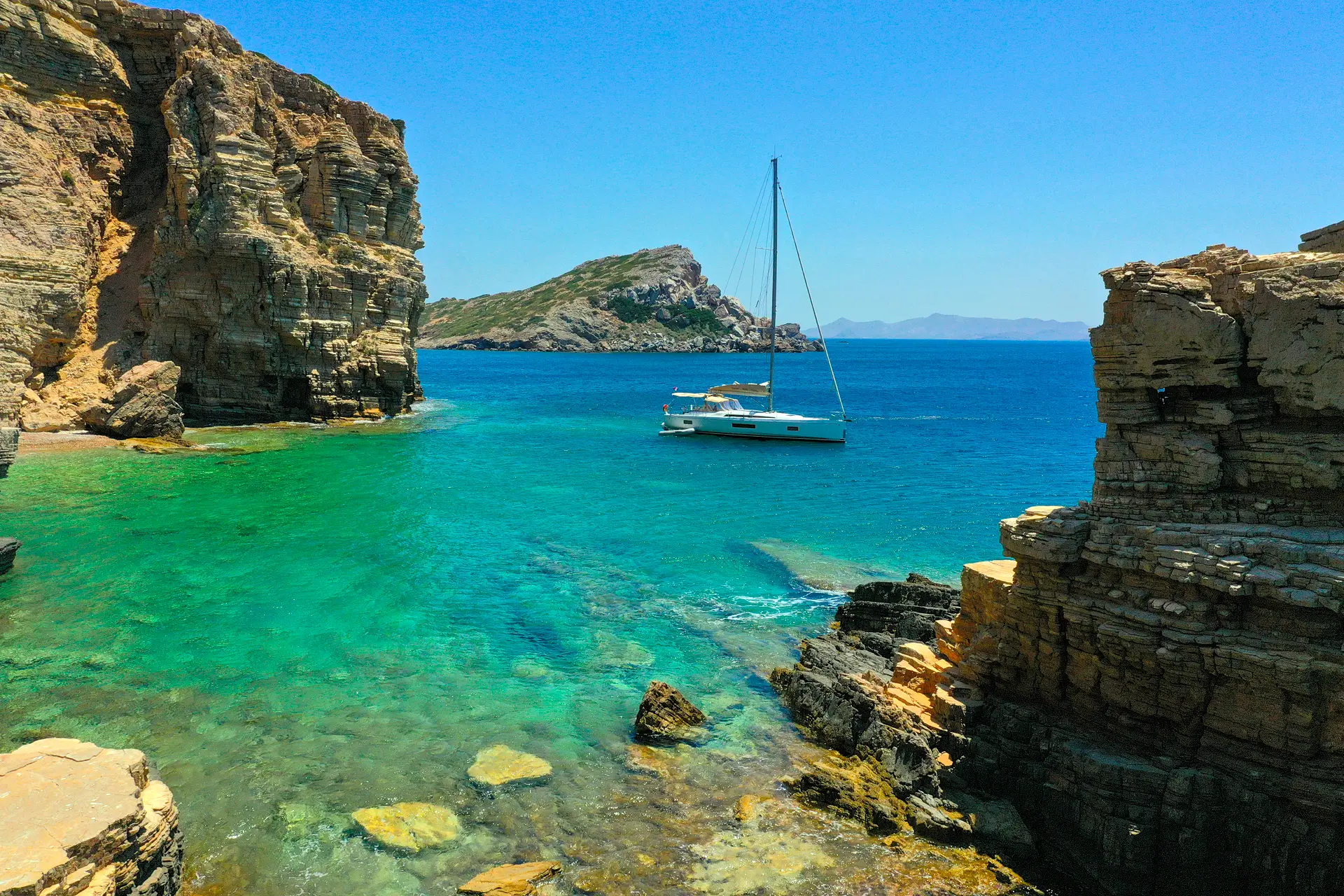
Kos is starting to attract renewed attention as a yacht charter base, and the reason is not hard to see. In a Greek sailing market often dominated by the Cyclades, the Ionian, or the Athens area, Kos offers something slightly different: a strategically placed island base in the heart of the Dodecanese, with strong marina infrastructure and direct access to routes that feel varied, scenic, and easier to shape into a one week itinerary. That combination is helping bring Kos back into the conversation for travelers who want a Greek sailing holiday with both character and practicality.
The Appeal of the Dodecanese Region
Part of the destination’s appeal comes from geography. Official tourism sources describe Kos as the third largest island in the Dodecanese, while Greece’s national tourism portal presents the wider Dodecanese cluster as a sailing region known for its excellent climate, clear beaches, natural attractions, and strong mix of historical and religious sites. For charter guests, that matters because it signals a route area that offers more than beautiful water. The Dodecanese combines island hopping with a stronger sense of place, which makes the sailing feel richer and more distinctive from stop to stop.
Kos as a Strategic Sailing Base
Kos also has a practical advantage that many travelers immediately understand. The island’s official tourism site describes it as being right in the middle of the Dodecanese and highlights its easy access, numerous anchorages, and strategic location for sailing holidays. That central positioning makes Kos especially useful as a departure point because it opens multiple directions at once, rather than pushing crews into one rigid route logic. Instead of spending too much of the first days simply reaching the cruising ground, travelers can start working through the island chain much sooner.
Marina Infrastructure and Easy Access
Infrastructure strengthens that case. Kos Island Marina describes itself as the “ultimate starting point” and states that it sits within 25 km of Kos International Airport, with about a half-hour taxi ride from the airport to the marina. The marina lists 265 berths across five piers, with 80 additional berths at Mandraki, while the official Kos tourism site also highlights a Blue Flag marina and says the port hosts more than 4,000 boats annually. For charter guests, that translates into something simple but important: a base that is not only scenic, but properly equipped to handle arrivals, provisioning, and embarkation with less friction.
Why Smooth Travel Logistics Matter
That ease of access matters more than ever. Travelers booking yacht holidays increasingly want the journey to feel smooth from the start, not only once they are already under sail. Kos benefits from that shift because it combines island atmosphere with relatively straightforward airport-to-marina logistics. Official local tourism guidance also points to the island’s recently renovated international airport, which further supports Kos as a realistic charter base for international arrivals rather than a destination that feels complicated before the trip has even begun.
A Flexible Charter Market for Different Travelers
The charter offer itself adds another layer of momentum. On 12 Knots, Kos shows 305 boats available, including 222 sailboats, 77 catamarans, 5 gulets, and 1 power boat. That range matters because it suggests a base with enough depth to serve different kinds of travelers. Experienced bareboat sailors can find traditional monohulls, groups can move toward catamarans for space and comfort, and travelers who want more support can choose skippered or crewed options. A charter destination becomes much easier to recommend when it is flexible enough to meet very different expectations.
Routes and Islands Kos Can Unlock
This is one reason a Kos yacht charter feels increasingly relevant again. It is not only about the island itself, but about the routes it unlocks. Greece’s tourism guidance names the major Dodecanese islands as including Kos, Kalymnos, Patmos, Leros, Nisyros, Symi, Tilos, and others, while regional route examples from charter operators show how Kos works naturally as a gateway into that broader cluster. In practical travel terms, that means crews can build itineraries around lively harbors, quieter anchorages, volcanic landscapes, and smaller island stops without losing the coherence of a single cruising region.
The Onshore Value of Kos
Kos also benefits from the character of the destination on land. Visit Greece presents the island as a place where beaches, villages, nightlife, and archaeological heritage coexist, and describes it as the home of Hippocrates with the feel of an open-air museum. That makes a difference in outreach terms because Kos is not just a technical base for picking up a boat. It is a destination that adds value before embarkation and after disembarkation, which helps the entire sailing holiday feel broader and more memorable.
Why Kos Fits Current Travel Preferences
There is also a wider market reason Kos is becoming easier to talk about again. Many travelers are now looking for sailing holidays that feel immersive without being overcomplicated. The Dodecanese fits that mood well. Official Greek tourism materials describe the region as exceptionally rewarding for sailing, with protected bays, clear water, and beautiful island clusters, while Kos’s own tourism positioning emphasizes easy access and plenty of serene bays. Together, those qualities support the idea of a charter holiday that delivers scenery and movement without forcing every day into an overly demanding passage plan.
Why Kos Is Back on the Radar
In the end, Kos is returning to the radar because it solves several problems at once. It offers a real island departure, not a mainland compromise. It has a marina setup strong enough to support charter demand. It sits in the middle of a cruising region with broad route potential. And it gives travelers access to a part of Greece that still feels slightly less overexposed than some of the country’s better-known sailing names. As interest in Dodecanese sailing keeps growing, Kos looks less like a secondary option and more like one of the smartest bases in the eastern Aegean.