
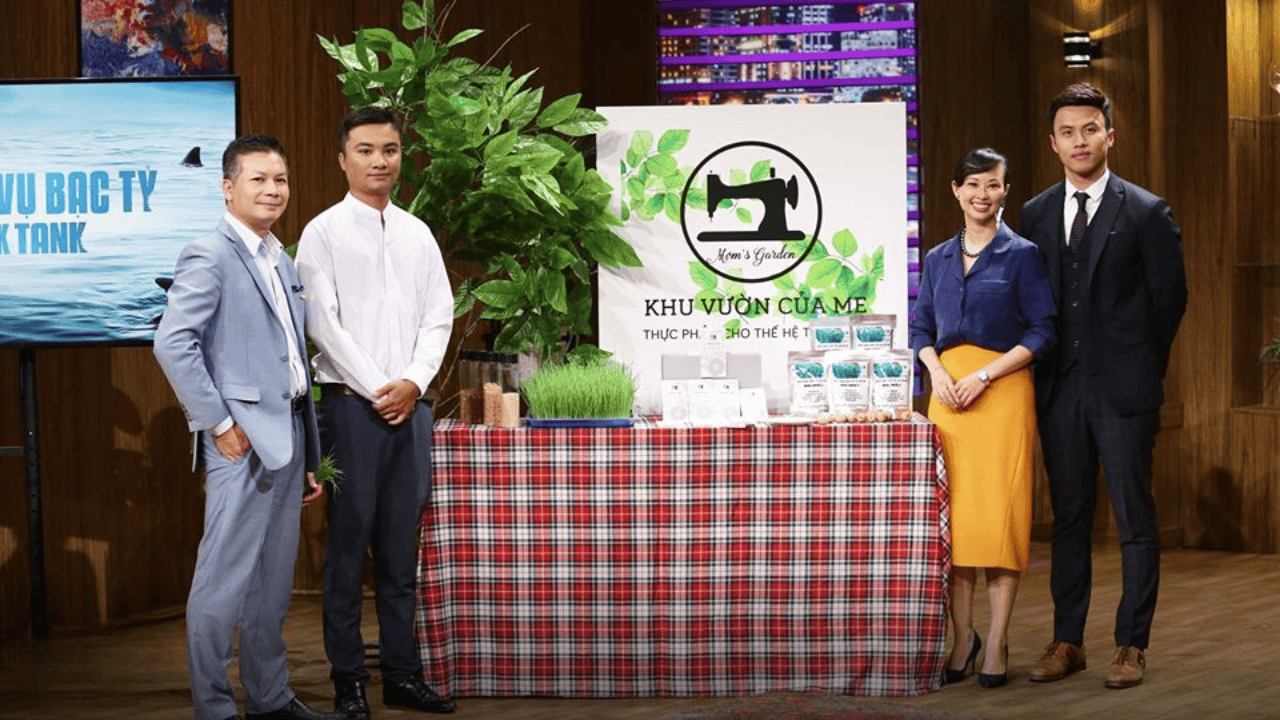
When the Vietnamese startup “Khu Vườn Của Mẹ,” which means “Mother’s Garden,” walked onto the Shark Tank Vietnam stage, the story felt almost cinematic. The founder shared how his mother’s battle with heart disease inspired him to create drinks and foods that could help other families stay healthy. Investors and viewers connected with the heartfelt mission. By the end of the episode, three Sharks offered a combined investment of 3 billion VND in exchange for a 45 percent stake.
For a television audience, that moment looked like the beginning of a national success story. A small, family-driven idea seemed ready to ride the wave of Vietnam’s booming health and wellness market. Yet several years later, anyone searching for the company will find almost nothing. Instead of growth updates and product launches, the name now leads to scattered businesses and a confusing trail of clues. Understanding what happened requires a closer look at the deal, the brand, and the market it once hoped to capture.
The Promise on Shark Tank
The original pitch focused on products made from young wheat grass. The founder described powders, plant-based milks, and even chocolate that offered concentrated vitamins and minerals. These details resonated with the growing health trends in Vietnam, where more families seek natural foods to fight lifestyle diseases such as diabetes and heart problems.
Industry data supports this opportunity. The USDA Foreign Agricultural Service reported in 2023 that Vietnam’s organic food sector is expanding by about 10 percent every year, a rate faster than many other Asian markets.
The brand name itself carried cultural weight. “Mother’s Garden” evokes the image of a safe, green space where food is pure and nurturing. In a society where family ties are strong, this name gave the startup instant emotional appeal. Investors on the show praised both the health focus and the sentimental branding, calling it a rare combination of commercial potential and heartfelt storytelling.
The Fragmented Identities
After the TV appearance, the trail splits in unexpected ways. Research shows at least three different entities now use the same name. Each one operates in a separate location and sells different products, which makes it hard to know if any of them connects to the televised startup.
The first trace is the company presented on Shark Tank. It was introduced as a healthy food and beverage business with a small shop in the Gò Vấp District of Ho Chi Minh City. This was the place where the founder said he tested wheat-grass drinks and juices for local customers.
The second trace is an online store at vuoncuame.vn, which sells decorative plants, pots, and gardening tools. This business lists a contact address in Ba Đình, Hanoi, far from Ho Chi Minh City. The products on this website focus on home décor rather than food or nutrition, a complete change from the original idea.
The third trace appears in Vietnam’s national tax registry. A company named CÔNG TY TNHH KHU VƯỜN CỦA MẸ shows a registered address in rural Hậu Giang Province in the Mekong Delta. Public records give no information about its products or leadership team.
Such fragmentation creates confusion for customers and investors alike. A shopper looking for healthy drinks will not know which “Mother’s Garden” is authentic. This identity crisis makes it almost impossible to confirm whether the original startup continues to operate or whether the brand name was adopted by unrelated businesses.
The Deal That May Never Have Closed
Shark Tank viewers often assume that a handshake on air means the money has been transferred. In reality, every deal goes through weeks or months of due diligence after filming ends. Contracts must be signed, business plans verified, and financial documents checked. Many deals fall apart during this stage.
Vietnamese startup analyst Trần Quang Minh explained in a 2024 Vietdata Research interview,
“In Vietnam, up to 40 percent of Shark Tank deals never close after the cameras stop rolling.”
For Khu Vườn Của Mẹ, no public records or media updates show that the 3 billion VND investment was completed. There is no evidence of capital transfer, new shareholders, or an expanded retail footprint. Another factor may have played a role. One of the lead investors, Shark Linh, worked with Vingroup Ventures during the time of filming.
That venture fund shut down in 2020, not long after the episode aired. When an investor’s institution changes direction or closes, agreements often stall or collapse. The silence surrounding the company strongly suggests that the deal never moved beyond the studio stage.
The Market That Moved On
While the fate of Khu Vườn Của Mẹ grew uncertain, the health-food market in Vietnam continued to expand. Major dairy company Vinamilk launched new fortified products. Local kombucha and cold-pressed juice brands built strong followings on Facebook, TikTok, and Instagram. These competitors captured the very audience that Khu Vườn Của Mẹ once hoped to serve.
A 2025 report from Metric.vn highlighted that functional food sales in Vietnam’s e-commerce sector grew by 15 percent in a single year, proving that consumer interest in healthy drinks and superfoods is still climbing.
If the Mother’s Garden brand had stayed active, it could have benefited from this rising demand. Instead, the absence of marketing campaigns, social media updates, and new product launches left the field open for others.
Why the Silence Matters
The most striking part of this story is not just a failed deal but the deep confusion around the brand itself. Today, the name “Khu Vườn Của Mẹ” refers to multiple businesses that share no common products. Customers looking for the wheat-grass drinks showcased on television find only small decorative plants or a distant tax registration.
Such a fractured identity can destroy consumer trust. In competitive markets, buyers need clear signals about who you are and what you offer. When those signals disappear, even a beautiful name loses its power. Entrepreneurs in Vietnam and beyond can learn from this: publicity alone cannot replace a stable, unified brand strategy.
Lessons for Entrepreneurs and Investors
This case teaches three key lessons.
- First, a handshake agreement on a reality show is only the beginning. Founders must be ready for detailed financial reviews and possible changes in investor priorities.
- Second, brand identity must stay consistent across all platforms. When multiple companies share the same name but sell different products, customers quickly turn away.
- Third, timing matters. Vietnam’s health-food sector is still expanding, but missing the early momentum can mean losing market share that is hard to win back later.
Conclusion: A Cautionary Tale
Khu Vườn Của Mẹ began with a heartfelt mission and won applause from investors and viewers. Yet the company that once promised to bring natural nutrition to Vietnamese homes has almost vanished from public view. Whether the disappearance came from a broken deal, a quiet pivot, or a decision to remain small and private, the result is the same.
For aspiring founders, the story offers a clear reminder. Public attention is valuable, but execution and trust decide a company’s future. A garden can bloom on national television, but without steady care, it can fade until only scattered seeds remain.
TL;DR
Khu Vườn Của Mẹ captured attention on Shark Tank Vietnam with a 3 billion VND deal, but no public evidence shows the investment ever closed. Years later, the once-promising healthy-food startup has splintered into unrelated ventures, leaving its original brand and mission effectively vanished.
FAQs
Is Khu Vườn Của Mẹ still in business in 2025?
No verifiable evidence shows that the original healthy-food startup remains active. Current online results point to unrelated gardening shops and a rural company registration, not the Shark Tank Vietnam business.
Did Khu Vườn Của Mẹ finalize its Shark Tank Vietnam deal?
There is no record of the 3 billion VND investment being completed after the show. Industry analysts estimate that about 40% of Shark Tank Vietnam deals fail to close once due diligence begins.
Who founded Khu Vườn Của Mẹ?
The televised pitch credited a young Vietnamese entrepreneur inspired by his mother’s heart illness, but public filings do not confirm a specific founder name. This lack of a clear public profile adds to the mystery.
What products did Khu Vườn Của Mẹ originally sell?
The Shark Tank presentation highlighted nutrient-rich wheat-grass drinks, powders, and plant-based milk. These products were designed to provide natural vitamins and minerals for preventive health.
Why did Khu Vườn Của Mẹ disappear after Shark Tank?
Several factors likely contributed: a deal that never closed, investor changes when Vingroup Ventures ended operations, and a fragmented brand identity. Without consistent leadership and marketing, the startup lost visibility in Vietnam’s fast-growing health-food market.
How fast is Vietnam’s healthy food and superfood market growing?
Vietnam’s organic and functional food sector is growing at about 10% annually. E-commerce sales of functional foods alone increased 15% in 2025, reflecting strong demand for natural and nutrient-rich products.
Source: USDA Foreign Agricultural Service 2023; Metric.vn 2025