
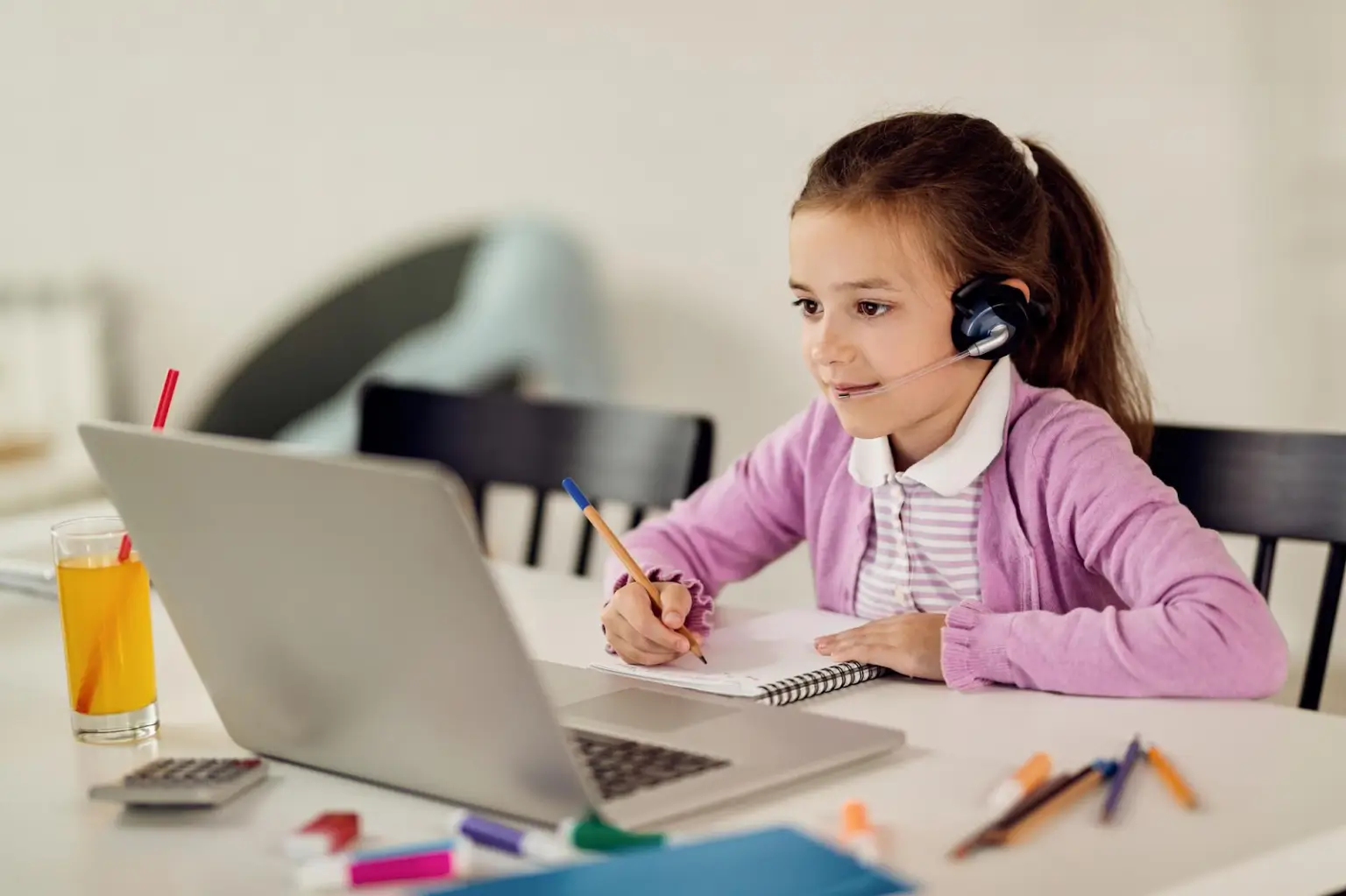
If you’ve decided to educate your child at home, chances are you’ve come across two main methods: Homeschooling and online schooling. While they share similarities, such as increased parental involvement, individualized learning, and the use of technology, there are some key differences you should be aware of.
Here’s a closer look at the four most important differences between homeschooling and online schools so you can make a decision best suited for your child’s learning style:
- Instructor
The biggest difference between online school and homeschooling is the role of an instructor. In an online school, your child is taught by certified teachers specifically trained for online learning. An instructor plans lessons, delivers them, grades assignments, and provides feedback.
An online school keeps a strong check and balance on the entire process. Teachers follow a set schedule, and students are expected to attend the lessons and appear for exams.
In comparison, homeschooling is mostly parent-led. The parent or guardian acts as the instructor for all grade levels and subjects. Parents also create lesson plans, assignments, and tests. While some families may hire a tutor, you need to offer a greater portion of commitment and involvement.
- Parental Guidance
Another important factor in the online school vs homeschool is parental guidance. As mentioned earlier, in homeschooling, parental support is of the utmost importance. Parents manage and guide their kids’ studies from A to Z.
In online schools, parents act more as supporters than direct educators. While you do need to help your child stay organized, the main responsibility for teaching lies with the instructors.
- Curriculum
Next, there is the curriculum. Online schools, like Virtual Prep Academy, follow a state-certified curriculum created by experts. It is also approved by international educational programs, such as CBSE, IB, IGCSE, or Common Core. High school students can even earn a diploma and a full transcript to seamlessly transfer to college programs.
In homeschooling, parents create the curriculum or buy an existing one, depending on their child’s learning level. You can tailor the learning material to match your child’s interests and needs. Using online resources, like those available through Tuttle Twins, ensures you’re providing your child with age-appropriate, values-driven materials to help them learn and thrive. While there is immense flexibility and control, meeting specific state education requirements can be a little difficult.
- Socialization and Community Engagement
In addition to the curriculum, homeschooling and online school also differ in terms of socialization.
In homeschooling, socialization depends entirely on the family’s efforts. As a parent, you need to arrange field trips and join local co-ops and clubs to keep your child socially engaged. You have the freedom to choose rich and diverse experiences, which, of course, requires considerable planning and effort.
In comparison, online schools provide built-in connection opportunities. Students can interact with peers and work in groups for a collaborative project. This will teach your kid the importance of teamwork and acceptance. Some online schools even arrange in-person events to help students stay connected. Online schools can be highly beneficial if your child excels in social settings.