
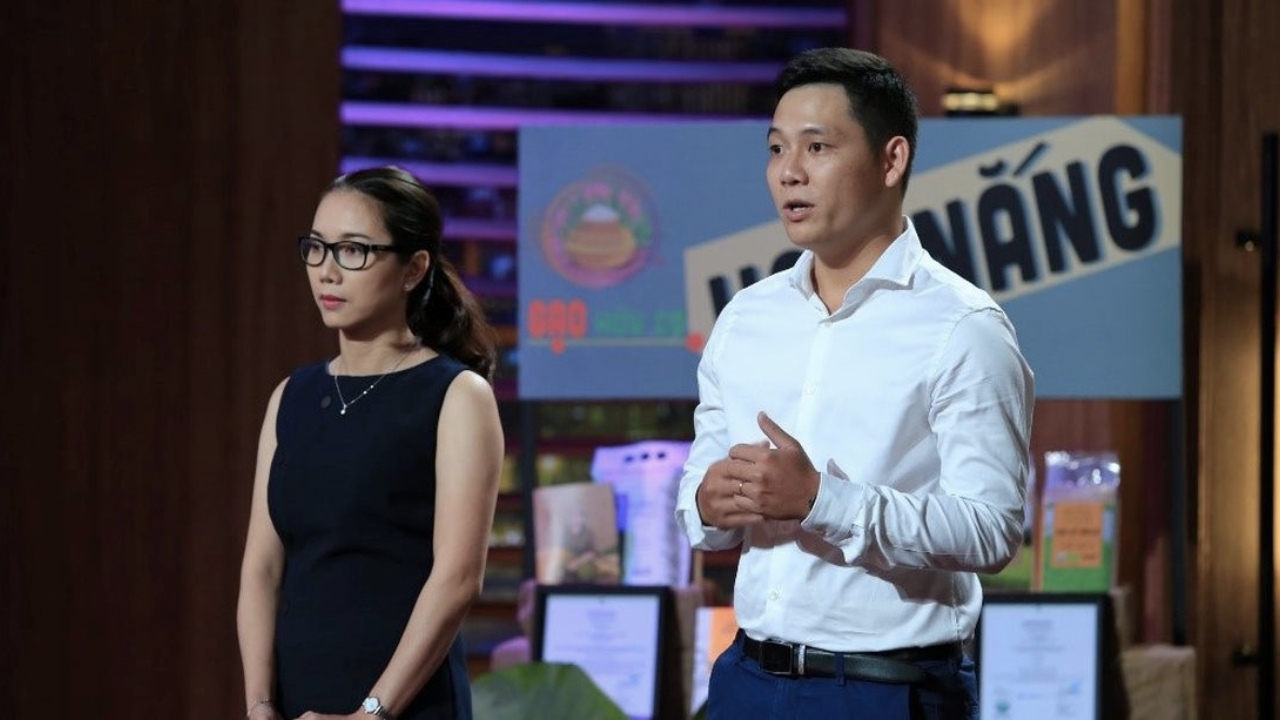
In 2018, two young Vietnamese founders, Lâm Anh Tú and Đặng Thị Trường An, stepped under the bright studio lights of Shark Tank Vietnam Season 2. Their company, Hoa Nắng Organic, was built on the dream of transforming everyday staples like rice and sugar into certified organic products that could compete on the world stage. With quiet determination, they asked for 10 billion VND, about 500,000 USD, in exchange for 30% of their business.
At first, their dream seemed out of reach. Most of the sharks questioned the structure of the business and worried about ownership issues. For a tense moment, it looked like the founders would walk away empty-handed. But in the dramatic style that makes Shark Tank so memorable, Shark Louis Nguyễn surprised everyone. He offered 4 billion VND for 51% of the company, along with 6 billion VND as a convertible bond. That moment shifted the entire course of Hoa Nắng’s journey, marking the start of a story filled with crisis, resilience, and growth.
The Shark Tank Deal and Its Complications
On the surface, the Shark Tank deal looked like salvation. It gave the founders both financial backing and the guidance of a well-known investor. However, what many viewers did not see was that the company’s legal structure had serious complications.
Before appearing on the show, Hoa Nắng had already taken on an investor. That investor backed out just before Shark Tank aired, leaving the founders scrambling. To keep moving forward, they dissolved the original company and quickly formed a new one under the same name. This unusual maneuver meant that the new entity carried no legal ties to the earlier one, but it also raised red flags. Most of the sharks saw the risk and chose to stay away.
Shark Louis, however, looked beyond the confusion. He focused on the founders’ vision and the potential in Vietnam’s rising organic food market. His decision to invest did not just provide money; it also gave Hoa Nắng a second chance to rebuild credibility. For the founders, the deal was less about cash and more about survival.
Rebuilding After Collapse
The years following Shark Tank were anything but easy. Lâm Anh Tú and Đặng Thị Trường An faced the heavy burden of proving that Hoa Nắng was more than a shaky TV deal. They needed to restore trust with consumers, partners, and even their own team. Their strategy was to focus on the one thing no investor or competitor could question: product quality.
They built their business around the “shrimp–rice cultivation” model, an approach deeply rooted in Vietnam’s Mekong Delta farming tradition. During part of the year, the fields are used for rice. During another part, they serve as shrimp ponds. This cycle reduces pests naturally, restores soil nutrients, and eliminates the need for harmful chemicals. It is a method that blends tradition with modern sustainability.
This model not only impressed local farmers but also caught the eye of international certifiers. In time, Hoa Nắng’s rice achieved both USDA Organic and EU Organic seals through Control Union Certifications. These were not just stickers on a package; they were powerful symbols of trust. For foreign buyers, the certifications confirmed that Hoa Nắng products met some of the strictest food safety and environmental standards in the world.
Turning Crisis Into Growth During the Pandemic
The COVID-19 pandemic in 2020 and 2021 was a stress test for businesses worldwide, and food producers in Vietnam were no exception. Supply chains broke down. Supermarket shelves emptied. Small farmers were left stranded with unsold goods. For a company like Hoa Nắng, which relied heavily on in-person distribution, the crisis could have been fatal.
Instead of waiting for recovery, the founders made a bold pivot. They shifted their focus to e-commerce platforms such as Tiki and Kamereo, while also building their own online presence. This move was not just about opening new sales channels. It represented a change in mindset. The team realized that future growth required flexibility, and digital distribution was no longer optional but essential.
The gamble worked. By embracing online sales, Hoa Nắng reached urban customers stuck at home during lockdowns. Families who once bought rice and sugar at local markets now ordered directly from their phones. In 2021, while many small food businesses reported losses, Hoa Nắng’s revenue increased by 30%. This growth was not a stroke of luck but a direct result of quick adaptation. It also showed how a crisis can create opportunities for those willing to act fast.
Expanding Beyond Vietnam
With their domestic presence secured, Hoa Nắng turned their eyes to the global stage. The company’s organic rice and sugar began to appear in hundreds of supermarkets and specialty stores across Vietnam. But international expansion became the next big step.
One of their key breakthroughs came when Vietfarms, a US-based distributor, began carrying Hoa Nắng’s products. This gave them access to the large Vietnamese diaspora in the United States, as well as health-conscious American consumers looking for organic staples. To compete abroad, Hoa Nắng launched Champa Organic Sugar, a premium product certified to both USDA and EU standards. These certifications opened doors to premium grocery chains that would never stock uncertified imports.
The company also began experimenting with new products such as rice cakes and packaged organic snacks. These innovations were not only about profit margins but also about proving that Vietnamese organic products could move beyond commodity status and enter higher-value segments.
Investment and the Beacon Fund Boost
In 2022, Hoa Nắng achieved another milestone by securing investment from Beacon Fund, a gender-lens fund focusing on women-led enterprises in Southeast Asia. This partnership was more than financial. It validated the leadership of co-founder Đặng Thị Trường An and reinforced the company’s commitment to sustainable and inclusive growth.
As Beacon Fund explained in their press release, “Hoa Nắng is a prime example of how women entrepreneurs are building sustainable, high-growth businesses in Vietnam.”
This new capital allowed Hoa Nắng to expand farming areas, strengthen distribution, and explore building a processing facility for value-added products. For a startup that once faced collapse, the Beacon Fund investment symbolized maturity. It showed that Hoa Nắng had grown from a risky TV gamble into a recognized pioneer in Vietnam’s organic food industry.
Lessons Every Startup Can Learn
The journey of Hoa Nắng holds lessons for entrepreneurs everywhere. Resilience is more powerful than rejection. Even after most sharks declined, the founders pressed on and built credibility step by step. The COVID-19 crisis revealed another truth: adaptability can turn disaster into growth. By shifting online, Hoa Nắng not only survived but came out stronger.
Finally, the pursuit of credibility through international certifications and trusted partnerships turned a small Vietnamese company into a global contender. This strategy is often overlooked by startups that rush for short-term profit. Hoa Nắng proves that building trust and quality pays off in the long run.
Conclusion – A Model for Vietnam’s Sustainable Future
Hoa Nắng Organic began as a risky pitch in a TV studio, overshadowed by doubts and legal complications. Today, it stands as a company exporting to foreign markets, creating jobs, and promoting sustainable farming practices. It represents more than a brand; it represents a movement.
For Vietnam, Hoa Nắng is part of a growing shift toward organic farming, a future where traditional methods meet modern demand for safe and healthy food. For entrepreneurs, it is proof that setbacks can be the start of something bigger.
The story of Hoa Nắng is not just about rice and sugar. It is about persistence, creativity, and the belief that even small farms in Vietnam can fuel a global food revolution.
TL;DR (Too Long; Didn’t Read)
Hoa Nắng Organic turned a risky Shark Tank pitch into a resilient business by focusing on product quality, pivoting online during the pandemic, and securing international certifications and funding. Their story shows how crisis-driven adaptability can spark lasting growth in Vietnam’s organic food industry.
FAQs
What investment did Hoa Nắng Organic receive after Shark Tank?
Hoa Nắng secured an initial investment from Shark Louis Nguyễn: 4 billion VND for 51% equity and a 6 billion VND convertible bond. Later, in January 2022, they received funding from the Beacon Fund, a gender-lens investor supporting women-led businesses in Southeast Asia.
How did Hoa Nắng perform during the COVID-19 pandemic?
Instead of contracting during the pandemic, Hoa Nắng pivoted to e-commerce and redesigned its supply chain, achieving a 30% increase in revenue in 2021.
Are Hoa Nắng’s products certified organic?
Yes, their rice is certified organic by Control Union according to USDA, EU, and JAS standards, ensuring high-quality, pesticide-free production.
Does Hoa Nắng export its organic products?
Yes, through strategic partnerships like Vietfarms in the U.S., they export certified organic rice and sugar to North American markets. :
What makes Hoa Nắng’s farming model unique?
Hoa Nắng uses a sustainable shrimp-rice cultivation method in the Mekong Delta, integrating shrimp farming and rice cultivation to enhance soil quality and reduce chemical use.