
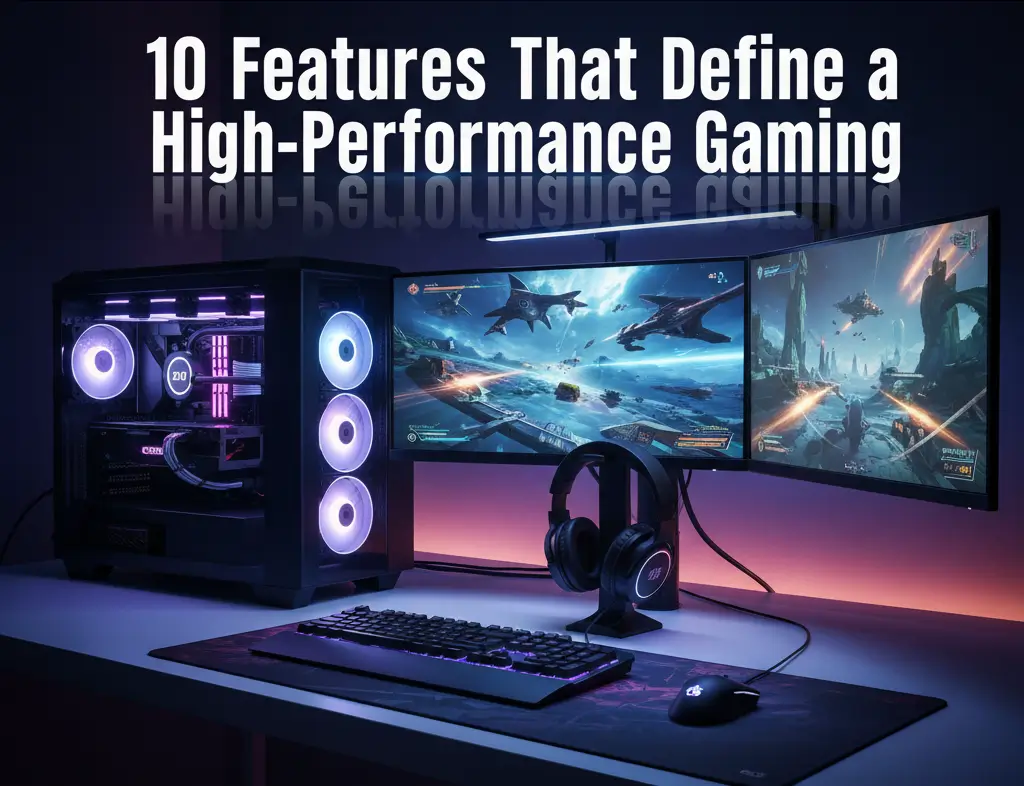
Building or buying a powerful computer for modern titles is not just about chasing flashy specs. Many people choose gaming pre-built PCs because they want solid performance without the headache of researching every detail. Yet, even ready-made options share common characteristics that make them stand out. These features decide whether a rig will stay fast for years or struggle after a few updates in the gaming world.
1. Powerful Graphics Card
The graphics card is the beating heart of a gaming computer. Without it, high frame rates and smooth visuals simply do not exist. A strong GPU not only pushes pixels but also handles advanced rendering techniques, from ray tracing to AI-driven upscaling. Choosing the right card means thinking about both raw horsepower and software support, since driver updates often make a big difference in how games run over time.
2. Fast Processor
A CPU shapes the speed of calculations that happen behind the screen. While some games rely heavily on the graphics card, others lean on the processor for physics, AI, or world simulation. High clock speeds combined with multiple cores give flexibility for different genres, from competitive shooters to massive open worlds. A balanced system will always pair the GPU with a CPU that doesn’t hold it back.
3. Adequate Cooling System
Performance does not last long if the components are overheating. Effective cooling is a defining trait of a high-performance PC. Liquid loops or advanced air coolers keep temperatures under control and prevent thermal throttling. The difference between a hot, noisy machine and a cool, quiet one often lies in the quality of fans, radiators, and airflow design. This is why many builders treat cooling as an art rather than just a technical requirement.
4. High-Speed Memory
RAM affects how quickly a game can load assets and how responsive the system feels. Modern titles use more memory than ever, and low-capacity setups quickly become bottlenecks. Beyond size, speed matters too; fast DDR modules cut down on delays and keep frame times consistent. Matching RAM with the right motherboard settings unlocks its true potential, making gameplay noticeably smoother.
5. Storage That Matches Performance
A fast solid-state drive is not only about reducing loading screens. Games today often require tens of gigabytes, and older hard drives simply cannot keep up with that demand. NVMe SSDs in particular make installations, updates, and level transitions dramatically faster. Having one drive for the operating system and another for games is a common approach, as it keeps the system responsive even during heavy tasks.
6. Reliable Power Supply
A machine that consumes hundreds of watts needs steady power to stay stable. The power supply is often overlooked, but it is one of the most defining components of a performance build. A good unit offers headroom for future upgrades, consistent voltage delivery, and protection against spikes. Cheap power supplies cut corners, and in gaming PCs that choice can shorten the life of expensive hardware.

7. Quality Motherboard
Every part of the system connects through the motherboard, making it more than just a platform. High-quality boards provide better VRMs for stable overclocking, extra slots for storage, and advanced networking features. They also dictate upgrade paths for the future, since socket compatibility determines which processors can be installed later. A solid motherboard lays the groundwork for both present and future gaming ambitions.
8. Future-Proof Connectivity
A gaming PC that lacks modern connections quickly feels outdated. Fast USB ports, Wi-Fi 6, and PCIe 4.0 or even 5.0 support all contribute to performance and flexibility. Gamers use multiple devices, from headsets to external drives, and having the right ports keeps the setup free from constant adapters. This attention to connectivity avoids frustrations that appear months after the initial build.
9. A Well-Balanced Setup
Before listing the final key aspects, it is worth pointing out that balance is the secret ingredient of high-performance rigs. Over-investing in one part while ignoring others leads to wasted potential. A good build is like a team where every member matters. The following points bring that idea into sharper focus:
- A case with strong airflow keeps parts healthy for longer.
- A monitor that matches the GPU output makes the whole investment worthwhile.
- A reliable keyboard and mouse contribute more to the experience than many expect.
All these details may look secondary, but they tie the system together and make it enjoyable in daily use.
10. Professional Craftsmanship
While individual parts matter, the way they are assembled defines how the system performs over years. Companies like Hyper Cyber gained recognition by building rigs where every cable, fan, and component feels considered. Such craftsmanship avoids rookie mistakes, like poor thermal paste application or messy wiring that blocks airflow. A professionally assembled system combines power with reliability, creating a machine that feels premium inside and out.
Conclusion
A high-performance gaming PC is more than a collection of parts; it is a carefully built machine where every feature serves a purpose. From GPUs and CPUs to storage and power supplies, each element carries weight in the final experience. Add in cooling, connectivity, and professional assembly, and you get a computer that handles innovations without breaking a sweat. Whether one chooses to build from scratch or turn to trusted names like Hyper Cyber, these ten features set the foundation for gaming that stays fast, stable, and enjoyable for years.