

He Climbed a 13,000-Foot Wall Alone and Conquered the Alps Faster Than a Ski Lift
He turned climbing into a race against gravity, scaling sheer ice walls with the precision of a machine and proving that human limits are meant to be rewritten.
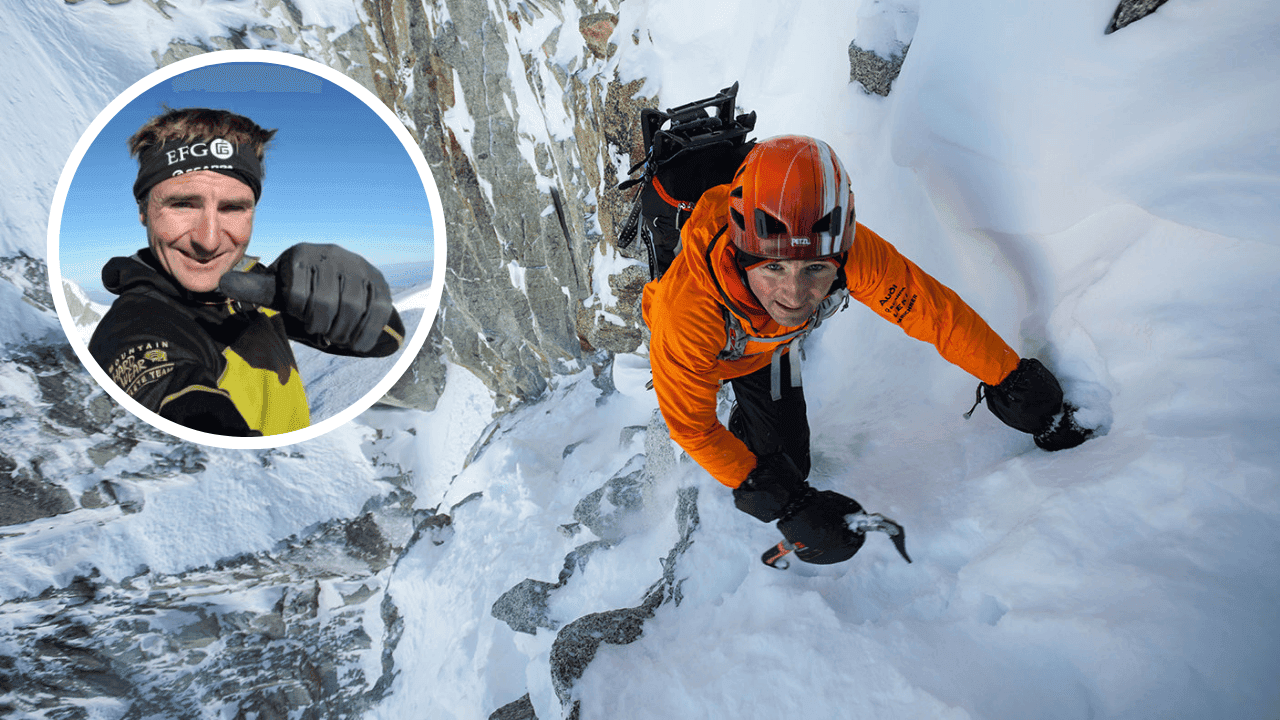
Imagine standing at the base of a 13,000-foot wall of ice and rock. The air is cold, the slope almost vertical, and every step could end your life. Most people would back away. Ueli Steck looked up and started climbing.
Known as “The Swiss Machine,” Ueli Steck was a climber from Switzerland who became a legend for doing what seemed impossible. In 2015, he climbed the Eiger’s North Face in just 2 hours and 22 minutes, faster than a ski lift could carry someone to the top.
That wall usually takes experienced climbers two days to climb with ropes, food, and rest. Steck did it alone, with only an ice axe in each hand and crampons on his boots.
Fast Facts
A quick look at the essentials behind this record-setting climb.
- Climber: Ueli Steck, known as The Swiss Machine
- Feat: Eiger North Face, approximately 13,000 feet of vertical terrain
- Time: 2 hours 22 minutes 50 seconds, verified 2015 record
- Style: Solo ascent with ice tools and crampons, no supplemental oxygen
- Why it matters: A benchmark for speed alpinism that still inspires new generations
Why His Climb Went Viral Again
In 2025, short clips of Steck’s record-breaking climb started spreading again on TikTok, YouTube Shorts, and Reddit. Viewers could not believe how fast he moved up the icy slope. He looked like a superhero or a machine programmed for perfection.
Younger audiences who had never heard of him began asking, “Who was this guy?” and “How did he do that?” His old videos gained millions of new views.
Steck’s name became a symbol of pure human power in a world filled with artificial intelligence and machines.
How He Did the Impossible
Ueli Steck’s success came from years of scientific training and discipline. He treated climbing like a math problem that could be solved with precision and practice.
He trained 30 to 40 hours a week, combining running, cycling, and endless vertical climbs to build endurance. He once told Outside Magazine, “I don’t have a death wish. I’m hanging onto my life like never before.”
His tools were simple: two ice axes, crampons, and knowledge. But his real weapon was efficiency. Every move was planned to save seconds. Every strike of his axe was part of a rhythm.
An analysis by Climbing.com showed that Steck’s 2015 record meant he climbed the wall at an average rate of over 3,000 vertical feet per hour, a speed no one else had achieved at that altitude.
The Mind Behind “The Machine”
Despite his nickname, Steck was not robotic. He was calm, analytical, and deeply human. He studied his routes like a scientist and trained his mind to stay steady under pressure.
In interviews, he often said climbing was about freedom, not fear. “When I climb, I feel free and unrestricted,” he explained.
His ability to focus made him different. He turned each climb into a meditation on movement and control. Many athletes now use his training philosophy, focusing on precision, flow, and mental strength rather than brute force.
Why People Can’t Stop Talking About Him
Every few years, Steck’s story goes viral again. It often happens when someone attempts a new speed record or when climbers post old footage of his climbs.
This time, the attention returned as new mountaineers tried to beat his records in the Alps. Many referenced Steck as the gold standard. His videos are also popular because they remind people that a human, not a machine, once did something superhuman.
Modern audiences, surrounded by automation, seem drawn to stories where human skill still matters.
A Legacy That Still Inspires
Ueli Steck died in 2017 while preparing for another record attempt on Mount Everest and Lhotse. He fell while training on nearby Mount Nuptse. His death shocked the climbing community, but his influence never faded.
Today, climbers study his routes and techniques. Coaches use his methods to teach balance, rhythm, and efficiency. He proved that mastery is not about strength alone, but about understanding your limits and then quietly rewriting them.
Expert Insight: Why Steck Still Matters
Dr. Peter Habeler, a veteran mountaineer and the first man to climb Everest without oxygen, once said,
“Ueli didn’t just climb mountains. He showed what the human body can achieve when mind and motion become one.”)
That quote captures why Steck still inspires scientists, athletes, and dreamers alike. He turned endurance into an art form.
Can Others Do This Too?
Steck’s style of climbing is not for beginners. It is risky and demands years of experience. But his mindset can apply to anyone: focus deeply, move efficiently, and value mastery over speed.
His story encourages people to find their own “Eiger,” whatever challenge feels impossible, and start climbing.
Final Reflection
Ueli Steck’s story proves that technology does not own the idea of perfection. Sometimes, it’s a human being with two tools, a heartbeat, and a goal that resets what we believe is possible.
Even years after his death, millions still watch his videos in awe. They remind us that being human is not a weakness. It is the ultimate strength.
From obsession to clarity — one original question every week.
We answer one noisy topic at a time, in full. No daily roundup, no thread bait — just the question, the principles, and the system.