
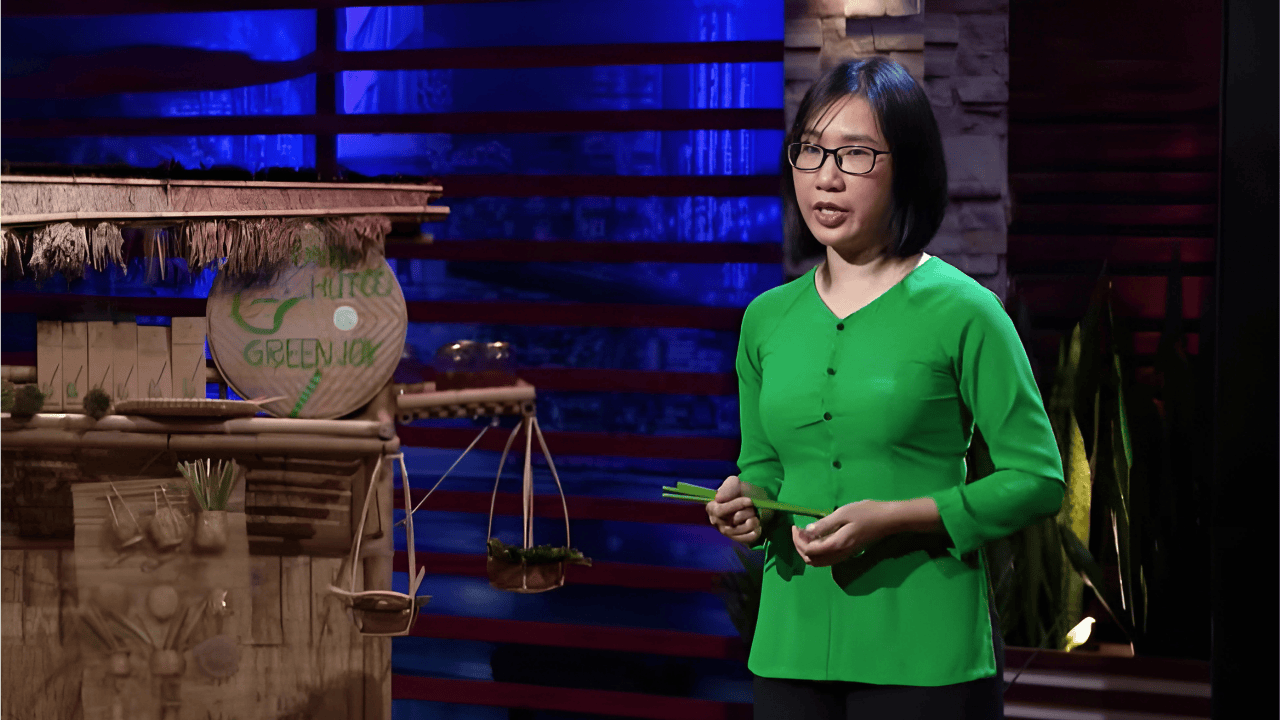
What happens when someone walks away from a safe corporate life to follow a dream? That is the heart of Green Joy’s story. Its founder, Võ Quốc Thảo Nguyên, often known as Nguyen Vo, worked in banking. She had a senior position, a large salary, and what many would call a secure future. Yet she gave it all up to become, in her own words, a “farmer.”
Her family worried because leaving a bank career in Vietnam meant stepping off a clear career ladder into the unknown. But Võ was not motivated by money or status. She wanted to create a product that could fight pollution and give back to the planet. That vision turned her attention to something most people never think twice about: the drinking straw.
The choice was bold. A straw is small, but billions of them are used every year. By tackling such a common item, Võ saw a way to make everyday habits more sustainable. In many ways, her decision was less about business and more about answering a personal question: What if one small product could help clean up the world?
The Vision That Sparked Change
Plastic straws became one of the most visible symbols of ocean waste in the late 2010s. Campaigns to ban them spread across countries after viral photos showed turtles and seabirds harmed by plastic. Yet, alternatives had flaws. Paper straws collapsed after minutes in a drink, and metal straws were expensive and inconvenient.
Green Joy introduced a simple but powerful alternative. It used Lepironia grass, a plant found in the Mekong Delta wetlands. The grass was cut, dried, and shaped into straws that looked and felt natural. They were biodegradable, safe, and unlike paper straws, they stayed firm for hours.
This process was not just about the product. By sourcing locally, Green Joy supported small farmers in the Mekong Delta, an area already facing threats from rising sea levels and saltwater intrusion. The production chain gave farmers a new source of income and helped protect their land from being abandoned.
Nguyên Võ explained the idea this way:
“Our straws come directly from nature and return to nature. They carry no guilt, only relief.”
Her words highlighted the product’s simple promise: no waste, no harm, and no compromise on quality.
A Spotlight on Shark Tank Vietnam
The turning point came in 2019 when Green Joy appeared on Shark Tank Vietnam. The show gave the company national exposure. On screen, Võ confidently pitched her eco-straws, asking for 2 billion VND (about $86,000) in exchange for 20 percent equity.
The pitch struck a chord. Several Sharks quickly showed interest, but the most aggressive was Shark Đỗ Liên. Known for her focus on community-driven investments, she doubled the offer, committing 4 billion VND for 33 percent of the company.
Her decision was about more than profit. Liên said: “You think about the environment, which is something I really like.” She also admired Võ’s courage as a female entrepreneur in a competitive market, stating that she wanted to help her “become a strong person” and inspire other women in Vietnam to start businesses.
The deal became a headline moment. Green Joy was no longer just a small workshop in the Mekong Delta. It became a startup with national recognition, a global export plan, and a backer who cared about more than just money.
The Financial Picture: Big Dreams, Quiet Results
During the Shark Tank pitch, Võ laid out an ambitious roadmap. In the first eight months, Green Joy had earned 830 million VND in revenue. She forecasted 13 billion VND by the end of 2019 and long-term targets of 150 billion VND for 2020, 350 billion VND for 2021, and 600 billion VND by 2022.
However, there is no public evidence confirming whether those numbers were reached. Unlike American startups that often publish funding rounds and valuations, Vietnamese private companies rarely share financial details. Green Joy has never issued a press release or filing about its net worth or profitability.
This silence does not mean failure. It reflects how social enterprises often grow differently. Instead of chasing billion-dollar valuations, Green Joy built a slower but steadier path. For many Vietnamese Shark Tank startups, deals announced on TV also take months to finalize, and sometimes they change afterward. What is clear is that Green Joy kept producing, kept exporting, and kept winning recognition.
What We Can Measure: Real Impact
Green Joy’s own reports focus on impact instead of revenue. According to its official data, the company has replaced over 40 million plastic straws with grass straws. This shift prevented around 20 tons of plastic from entering landfills and oceans. It also cut an estimated 50 tons of carbon emissions and provided stable income for about 100 farmers in the Mekong Delta.
The company is active, selling both in Vietnam and through export channels in over 30 countries. Its impact shows ongoing production and demand, even if financial figures remain private.
The lesson here is clear. Some startups prove their worth not with balance sheets, but with measurable benefits to society and the environment.
Growing Beyond Straws
Green Joy has also moved beyond a single product. Its catalog now includes placemats, coasters, utensils, and decorative handicrafts made from bamboo, palm leaves, and wood. This expansion reflects a “circular economy” mindset, where nothing goes to waste and natural materials are reused in creative ways.
For farmers, this diversification means more consistent demand for raw materials. For customers, it means more chances to replace plastic with natural alternatives. For Green Joy, it means building a brand identity not just as “the straw company,” but as a leader in eco-friendly lifestyle products.
In this way, Green Joy shifted from solving one problem to addressing a broader question: How can everyday objects become tools for sustainability?
The Challenge of Many Green Joys
One reason it has been hard for outsiders to track Green Joy’s journey is brand confusion. Search “Green Joy” on Google and you might find a cannabis company in New Jersey, a salad chain in the U.S., or a Hong Kong trading firm. None of these are linked to the Vietnamese startup.
This identity overlap creates a problem. Journalists, investors, and even eco-conscious buyers struggle to find information about the real Green Joy from Vietnam. Despite this, the company continues to stand apart through its mission, awards, and direct presence in export markets.
For anyone asking online, “Is Green Joy legit?” the answer is yes, but you need to look carefully to distinguish it from unrelated namesakes.
Recognition on the Global Stage
Although Green Joy does not share valuations, it has gained recognition that adds credibility. In 2021, it won VietChallenge, a global competition for Vietnamese startups. The same year, it received the International Innovator Award. Later, it won the Single Use Plastic Challenge in 2022 and USAID’s Clean Cities, Blue Ocean Award.
These awards matter because they come from independent organizations. They prove that Green Joy’s mission and execution are seen as innovative not only in Vietnam but worldwide.
Redefining Startup Success
When people think of startups, they often picture unicorns: billion-dollar companies racing toward huge profits. Green Joy challenges that idea. It shows that success can mean building steady growth, supporting farmers, reducing waste, and protecting ecosystems.
Nguyên Võ’s decision to leave banking was not just about running a company. It was about creating a movement. Green Joy may never be valued at billions, but it has given back something even more valuable: a model of how small businesses in developing countries can lead global change.
Like the grass that makes its straws, Green Joy’s journey is quiet but strong. It bends without breaking, grows steadily in hard conditions, and restores balance to the environment around it.
TL;DR
Green Joy, a Vietnamese social enterprise, has replaced more than 40 million plastic straws with eco-friendly grass straws. Instead of chasing unicorn status, the company has focused on steady growth, supporting 100 local farmers, and expanding sustainable products worldwide.
FAQs
Is Green Joy still in business in 2025?
Yes, Green Joy is still active in 2025. The company continues to export eco-friendly products to more than 30 countries and reports replacing over 40 million plastic straws worldwide.
Did Green Joy close the Shark Tank Vietnam deal?
Green Joy secured an on-air deal with Shark Đỗ Liên for 4 billion VND in exchange for 33 percent equity. However, like many Shark Tank Vietnam deals, there is no public record confirming whether the transaction fully closed after filming.
What is Green Joy’s net worth?
Green Joy has not publicly disclosed its net worth. As a privately held social enterprise, its success is measured through environmental impact rather than financial valuation, including 20 tons of plastic prevented from waste and 100 farmers supported.
What products does Green Joy make now?
Green Joy produces biodegradable grass straws, placemats, coasters, bamboo and palm-leaf handicrafts, and natural utensils. These products expand the company’s vision of a zero-waste, circular economy.
Why is it hard to find information about Green Joy?
Many unrelated businesses worldwide also use the name “Green Joy,” including cannabis and trading companies. This brand confusion often hides information about the real Vietnamese Green Joy that makes eco-friendly straws.
Who is the founder of Green Joy?
Green Joy was founded by Võ Quốc Thảo Nguyên, also known as Nguyên Võ, a former banking professional who left her career to build a sustainable startup focused on reducing single-use plastics.