
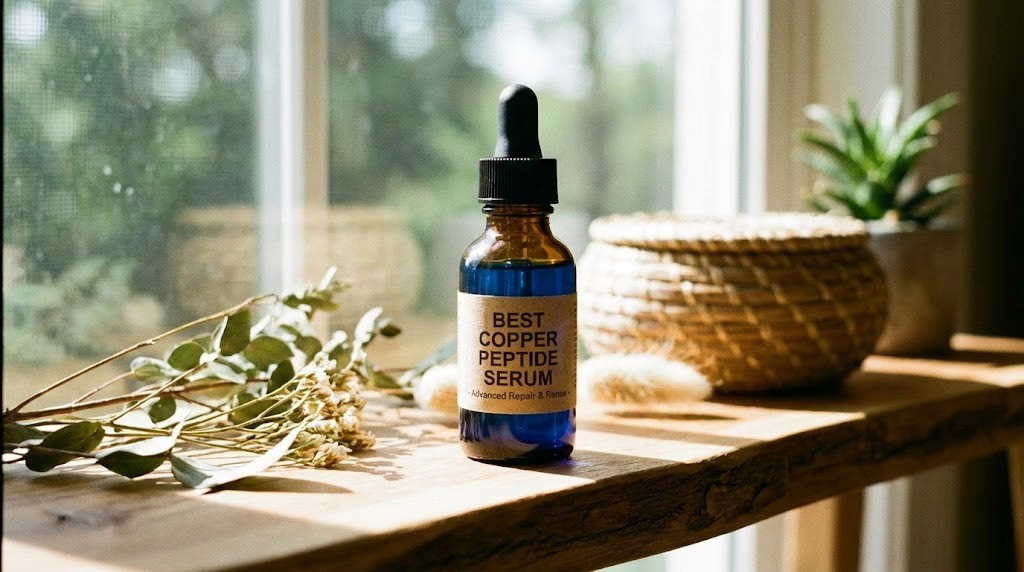
The story of GHK-Cu in skin biology is one of slow vindication. When Dr. Loren Pickart first isolated the small copper-binding peptide from human plasma in 1973, the immediate research interest was immunological rather than dermatological. It would take another two decades before the cosmetic and skin science communities recognized that this naturally occurring tripeptide held implications for understanding how skin maintains, repairs, and ultimately loses its structural integrity over time.
By 2026, GHK-Cu has accumulated one of the more substantial research profiles of any peptide studied in skin biology not because of marketing momentum, but because the molecular biology keeps pointing back to it.
The Architecture Behind GHK-Cu’s Activity
GHK-Cu consists of three amino acids glycine, histidine, and lysine bound to a single copper ion. This compact structure belies an unusual biological versatility. The peptide functions as a copper carrier capable of delivering this essential cofactor to enzymes that depend on it for activity. It also acts as a signaling molecule in its own right, modulating gene expression patterns in ways that extend well beyond simple copper delivery.
In skin specifically, GHK-Cu interacts with fibroblasts, keratinocytes, and the extracellular matrix proteins that determine skin’s structural and functional properties. Its naturally occurring presence in plasma — and its documented decline with age — has prompted researchers to investigate whether falling GHK-Cu levels contribute to the visible and biochemical changes that define skin aging.
Collagen and Elastin Research
One of the most studied effects of GHK-Cu in skin involves collagen synthesis. Multiple studies of cultured fibroblasts have demonstrated that GHK-Cu exposure increases the production of type I and type III collagen, the structural proteins most abundant in dermal tissue. The peptide also appears to support elastin synthesis, the protein responsible for skin’s recoil properties.
What makes these findings particularly relevant to skin science is the parallel observation that GHK-Cu may modulate the activity of matrix metalloproteinases enzymes that break down collagen and elastin during normal tissue remodeling but that become overactive in aging and photodamaged skin. By influencing both production and degradation pathways, GHK-Cu appears to support a more favorable balance for tissue maintenance.
The implications for skin aging research are significant. Visible signs of aging wrinkles, loss of firmness, thinning dermis correlate strongly with declining collagen content and disrupted elastin networks. Compounds that influence the underlying production-degradation balance offer a different mechanistic angle than approaches targeting only superficial appearance.
Wound Healing and Skin Barrier Studies
The wound healing literature on GHK-Cu has expanded considerably over the past decade. Studies in animal models have documented accelerated wound closure, improved tissue organization, and reduced scar formation in GHK-Cu-treated wounds compared to controls. These effects have been observed across various wound types, from superficial abrasions to deeper surgical incisions.
Beyond acute wound healing, research has examined GHK-Cu’s effects on skin barrier function. The skin barrier primarily mediated by the stratum corneum and the lipid matrix surrounding its corneocytes is essential for retaining moisture, excluding pathogens, and maintaining homeostasis. Studies suggest that GHK-Cu may support barrier integrity through mechanisms involving keratinocyte differentiation and lipid metabolism.
For research focused on barrier-compromised skin conditions, this line of investigation has obvious relevance. Whether the findings translate into reliable interventions remains an open question, but the consistent observation that GHK-Cu supports multiple aspects of healthy skin function has sustained ongoing investigation.
Hair Follicle Research
While not strictly dermatological in the cosmetic sense, hair follicle biology shares considerable overlap with skin science, and GHK-Cu research has expanded into this area substantially. Studies have documented effects including increased follicle size, extended anagen phase duration, and improved dermal papilla function in animal models.
The proposed mechanisms involve both direct stimulation of follicular cell populations and indirect effects mediated by improved blood supply through enhanced angiogenesis. Hair follicles cycle continuously through phases of growth, regression, and rest throughout life, and the molecular signals governing these transitions provide a window into how peptides like GHK-Cu may influence regenerative processes more broadly.
Anti-Inflammatory and Antioxidant Properties
Chronic low-grade inflammation contributes to many of the changes observed in aging skin, including degradation of structural proteins, impaired wound healing, and increased oxidative damage. GHK-Cu research has demonstrated anti-inflammatory effects in skin-relevant cell models, with documented reductions in pro-inflammatory cytokine expression and enhanced antioxidant defense.
These properties matter beyond their immediate effects. The chronic inflammatory state often described as “inflammaging” appears to drive tissue dysfunction across multiple organ systems, and skin being directly exposed to environmental insults including UV radiation, pollution, and microbial challenges sits at the front line of this process. Compounds that modulate inflammatory signaling in skin contexts have implications for understanding tissue resilience more generally.
Gene Expression Studies
Some of the most striking findings in GHK-Cu research have come from gene expression profiling. Studies examining the peptide’s effects on human fibroblast cultures have documented modulation of thousands of genes, with the affected pathways clustering around tissue repair, antioxidant defense, and reduction of fibrotic and inflammatory signaling.
This breadth of gene regulation distinguishes GHK-Cu from compounds that target single pathways. Rather than addressing one mechanism, the peptide appears to influence a network of related processes that collectively determine tissue health. For researchers studying skin biology, this systems-level effect has prompted reconsideration of how single-target approaches may underestimate the complexity of skin aging.
Research-Grade Sourcing
The reproducibility of GHK-Cu research depends substantially on compound quality. Pure tripeptide bound to copper in the correct stoichiometric ratio, verified by HPLC and mass spectrometry, is the baseline for reliable experimental work. Suppliers offering GHK-Cu copper peptide compounds with full characterization documentation and certificates of analysis support the standards that peer-reviewed publication requires.
The Trajectory Ahead
GHK-Cu research is unlikely to slow. The peptide sits at intersections of skin biology, regenerative medicine, hair follicle research, and the broader study of how aging affects tissue maintenance. Each of these areas continues to advance, and GHK-Cu remains a reference compound in many of the relevant investigations. For researchers entering skin science in 2026, understanding what GHK-Cu does and what we still need to learn about how it does it has become essentially mandatory background.