
Garblizer Shark Tank Dubai: The UAE Startup Turning Food Waste Into Water and Profit
Garbaliser Shark Tank Dubai reveals how food waste can turn into clean water and real profit.
Food waste is everywhere. But what if it could become clean water and farm profit?
Most people see leftovers as trash. But Garbaliser sees something far more valuable. This UAE-born startup is turning everyday food scraps into two powerful outputs: drinkable water and high-performance fertilizer.
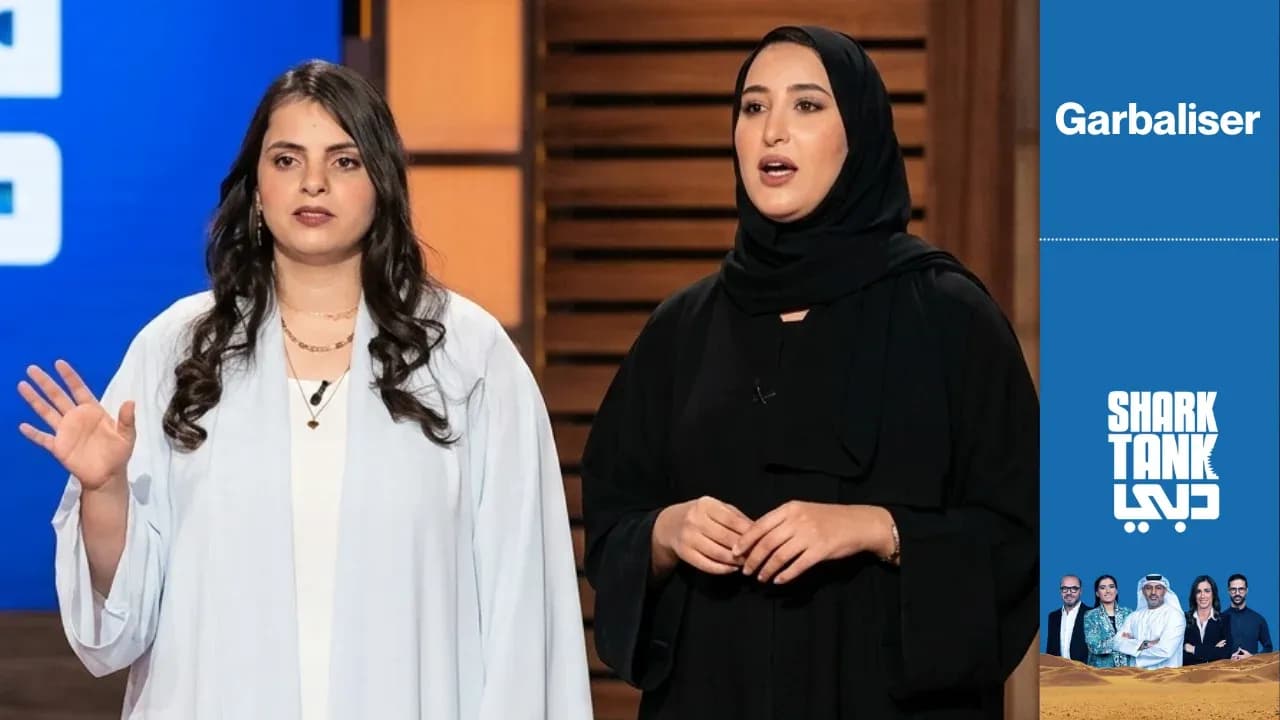
Led by Reem Al Marzouqi and Dr. Hanan, the company is not just solving waste. It is tackling water scarcity, farming costs, and sustainability all at once.
For a region like the UAE, where water and agriculture are critical challenges, this idea hits differently.
Turning Waste Into Water and Profit
Garbaliser’s core innovation sounds almost unbelievable. They use a proprietary fermentation system that transforms organic waste into liquid organic fertilizer and clean water.
Most waste systems produce toxic sludge. Garbaliser does the opposite by purifying the liquid output instead of discarding it. This is what makes the idea powerful in the GCC, where water is expensive and waste is abundant.
“Our project produces renewable fertilizer and pure water through an integrated system.” Founders
This is not just sustainability. It is a system that turns a daily problem into a valuable resource.
Real Results: 30% Higher Crop Yield
Many startups sound great in theory, but fail in real-world conditions. Garbaliser avoided this by testing directly on farms under real pressure.
A farmer split his land into two sections. One side used traditional chemical fertilizers, while the other used Garbaliser’s organic solution. The outcome was clear and measurable.
The Garbaliser-treated side produced a 30% increase in yield and a 20% increase in profits. This shifts the conversation from eco-friendly to profit-driven, which is what truly matters for adoption in markets like Dubai.
Why Some Farmers Still Say No
Even with strong results, adoption is not automatic. Garbaliser discovered that the biggest barrier was not performance or price, but mindset.
Farmers are deeply used to chemical fertilizers. They expect fast, visible results and feel uncertain about switching to organic alternatives. This creates hesitation, even when data proves otherwise.
Out of all users, 300 farmers stayed with the system, showing an 85% retention rate. However, around 50 farmers dropped out simply because they were not ready to change.
“The issue is mindset. Farmers are used to chemicals.” Dr. Hanan
This insight highlights a key truth in innovation. Technology alone is not enough. Adoption depends on behavior.
The Founders: Engineering Meets Economics
Garbaliser’s strength comes from its founders. Reem Al Marzouqi brings deep engineering expertise and holds patents in both the United States and Japan.
Her co-founder, Dr. Hanan, complements this with a strong economic foundation. Her background ensures the business model is scalable and financially sound.
Together, they combine technical innovation with strategic thinking. This balance is rare and highly valued by investors, especially in sectors like agriculture and infrastructure.
The Deal That Changed Everything
Before entering Shark Tank Dubai, Garbaliser had already secured 800,000 AED for 7% equity. They entered the show seeking the remaining 800,000 AED to complete their round.
What followed was unexpected. Instead of negotiating down, the Sharks moved quickly to secure the opportunity.
Shark Tank Pitch Summary
| Startup | Garbaliser |
| Founders | Reem Al Marzouqi, Hanan Ismail |
| Industry | Waste Management / AgriTech |
| Ask | 800,000 AED |
| Pre-secured | 800,000 AED for 7% |
| Final Deal | 1.6 million AED for 12% |
| Investors | Noor Sweid and Yousef Tuqan |
| Key Value | Waste-to-water and fertilizer innovation |
This deal was not just about funding. It was a strong validation of a system that can scale across regions facing similar challenges.
Business Model: Built for Scale Across the GCC and Beyond
Garbaliser operates with a diversified business model designed for growth. It includes direct fertilizer sales, home units, and industrial-scale systems.
The company has already processed 30 tons of waste and produced 45,000 liters of fertilizer. It also has over 200 pre-orders for large-scale systems, showing strong demand beyond early testing.
Their revenue target is 11 million AED by 2026. Expansion plans include Lebanon, Jordan, the UAE, the GCC, and parts of Africa. This positions the company as more than a local startup, but a regional solution provider.
Why This Startup Hits Differently in Dubai
Garbaliser stands out because it aligns perfectly with how people in Dubai think and search. It is not just another green idea. It solves a real problem that people understand immediately.
Waste and water are everyday concerns in the region, and this startup connects both in a simple, powerful way.
The business also delivers clear economic value. Farmers are not just helping the environment. They are earning more money through higher yields. This makes the solution practical, not just idealistic.
Another reason it resonates is trust. Many people in the UAE are cautious about Shark Tank products due to scam ads. Garbaliser stands apart because it shows real data, patents, and traction.
It also naturally triggers common Dubai search behaviors. People want to know if it is real, if they can invest, and where they can buy it. Garbaliser answers all of these questions through its proven results and scalable model.
The Bigger Vision: A Future Without Waste
Garbaliser is not just solving waste. It is redefining how we see resources in a constrained world.
Food waste can become water. Water can support agriculture. Agriculture can feed communities more efficiently. This creates a circular system that reduces dependency on external inputs.
For regions like the UAE, this is more than innovation. It is a long-term strategy for sustainability and resilience.
The real question is no longer whether this idea works. The real question is how fast it can scale and who will adopt it first.
Related Reading
Bronze tanning brand Shark Tank journey update
Read the Full StoryFrom obsession to clarity — one original question every week.
We answer one noisy topic at a time, in full. No daily roundup, no thread bait — just the question, the principles, and the system.