
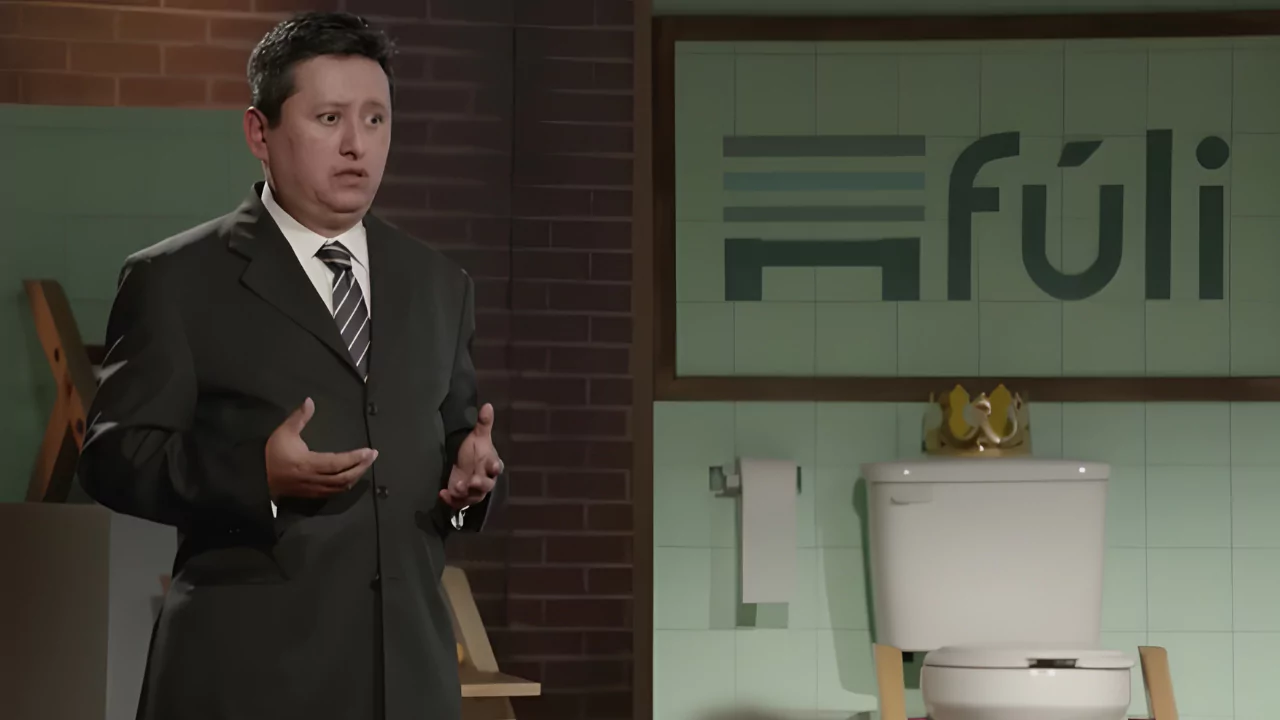
In one episode of Shark Tank México, an inventor brought a product that tackled a problem many people experience but rarely talk about. It was called Fúli, an adjustable toilet footstool designed to help you sit in a better position while using the bathroom.
The idea was simple but powerful. By raising your feet while sitting on the toilet, you move your body into a squatting position. This position is more natural for the human body and makes bowel movements easier and healthier. People with digestion problems or constipation often find relief using this method.
Even though Fausto Carabantes, the founder, impressed the sharks with his calm pitch and well-thought-out design, Fúli slowly faded from public view. Let’s explore what happened and why this promising idea may have disappeared.
Fúli’s Shark Tank Pitch: A Quiet Innovation for a Loud Problem
Fausto Carabantes, a passionate inventor from Mexico, appeared on Shark Tank México during Season 3, Episode 11. He introduced Fúli as a wellness product designed to improve toilet posture. During his pitch, Fausto explained that traditional sitting toilets put our bodies in an awkward angle. This often leads to health problems like constipation, bloating, and even long-term issues like hemorrhoids and colon problems.
Fúli was designed to raise a person’s legs while sitting, placing them into a squatting-like position. This position straightens the colon and makes the entire process of bowel movement smoother and quicker. Fausto pointed out that in many parts of the world, people naturally squat when using the toilet, and those regions report fewer colon-related health issues.
He showed off the actual footstool on stage. It was lightweight, compact, and had an ergonomic curve for comfort. Its height was adjustable, making it suitable for children, adults, and even people older than 70. Fausto emphasized how this simple change in posture could help millions improve their digestion without needing medication.
He asked for 1 million pesos in exchange for 25% equity. He was confident that the health benefits, design, and growing interest in wellness products would win the sharks over.
Why the Sharks Said No
Despite Fausto’s strong pitch and the practical value of the product, the sharks remained cautious. They appreciated the health benefits and agreed the idea was interesting, but they pointed out several weaknesses in the business plan.
First, Fúli had no existing sales. Fausto hadn’t tested the market or sold any units before coming on the show. This made it hard for the sharks to judge if real customers would actually buy it. In the startup world, early sales are often a sign of product-market fit, and unfortunately, Fausto didn’t have that proof.
Second, Fúli had no patent or intellectual property protection. This means that even if the product was unique, anyone could copy it, manufacture it cheaply, and sell it themselves. The sharks explained that this was risky because larger companies could steal the idea and take over the market before Fúli even had a chance to grow.
Third, some sharks felt that Fúli looked too similar to other products already on the market. Even though it was adjustable and more compact, it didn’t seem different enough to stand out. Without a clear competitive edge, the sharks were worried it would be lost in a sea of copycats and bigger brands.
Because of these concerns, none of the sharks made an offer. Fausto had to walk away without a deal, but the exposure from national television gave him hope that customers might still discover his product on their own.
What Happened After Shark Tank?
When an entrepreneur appears on Shark Tank, their business usually gains attention, even if they don’t get a deal. Some companies go viral. Others begin selling online. At the very least, many start a social media presence to build their brand.
But in Fúli’s case, that didn’t happen.
We did a deep investigation to see what happened next. We looked for an official website, but none exists. There are no active pages or profiles on Facebook, Instagram, or TikTok. We checked online marketplaces like Amazon México and Mercado Libre and found no listings for the Fúli toilet footstool. We even searched trade directories and public business records. Still, no sign of activity.
We also looked into patents or trademarks filed in Mexico for Fúli or under Fausto Carabantes’ name. Again, we found no results. This suggests that even after the Shark Tank pitch, no steps were taken to protect the product or prepare it for wider sale.
Even years after the episode aired, there are no updates, press releases, interviews, or partnerships linked to Fúli. It seems the company never launched after the show.
What the Market Looks Like Today
The global toilet footstool market has grown in the past few years. Wellness influencers and health bloggers often recommend footstools to improve digestion. One of the most popular products is Squatty Potty, a U.S.-based brand that became famous after its own appearance on Shark Tank USA.
Squatty Potty features a curved design, height options, and strong marketing. Their viral unicorn-themed commercial helped boost awareness. Today, Squatty Potty is sold in stores like Walmart, Target, and Amazon. It even has medical backing and clinical research supporting its benefits.
Besides Squatty Potty, other brands have entered the market, offering foldable, bamboo, eco-friendly, or adjustable designs. In short, the competition is tough.
Fúli entered this space with a great idea, but it didn’t have branding, funding, or a clear plan to compete with bigger names. While the design may have been clever, a business needs more than that to survive in a crowded market.
Why Exposure Was Not Enough
Some people think that appearing on Shark Tank is all it takes to become successful. But Fúli’s story shows that even a national platform doesn’t guarantee results.
TV exposure may create a short-term buzz, but a lasting business needs a strong foundation. Without sales, people don’t know if the product works. Without legal protection, the product can be copied. Without a website or online store, customers have nowhere to buy it.
Fausto Carabantes clearly believed in his product. He had the right mindset and the right idea. But when it came time to build a brand and grow a company, the follow-through just wasn’t there.
In today’s world, a good product is only the beginning. Marketing, operations, protection, and customer service all play major roles in building a business that lasts.
Could Fúli Still Exist Under Another Name?
We explored the possibility that Fúli could have been rebranded. Sometimes, entrepreneurs change product names or join other businesses. But after checking business registries, startup incubators, and trade directories in Mexico, there’s no trace of Fúli being revived.
There are no new product lines linked to Fausto Carabantes. There are no interviews, collaborations, or mentions of Fúli on recent entrepreneur platforms. There are also no investment records suggesting that Fausto partnered with another company or investor.
Unless the product was launched secretly under a completely different name, it appears that Fúli never moved forward after Shark Tank. As of 2025, there is no evidence of sales, activity, or rebranding.
A Missed Opportunity
Fúli had all the elements of a successful product. It addressed a common health issue, used a natural and science-backed approach, and offered a simple, affordable solution. But it also lacked the key steps needed to turn that idea into a real business.
Fausto’s pitch was clear, honest, and full of potential. Unfortunately, potential doesn’t pay the bills. Without action after the show, the opportunity passed. In the time that Fúli faded away, other brands filled the space and gained loyal customers.
Fúli’s story is not just about a toilet footstool. It’s a lesson in what happens when a good idea is left unfinished. Shark Tank gave it a stage, but the rest of the journey never began.
TL;DR (Too Long; Didn’t Read)
Fúli, a toilet footstool introduced on Shark Tank México Season 3, showed promise with its health-based design. But due to lack of sales, patents, and digital presence, the product quietly disappeared from the market and is no longer in business.
FAQs
Did Fúli get a deal on Shark Tank México?
No, Fúli did not receive a deal. Although the sharks were intrigued by the concept, they declined due to lack of sales, no intellectual property protections, and concerns over market readiness.
Is Fúli still in business in 2025?
No, there is no sign that Fúli is still in business. There are no product listings, no social media activity, and no official online presence as of 2025.
Where can I buy Fúli’s toilet footstool?
Fúli is not available for purchase on any major platforms like Amazon, Mercado Libre, or local retail stores. It appears to have been discontinued shortly after the Shark Tank pitch.
Who created Fúli?
Fúli was created by Fausto Carabantes, an entrepreneur who pitched the idea during Season 3 of Shark Tank México as a health-friendly toilet footstool with ergonomic benefits.
What made Fúli different from other toilet stools like Squatty Potty?
Fúli was adjustable and designed with a sleek ergonomic shape for better posture during bowel movements. Unlike Squatty Potty, however, it lacked strong branding, patent protection, and post-show execution.
Why did Fúli fail after Shark Tank?
Fúli failed due to a combination of issues: no confirmed sales, no digital marketing, no patent or intellectual property protection, and a lack of visibility after the show aired.