Everythink After Shark Tank Dubai: What the Founder Reports
John Achkar describes a team-adventure app after Shark Tank Dubai. We separate his account from unverified financial and training-effectiveness claims.
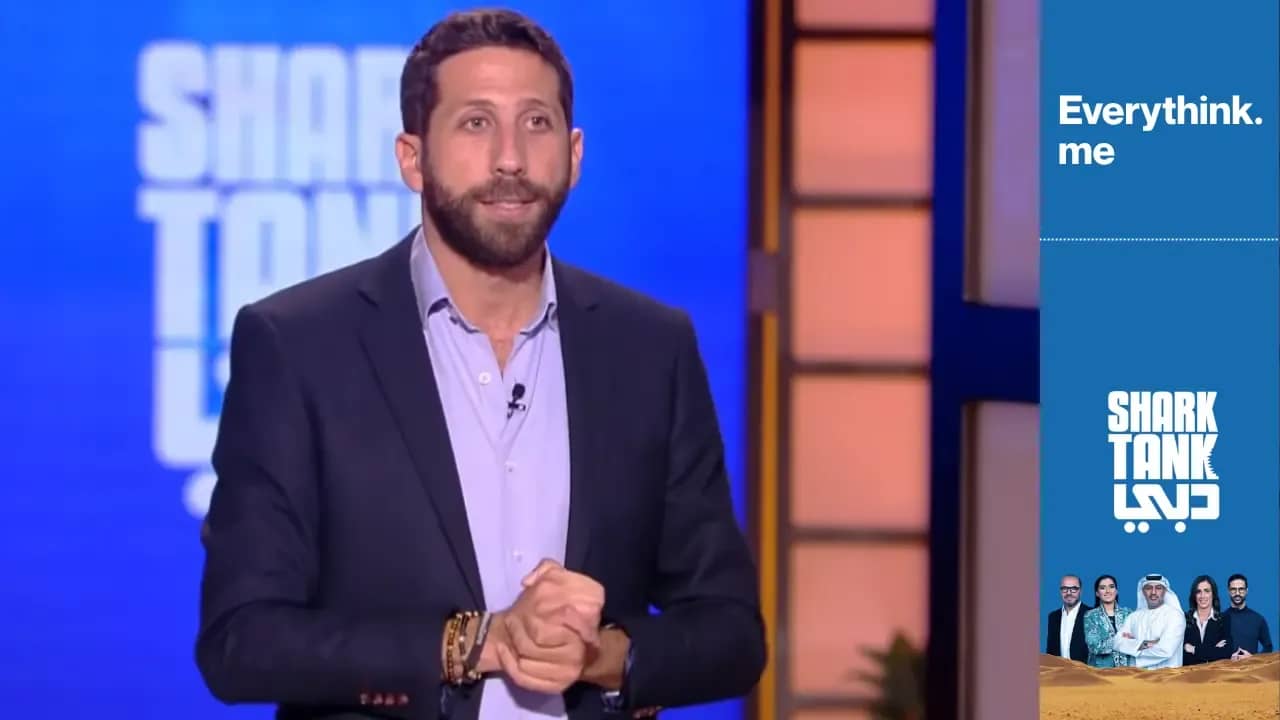
Everythink’s follow-up is better documented through founder John Achkar’s own account than through sweeping claims about virtual reality. In a public post about his Shark Tank Dubai experience, Achkar says the Sharks passed on his learning-and-development idea. He describes later building a team-adventure app with Thomas Tabet. This is a founder’s account, not independently audited evidence of business results.
Who is behind Everythink?
Achkar’s own corporate-services page identifies him as Everythink’s co-founder and CEO and describes his work as a comedian and facilitator. We use the spelling “John Achkar” shown by these primary sources, correcting “Ashqar” in the previous article.
The Everythink.me storefront lists games and lifestyle products. That consumer catalog should not be treated as evidence that a particular corporate VR product has achieved a learning outcome.
What happened after the pitch?
In his follow-up account, Achkar describes an app called The Ultimate Adventure, developed with Tabet and used in a team activity at LinkedIn’s Dubai office. He also acknowledges bugs and further work. The statement supports a specific reported development after the pitch; it does not establish revenue, a company valuation or an independently measured improvement in employee performance. Founder’s follow-up
A separate launch account describes a game combining riddles, challenges and exploration. This is a more concrete description of the later product than assuming that every part of the original VR pitch became the final service.
Are the financial and training-effectiveness figures verified?
We have not verified the previous article’s revenue figure, four-year sales projection or precise pitch terms from a reliably retrievable source in this review. Those figures have been removed. No current company valuation is established by the sources above.
The earlier “nine times more effective” statement was linked to a different training vendor, not evidence testing Everythink’s product. We have withdrawn it. A meaningful effectiveness comparison would need to identify the product, participants, comparison group, measured outcome and measurement period. A founder’s positive account of an event does not answer those questions.
Correction — October 10, 2026
We corrected the founder’s name, removed unsupported financial and effectiveness claims, and replaced speculation about the Sharks’ motives with an attributed founder account. The update adds the later app-development evidence and keeps company statements distinct from independently verified results. The original URL and publication date remain unchanged.
The weekly question
From obsession to clarity — one original question every week.
We answer one noisy topic at a time, in full. No daily roundup, no thread bait — just the question, the principles, and the system.