Derek Pacqué: The CoatChex Founder Who Rejected Mark Cuban
Derek Pacqué rejected Mark Cuban’s $200,000 CoatChex offer and built the idea into Chexology. Here is his verified founder and Shark Tank story.
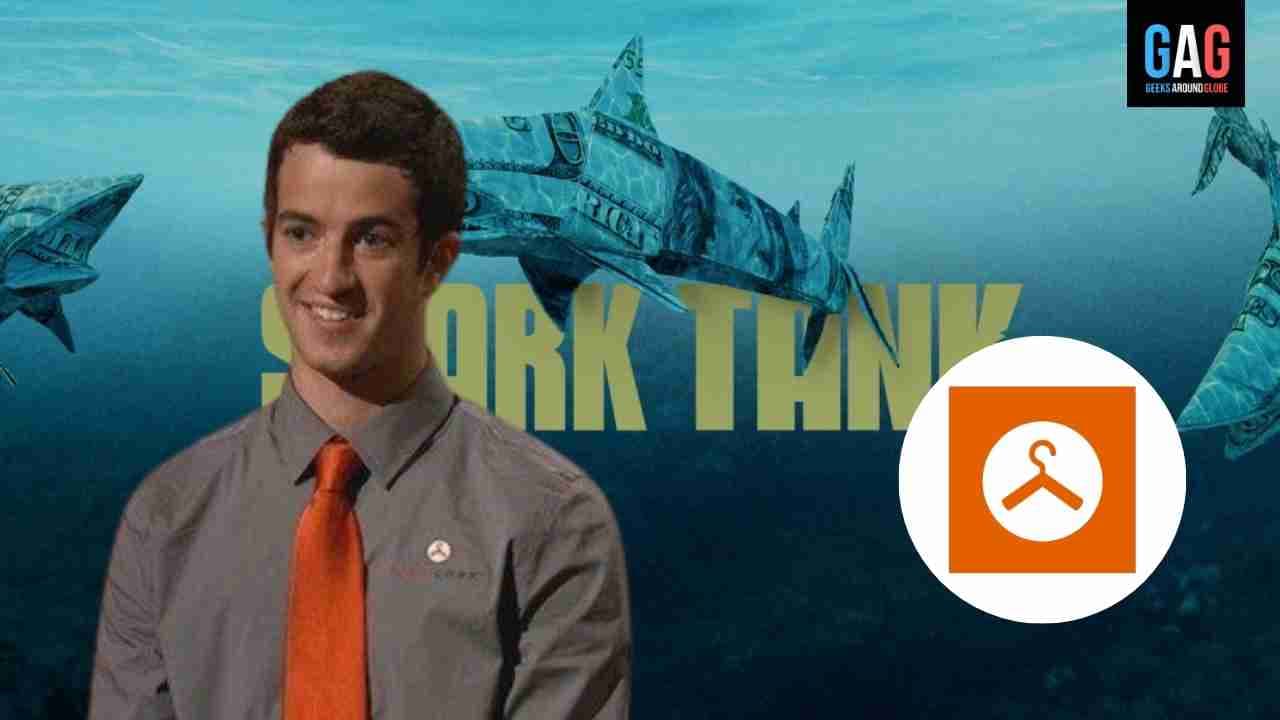
Derek Pacqué became known nationally as the 23-year-old founder who turned down Mark Cuban’s $200,000 offer on Shark Tank. His ticketless coat-check idea, CoatChex, did not disappear after the show. It developed into Chexology, where Pacqué continues to be identified as co-founder and CEO.
Derek Pacqué at a glance
| Detail | Verified information |
|---|---|
| Full name | Derek Pacqué |
| Known for | Founding CoatChex, now known as Chexology |
| Current role | Co-founder and CEO of Chexology |
| Education | Indiana University Kelley School of Business |
| Shark Tank appearance | Season 4, Episode 1 |
| Shark Tank ask | $200,000 for 10% |
| Mark Cuban’s offer | $200,000 for 33% |
| On-air outcome | Pacqué declined the offer |
| Personal net worth | Not publicly verified |
Who is Derek Pacqué?
Derek Pacqué is an American entrepreneur best known for creating CoatChex, a ticketless system designed to replace paper coat-check tickets with customer information stored digitally.
He developed the idea while studying at Indiana University. According to accounts from Pacqué and the Kelley School of Business, a frustrating experience involving a missing coat helped him recognize how inefficient traditional coat-check operations could be.
Pacqué completed his studies at Indiana University’s Kelley School of Business in 2011. He then continued building the coat-check concept into a technology company.
How did CoatChex begin?
The first version of CoatChex combined an iPad-based check-in system with a mobile, collapsible coat-check kiosk. Customers could check belongings using identifying information rather than relying on a small paper ticket that could be lost.
Pacqué tested the model around Bloomington, Indiana. A university alumni publication reported that his team generated approximately $50,000 during its first winter of operation. That historical figure describes the early service and should not be treated as current Chexology revenue.
The underlying idea eventually expanded beyond coats. The company developed tools for managing bags and other checked belongings at venues, events, hotels, nightlife businesses and entertainment locations.
Derek Pacqué’s Shark Tank pitch
Pacqué appeared in the Season 4 premiere seeking $200,000 for 10% equity in CoatChex. His request implied a $2 million company valuation.
The Sharks questioned the early-stage business, but Mark Cuban saw potential in the technology. Cuban offered $200,000 for 33% equity.
Pacqué stepped away to speak with his business partner and then declined the proposal. He believed that surrendering one-third of the company was too much at that stage.
The episode therefore ended without a deal. Cuban did not become an investor in CoatChex.
Why did Derek Pacqué reject Mark Cuban?
Pacqué explained in interviews after the episode that the timing and equity were the deciding factors. He respected Cuban and understood the value of his connections, but did not believe the offer matched the company’s early valuation or long-term plans.
Turning down the offer was a calculated ownership decision, not evidence that the pitch failed. The television appearance still introduced CoatChex to millions of viewers.
Pacqué has continued discussing the decision through Chexology’s official website. A company interview published years later said the business was thriving and noted that viewers still asked whether he regretted rejecting Cuban.
How CoatChex became Chexology
CoatChex eventually adopted the name Chexology as its technology moved beyond conventional coat checking. The broader brand focuses on digital check-in and item-management systems for businesses that temporarily hold customer belongings.
The change reflects a wider use case: the software can support coats, bags and other personal items rather than one narrow service.
Chexology’s official site continues to identify the company as the successor to CoatChex. Current professional and investment profiles identify Pacqué as its co-founder and CEO.
What does Chexology do?
Chexology provides digital claim-ticket and item-checking technology. Its system is designed to help venues:
- register a guest and checked item;
- replace or reduce paper claim tickets;
- retrieve items using customer information;
- track the handling of checked belongings;
- and manage high-volume guest-service operations.
The precise features offered to a business may change as the platform develops. Customers should use Chexology’s current product information rather than old descriptions of the original CoatChex kiosk.
Derek Pacqué’s patent work
Pacqué is listed in connection with a patent application titled “System and Method for Control of Bailment Inventory.” The filing relates to the foundation of the CoatChex model: recording and managing property temporarily entrusted to another party.
A patent filing is evidence of documented technical work, but it does not establish the company’s revenue or the inventor’s personal wealth.
Is Derek Pacqué still involved with Chexology?
Available current sources identify Pacqué as co-founder and CEO of Chexology. The company maintains an active official website and continues presenting its technology to venues and guest-service operators.
Private-company ownership, revenue and executive compensation are not publicly disclosed in enough detail to calculate Pacqué’s financial stake.
What is Derek Pacqué’s net worth?
Derek Pacqué’s personal net worth is not publicly verified.
The previous version of this article claimed an $8 million net worth without financial records or a reliable source. That estimate has been removed.
Several figures should not be confused with personal wealth:
- the $2 million valuation implied by Pacqué’s Shark Tank ask;
- the lower valuation implied by Cuban’s declined offer;
- CoatChex or Chexology revenue;
- and outside funding raised by the company.
A private-company valuation does not reveal the founder’s ownership percentage, debts, taxes or liquid assets.
The bottom line
Derek Pacqué founded CoatChex while studying at Indiana University, declined Mark Cuban’s $200,000-for-33% offer and continued developing the business. CoatChex later evolved into Chexology, where Pacqué remains publicly identified as co-founder and CEO.
His career is documented; his personal net worth is not. The strongest verified story is not an unsupported wealth estimate, but how an early coat-check service became a broader technology platform after leaving the Tank without a deal.
Read the company’s full post-show history in our CoatChex after Shark Tank update, or explore every company in the Shark Tank Season 4 guide.
FAQs
What company did Derek Pacqué found?
Pacqué founded CoatChex, a ticketless coat-check service that evolved into Chexology.
How much did Derek Pacqué ask for on Shark Tank?
He asked for $200,000 in exchange for 10% equity.
What did Mark Cuban offer Derek Pacqué?
Cuban offered $200,000 for 33% of CoatChex. Pacqué declined.
Does Mark Cuban own CoatChex?
No. Pacqué rejected Cuban’s on-air offer, so Cuban did not become an investor through the show.
What does Derek Pacqué do now?
Current company and professional sources identify him as co-founder and CEO of Chexology.
Is Derek Pacqué a millionaire?
His private finances are not publicly documented, so a reliable personal net-worth figure cannot be confirmed.
Sources
The weekly question
From obsession to clarity — one original question every week.
We answer one noisy topic at a time, in full. No daily roundup, no thread bait — just the question, the principles, and the system.