
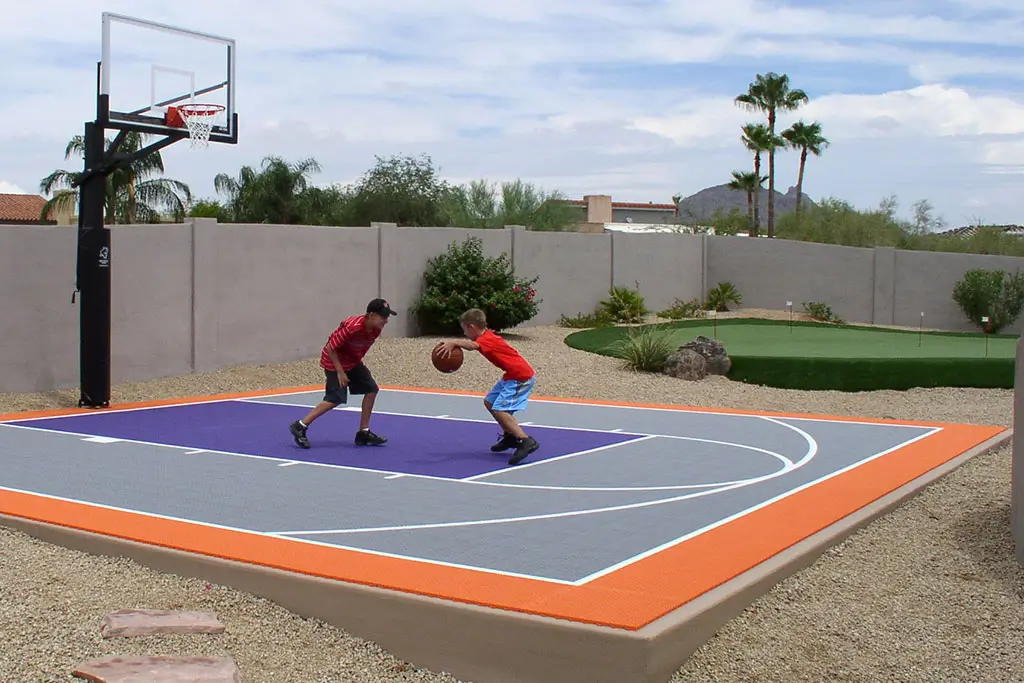
A basketball court needs more than a level slab and a goal. Good results come from smart planning, proper dimensions, and equipment that suits the space. When the setup is right from the start, the court feels safer, lasts longer, and plays better.
A strong plan should cover location, drainage, surface choice, and hoop selection before work begins. Many home and facility projects also include line markings, lighting, and a 60 inch basketball hoop to improve the playing experience. These choices shape how the court performs in daily use.
Choose the Right Location
The location affects every step in the project. The site should have stable ground, enough open space, and proper drainage. It should also fit the property without creating safety problems around the edges.
Space around the court matters as much as the court itself. Players need room to stop, turn, and move without hitting walls, fences, or hard objects. A smart location also makes construction easier and helps protect the surface over time.
Plan the Court Size and Layout
Court size should match both the available area and the intended use. A full court may suit schools or larger properties, while a half court may work better for homes. Clear planning at this stage helps avoid costly changes later.
The layout should reflect how the court will be used most of the time. Some owners want a space for casual shooting, while others need room for drills or competitive play. Accurate dimensions create a better result and make the court feel complete.
Build a Strong Base and Surface
A quality court starts with a strong base. The ground should be graded, leveled, and prepared to support drainage and long-term stability. If this step is rushed, cracks and uneven areas may appear later.
The top surface should fit the climate and the level of play. Concrete and asphalt remain popular because they offer durability and a dependable bounce. A smooth finish helps players move with confidence and improves overall play.
Select the Hoop With Care
The hoop is one of the most important parts of the setup. Height adjustment, backboard quality, and mounting style can all affect how the court feels during practice and games. A poor goal choice can weaken the value of the full project.
Many builders choose a 60 inch basketball hoop because it offers a strong balance between performance and practical size. This option suits serious play while still fitting many residential layouts. A well-made hoop can improve both function and long-term value.
Add the Finishing Features
Court markings give the space structure and purpose. Clear lines help players judge distance, position, and movement during practice or games. This step also gives the court a more complete appearance.
Other features can improve comfort and convenience after construction is done. Lighting, fencing, padding, and seating may all add value depending on the setting. These details can turn a basic court into a more useful and polished space.
A good basketball court comes from careful planning and sound construction. Location, layout, surface quality, hoop choice, and finishing features all affect the final result. When these steps are handled well, the court becomes a strong and enjoyable place to play.