
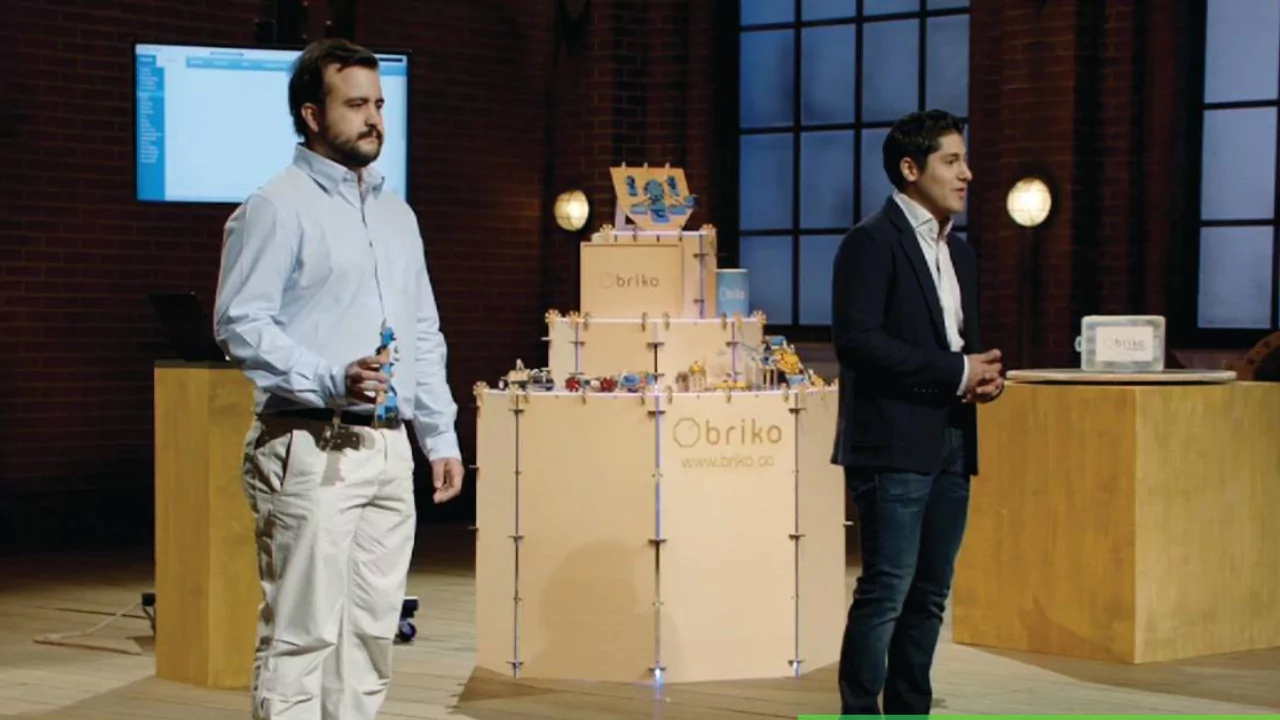
In 2014, a group of four engineers from Tec de Monterrey launched a mission-driven startup that captured the imagination of educators, investors, and parents alike. Their creation, Briko, was more than just a robotics kit. It was a full-fledged educational platform designed to teach programming, electronics, and engineering principles to children and teens across Mexico.
Their vision was clear: to democratize access to technology and STEM education in Latin America.
With appearances at major startup competitions, recognition from tech giants like Intel and MIT, and even a pitch on Shark Tank México, Briko’s future looked incredibly bright. Yet by 2025, the once-promising startup seems to have slipped into silence, with little digital footprint and no clear public presence.
So, what happened to Briko?
The Founders and Their Vision
Briko was founded by four mechatronics engineers, three of whom are publicly identified as Bernardo Fernandez Lopez, Juan Carlos Torres Felix, and David Bustos Torres. Each brought a unique skill set to the company. Bernardo had a strong focus on mechanical design and a passion for science and tech promotion. Juan Carlos had experience as a programming teacher and app designer. David was deeply driven by a desire to make tech education accessible, especially in underserved communities.
Together, they recognized a significant gap in Latin American education. Many schools lacked the resources, curriculum, or support to teach kids real-world STEM skills. Briko was their answer to that problem.
Their solution was simple in concept but powerful in execution. They built modular robotics kits paired with online learning, delivered in Spanish, tailored to younger learners, and made affordable for schools.
The Product That Promised to Change Education
At its core, Briko was designed to combine physical building with digital learning. The robotics kits allowed students to construct programmable machines, while the online platform guided them through structured learning paths. Over 70 hours of educational content covered topics like basic electronics, logic, mechanics, and even app development.
But it wasn’t just about teaching coding. Briko emphasized creative problem-solving, logical thinking, and hands-on experimentation. The startup understood that for young learners, engagement is everything. Their kit wasn’t a toy. It was a gateway into the future of work.
This blend of hardware and software proved effective. Within a few years, Briko had reached over 5,000 students in more than 55 educational institutions across Mexico, according to the Tec de Monterrey tech news outlet that featured their story in 2019.
Shark Tank México: The Big Break
Briko’s turning point came in Season 1, Episode 4 of Shark Tank México. Facing a panel of seasoned investors, the founders confidently pitched their mission: to prepare Latin American youth for a digital future. The panel was impressed, particularly Rodrigo Herrera, who offered 2 million pesos to support their cause.
That moment was a breakthrough. Appearing on national television gave Briko massive visibility. Teachers, school administrators, and even parents across Mexico saw the pitch. Suddenly, the company was no longer a niche EdTech project. It became a startup gaining real momentum.
However, what followed remains a little hazy. In a 2024 YouTube interview, a Briko co-founder stated, “One of the two investors who offered a deal on TV is involved in the business today. That’s probably the most I can share.” This suggests that at least one of the deals made during the show materialized. Whether Rodrigo Herrera’s investment closed officially, however, remains unconfirmed. Still, PitchBook confirms his involvement through a direct investment in 2016.
After Shark Tank: Promising Steps Forward
In the months following their TV debut, Briko raised early-stage funding through multiple channels. According to PitchBook, they secured $44,100 through equity crowdfunding in early 2015, followed by an additional $50,000 from a venture capital round. They also received support from the well-known accelerator 500 Startup LatAm.
With these funds, Briko continued expanding its reach. They refined their platform, made more kits available to schools, and attended educational expos and startup competitions. For a time, it looked like Briko was on a trajectory similar to other Shark Tank success stories. Their combination of social impact and market potential made them a standout in Mexico’s EdTech landscape.
Briko in 2025: Alive but Quiet
As of 2025, Briko Robotics is still listed as active on PitchBook, but the signs of activity are minimal. The company reportedly has just five employees and underwent a private secondary transaction in April 2024, suggesting potential internal ownership changes or a down-round.
However, publicly, Briko has gone nearly invisible. Their original website appears inactive. There is no updated e-commerce presence or product listing. Social media accounts show no recent activity, and no media interviews, press releases, or new school partnerships have been announced since the original kits launched more than a decade ago. The name conflict with a European sportswear brand using “briko.com” further complicates online discoverability.
Why Did Briko Go Silent?
Several theories could explain why Briko, despite early promise and funding, faded from the public spotlight.
Scaling in Latin America is Hard: Despite its potential, the Latin American education market presents massive logistical and financial barriers. Many public schools lack resources, and private schools have strict procurement systems. Scaling an EdTech product requires deep pockets, strong partnerships, and long-term engagement—requirements that can challenge even well-funded startups.
Brand Visibility Struggles: The Briko name was not unique. Competing online with a European company under the same brand likely caused SEO challenges and audience confusion. For a company that relied heavily on web-based visibility, this could have been a major roadblock.
Limited Operational Capacity: With just five employees in 2025, Briko remains a small operation. Maintaining product innovation, business development, client support, and logistics simultaneously at scale is a tall order for such a compact team.
No Clear Differentiation: While Briko’s focus on the Latin American market provided context and language support, it still competed against global giants like LEGO Mindstorms and Arduino kits—platforms with massive communities, teaching resources, and ecosystem support. Without constant growth and differentiation, Briko risked being left behind.
Lessons from Briko’s Journey
Briko’s journey highlights the gap between inspiration and execution, and between gaining attention and achieving lasting impact. It shows that a good product and pitch aren’t enough—you need sustained visibility, product updates, partnerships, and strong internal infrastructure.
Media moments like appearing on Shark Tank México can be powerful but often serve as boosts, not finish lines. For founders, educators, and investors, Briko’s experience offers critical reminders about the complexity of scaling meaningful EdTech solutions in emerging markets.
Despite its quiet presence today, Briko succeeded in reaching thousands of students and had a real impact—even if the full story remains behind closed doors.
Conclusion: A Faded Star or a Quiet Impact?
Briko hasn’t officially shut down. It still exists—in investor databases, in summer interviews, and potentially in a handful of schools still using their kits. But as of 2025, it’s clear the company hasn’t lived up to the full potential shown on Shark Tank México.
Whether this silence marks a temporary pause or the quiet end of a once-celebrated mission, Briko’s story reminds us how difficult it is to translate educational innovation into long-term, systemic change—especially in contexts with infrastructure hurdles and strong competition.
Perhaps one day, Briko or a successor will rise again to carry its mission further. Until then, their journey offers lessons worth studying.
TL;DR (Too Long; Didn’t Read)
Briko, once a rising EdTech star in Mexico with a Shark Tank deal and big dreams, is still technically in business—but has gone almost completely silent. Despite early success and impact in schools, its public presence and momentum have faded by 2025.
FAQs
Is Briko still in business in 2025?
Yes, according to PitchBook, Briko Robotics is still listed as active with five employees and a private secondary transaction in April 2024. However, the company maintains minimal public presence.
Did Briko secure the Shark Tank México deal?
Briko received an offer of 2 million pesos from Rodrigo Herrera on Shark Tank México. A co-founder later confirmed that one investor from the show remained involved, and PitchBook notes an investment by Herrera in 2016—though details were not officially disclosed.
How many students has Briko reached?
Briko’s modular robotics kits and courses have reached more than 5,000 students across over 55 educational institutions in Mexico, as reported by Tec de Monterrey.
Can I still buy Briko kits online?
Right now, there is no active website or e-commerce store for Briko, and their name is overshadowed online by a European brand using the same domain (briko.com). Availability may be limited and hard to find.
What made Briko different from LEGO Mindstorms?
Briko focused on affordability, Spanish-language instruction, and a local approach tailored to Latin American education systems. While LEGO Mindstorms and Arduino offer global ecosystems, Briko aimed to make STEM tools accessible specifically for Mexican schools.