
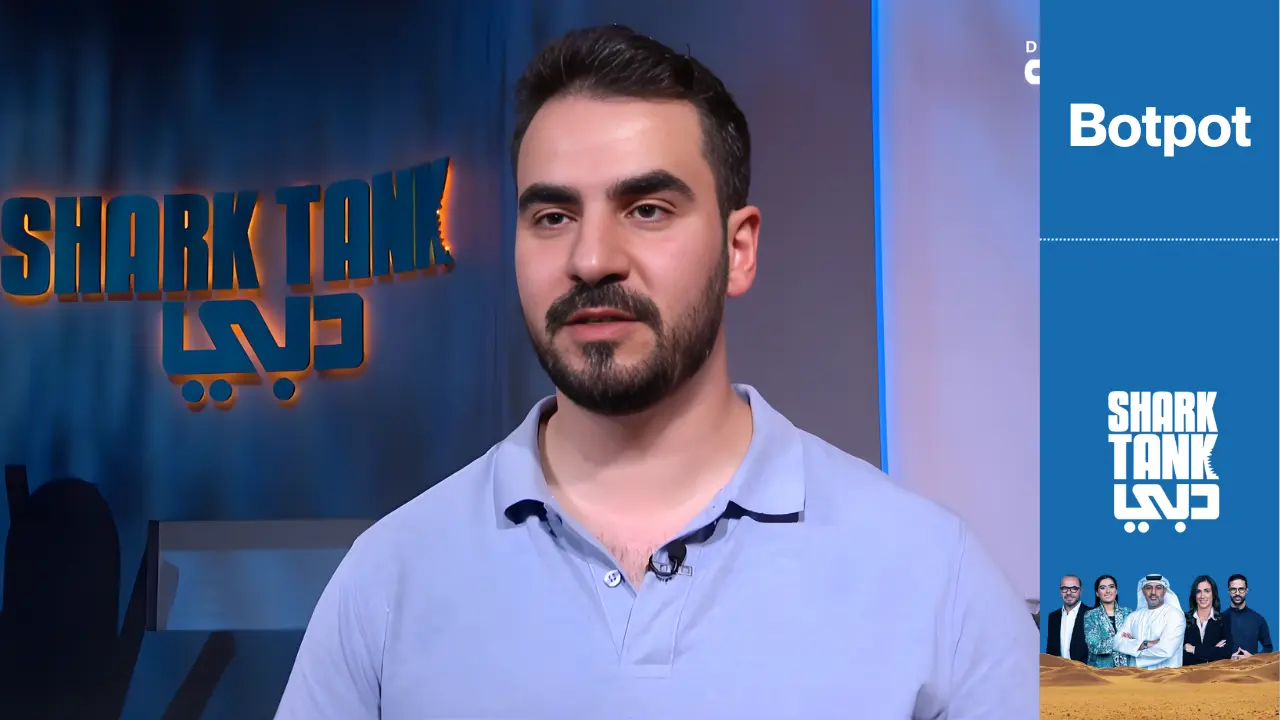
In Dubai’s soaring towers and compact apartments, space is a luxury. Sunlight is limited, balconies are small, and traditional gardening feels impossible. Yet Baraa Al-Jilani, founder of Botpot, walked into Shark Tank Dubai with a bold question:
What if your home could grow its own food, automatically?
This was not just another gadget pitch. It was a vision to move farming from the countryside into the urban kitchen.
Shark Tank Dubai Pitch Summary
| Company Name | Botpot |
| Founder | Baraa Al-Jilani |
| Product | Smart modular hydroponic indoor farming system |
| Ask | 750,000 AED |
| Deal Secured | 750,000 AED for 25% equity |
| Investor | Youssef Hammad |
Bringing the Farm to the Foyer
Most people love the idea of farm-to-table living. Few have the time, space, or skills to make it happen. In cities like Dubai, gardening often ends before it starts.
Botpot challenges that reality. Instead of soil, sunlight guesswork, and daily care, it offers an autonomous indoor farming system powered by technology. It transforms unused corners of modern apartments into efficient food production units.
The dream shifts from “maybe one day” to “harvest every six weeks.”
The Smart in Smart Farming: IoT Meets Agriculture
Botpot does not treat gardening as a hobby. It treats it as a system.
Using IoT integration and a dedicated mobile app, the device monitors water levels, nutrients, and plant conditions automatically. There is no daily manual watering. There is no performance anxiety about killing your plants.
If something needs attention, you receive a simple notification. You tap. You refill. The system continues.
This removes the biggest barrier in urban farming: uncertainty. Even a busy professional with zero gardening experience can produce fresh herbs and leafy greens consistently. Botpot makes horticulture feel like managing a digital subscription, not a fragile responsibility.
90% Less Water. Half the Time. Real Results.
The numbers surprised the Sharks.
Traditional agriculture takes around 90 days for many crops. Botpot reduces that to just 35 to 45 days using hydroponics. Every 40 days, users can expect new production cycles.
Leafy greens like lettuce provide steady harvests every six weeks. Herbs like basil grow even faster. There is no soil mess. There are no pesticides. The process is clean and contained.
Most impressive is water efficiency. The system uses 90% less water compared to traditional soil-based farming. In a region where water conservation matters deeply, this statistic carries weight.
This is not just convenience. It is sustainability engineered into the home.
Designed for Dubai Living: Modular and Stackable
Urban homes are shrinking. Storage is strategic. Every square meter counts.
Baraa Al-Jilani understood this reality. Botpot is modular and stackable, allowing vertical expansion without increasing floor space. Users can start with one unit and scale upward like building blocks.
This vertical design solves the density challenge of city living. Families can increase output by simply adding layers. The system grows alongside the household’s needs.
Instead of being a bulky appliance, Botpot integrates into modern interiors. It feels less like furniture and more like infrastructure.
The Founder’s Edge: Robotics to Radishes
Botpot’s strength does not stop at design. It begins with its founder.
Baraa Al-Jilani holds a Master’s degree in Electrical and Electronic Engineering. His background in robotics and programming gives the product a technical moat that competitors cannot easily replicate.
The manufacturing cost stands at 550 AED, while the retail price is 1,250 AED. This positions Botpot as a consumer electronics product with healthy margins.
During the pitch, Al-Jilani emphasized something bigger than profit. He wanted to prove that the region can manufacture high-quality electronics capable of competing globally. His focus on local assembly and high-spec components signals a shift in regional innovation.
Botpot is not just a planter. It is hardware backed by engineering discipline.
The Sharks’ Divide: Convenience vs Creation
The debate inside the Tank was intense.
Elie Khouri exited early, arguing that organic produce is already available in supermarkets. He viewed Botpot as a solution searching for a problem.
Noor Sweid and Amira Sajwani also stepped back. Amira questioned whether the niche market could scale large enough to justify investment.
But this was never only about lettuce.
Botpot appeals to something deeper: control, transparency, and psychological satisfaction. For many consumers, the value lies in harvesting pesticide-free greens seconds before eating them. It offers food security in a world where supply chains feel uncertain.
The device transforms users from passive consumers into active micro-producers. That emotional shift is powerful.
The High-Stakes Battle for 1%
The climax came with a battle between Youssef Hammad and Faisal Belhoul.
Both offered 750,000 AED. The difference? One percentage point.
Faisal proposed 26% equity. Youssef offered 25%. Baraa Al-Jilani chose Youssef’s deal, securing 750,000 AED for a 25% stake.
That single percentage decision showed strategic clarity. In Shark Tank Dubai, every percent represents long-term power. The choice reflected a founder who understood equity value deeply.
It was not just funding. It was a vote of confidence in the future of home agriculture.
What Botpot Means for Dubai’s Future
Dubai is a city built on bold solutions. From vertical skyscrapers to autonomous transport, innovation defines its identity.
Botpot fits naturally into that story. As cities grow denser and food systems become more complex, localized production gains importance. Autonomous home farming may soon shift from luxury to necessity.
The bigger question remains:
If your home could feed your family sustainably, would you still see the grocery store the same way?
For Shark Tank Dubai viewers, founders, and investors alike, Botpot represents more than a device. It represents a shift in mindset.
And that shift might just be the real harvest.