Air Tulip Net Worth Update: The $10M Shark Tank Pitch That Got No Deal
Air Tulip pitched a $4,490 sleep headboard that creates a “clean air bubble” on Shark Tank Season 16 at a $10M valuation. No deal closed. The brand is still selling in 2026. Here is the full net worth update for Dr. Arjen de Jong’s AirTulip.
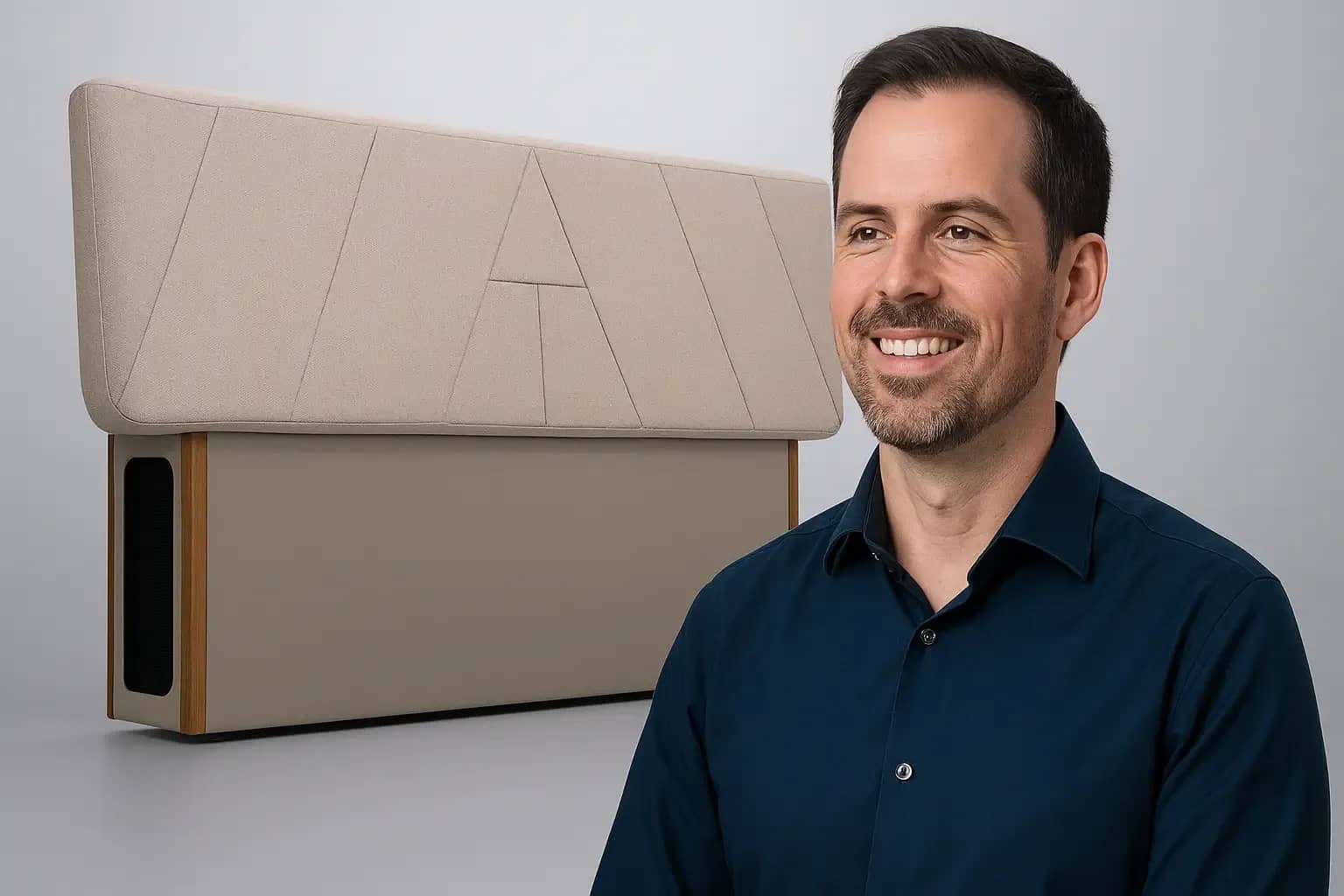
Quick answer: Air Tulip is still in business in 2026, selling the AirTulip Sleep air-purifying headboard for $4,490. Founder Dr. Arjen de Jong pitched Shark Tank Season 16 (April 2025) asking $400,000 for 4% at a $10 million valuation. No deal closed — Kevin O’Leary offered $400,000 for 20%, but de Jong walked away. Our net worth estimate: ~$1.5–$2.5 million, well below the TV pitch.
| Company | AirTulip (Air Tulip) — laminar-flow sleep headboard air purifier |
| Founder | Dr. Arjen de Jong (PhD, fluid mechanics / aerospace engineering) |
| Founded | Circa 2020, New York |
| Episode | Shark Tank USA Season 16, Episode 16 (aired 11 April 2025) |
| The ask | $400,000 for 4% ($10M implied valuation) |
| Best on-air offer | $400,000 for 20% — Kevin O’Leary (declined by founder) |
| Deal closed? | No |
| Kickstarter (2022) | $143,883 from 96 backers |
| Current price | $4,490 (made to order; hand-assembled in NY & Detroit) |
| Net worth (our estimate) | ~$1.5–$2.5M (private company; not officially disclosed) |
Air Tulip net worth: the quick answer
Air Tulip is one of the most talked-about luxury sleep-tech pitches of recent Shark Tank seasons. The headline number was $10 million. The business reality in 2026 looks very different.
- Still operating. AirTulip Sleep is listed on the official store at $4,490 with a 30-night sleep trial.
- No Shark investment. Kevin O’Leary made the only serious offer; Arjen de Jong rejected it and left with no deal.
- Small but real revenue base. Kickstarter raised $143,883; by the Shark Tank pitch the company had sold roughly 100 units. Volume remains niche, not mass-market.
- Our valuation estimate: $1.5–$2.5 million. That reflects early-stage hardware economics, not the $10M number floated on TV. Kevin O’Leary himself said on the episode he did not believe the company was worth more than $2 million.
How we estimated net worth
AirTulip does not publish audited financials. We built a conservative editorial estimate from observable data:
- Core SKU price: $4,490 per headboard (current official listing, made to order).
- Kickstarter baseline: $143,883 from 96 backers in late 2022.
- Pre-pitch sales: ~100 units sold before Shark Tank, per the founder’s pitch.
- Post-show volume assumption: roughly 50–100 units per year for a $4,490 custom hardware product with 8-week lead times and no mass retail.
- Implied annual revenue range: ~$225,000–$450,000 at current pricing, plus filter subscriptions.
- Valuation method: early-stage hardware multiple weighted toward IP (laminar-flow sleep tech, HEPA H14 stack, patent-pending design), Kickstarter proof, and reported early VC backing — not the Shark Tank ask.
Treat this as a GeeksAroundGlobe editorial estimate. If B2B wellness contracts scale faster than our model assumes, the real figure could be higher. If unit volume stalls, it could be lower.
What happened to Air Tulip on Shark Tank?
Dr. Arjen de Jong walked into the Tank in April 2025 with a dramatic demo: smoke in the room, particle counters dropping to zero around the bed. His product, AirTulip Sleep, is a headboard that uses laminar airflow — smooth, single-direction air movement like hospital cleanrooms and aerospace labs — to create a localized “clean air bubble” around the sleeper’s breathing zone.
He asked for $400,000 for 4%, valuing AirTulip at $10 million. The sharks were impressed by the science but skeptical of the price tag and the go-to-market path. At roughly $3,000–$3,500 per unit at pitch time (now $4,490), with limited sales beyond crowdfunding and no broad retail distribution, most sharks saw a capital-intensive hardware bet with a narrow buyer pool.
Mark Cuban, Robert Herjavec, Barbara Corcoran, and Lori Greiner all passed. Kevin O’Leary was the last shark standing. He said the product was impressive but the valuation did not match the risk, offering $400,000 for 22.5% before negotiating down to $400,000 for 20%. De Jong countered at 8%, then 15%. Kevin held firm at 20%. De Jong declined and left without a deal — choosing to keep majority control rather than accept Kevin’s terms.
READ ALSO: Why do so many Shark Tank deals never close?
Did Air Tulip get a deal on Shark Tank?
No completed deal. Kevin O’Leary made an on-air offer, but Arjen de Jong rejected the equity split. That is different from deals that collapse in due diligence after a handshake — here, the founder actively chose to walk away. Kevin reportedly said he would still buy the product personally, but he never invested in the company.
Kickstarter and the road to the Tank
AirTulip launched on Kickstarter in late 2022 and raised $143,883 from 96 backers, with pledge tiers roughly between $899 and $1,999 depending on size. NFL linebacker Matt Judon was an early public adopter, which helped the brand gain visibility in wellness and sports circles.
By the Shark Tank pitch, de Jong reported selling around 100 units total and was preparing a broader direct-to-consumer push. The company also secured early venture backing from RPV in January 2024 and talked about opening a public investment round for smaller backers.
Is Air Tulip still in business?
Yes. As of 2026, AirTulip remains an active brand. The official store lists AirTulip Sleep at $4,490, made to order with an 8-week production lead time, hand-assembled in New York and Detroit. The product includes dual HEPA H14 filters, active carbon layers, ambient lighting, USB charging, and a wireless phone dock. Buyers get a 30-night sleep trial and a one-year manufacturing warranty.
The company continues to lean on its Shark Tank appearance for credibility while pushing beyond pure DTC luxury. The stated strategy includes B2B wellness — medical offices, corporate campuses, and institutional buyers where a $4,490 sleep-quality device is easier to justify than in mass consumer retail.
Does the AirTulip actually work?
The core claim is narrow and specific: unlike room-wide purifiers that mix cleaned air back into a dusty environment, AirTulip targets the breathing zone directly above the pillow using laminar flow. Independent particle-counter demos — including the one shown on Shark Tank — support the idea that localized air quality can improve dramatically in that zone.
The harder question is whether that localized benefit justifies a $4,490 headboard plus roughly $674 per year in replacement filters for King/Queen models. Consumer skepticism on forums often focuses on open windows, ceiling fans, pets, and whether a whole-room purifier achieves “good enough” results at a fraction of the cost. AirTulip’s answer is that cleanroom-grade sleep is a different category — precision health hardware, not a commodity appliance.
Who founded Air Tulip?
Dr. Arjen de Jong is a Dutch aerospace engineer with a PhD in fluid mechanics. He spent nearly two decades designing airflow systems for demanding environments — from cleanroom engineering to automotive and aerospace clients. He developed AirTulip during the pandemic in New York after realizing conventional bedroom purifiers were not delivering clean enough air at the pillow.
De Jong’s personal net worth is not publicly disclosed. His stake is tied to a private, capital-intensive hardware startup that rejected Shark money and continues to sell a ultra-premium niche product.
Air Tulip net worth timeline
| Year | Status |
|---|---|
| 2020 | AirTulip founded by Arjen de Jong in New York |
| 2022 | Kickstarter raises $143,883 from 96 backers |
| Jan 2024 | Early VC backing from RPV reported |
| Apr 2025 (pitch) | $10M implied valuation ($400k for 4%); Kevin O’Leary offers $400k for 20% — declined |
| 2025–2026 | Still selling at $4,490; B2B pivot; estimated net worth ~$1.5–$2.5M (our model) |
The bottom line
Air Tulip is the rare Shark Tank story where the founder had an offer and said no. De Jong bet that a $10M vision for cleanroom-grade sleep tech was worth more than giving up 20% to Kevin O’Leary. The company is still standing in 2026, selling a beautiful, expensive, scientifically serious headboard to a tiny addressable market. Our best good-faith net worth estimate: $1.5–$2.5 million — real, but a long way from the number that made headlines on TV.
Frequently asked questions
Did Air Tulip get a deal on Shark Tank?
No. Kevin O’Leary offered $400,000 for 20%, but founder Arjen de Jong declined after countering at 8% and then 15%. All other sharks passed.
What is Air Tulip’s net worth?
Not officially disclosed. GeeksAroundGlobe estimates ~$1.5–$2.5 million in 2026 based on the $4,490 price point, low unit volume, Kickstarter history, and early-stage hardware valuation norms — far below the $10M Shark Tank ask.
Is Air Tulip still in business?
Yes. AirTulip Sleep is sold on the official website as of 2026 with a 30-night trial, made-to-order production, and B2B wellness outreach.
Who founded Air Tulip?
Dr. Arjen de Jong, a Dutch aerospace engineer with a PhD in fluid mechanics and a background in cleanroom airflow design.
How much does AirTulip cost?
The AirTulip Sleep headboard is listed at $4,490 as of 2026, with an 8-week made-to-order lead time. Replacement filters cost roughly $674 per year for King/Queen models.
Where can you buy Air Tulip?
Directly from the official AirTulip website. There is no mass retail distribution as of 2026.
How we verified this update
This update is based on the Shark Tank Season 16, Episode 16 pitch (aired 11 April 2025), the company’s 2022 Kickstarter campaign results, a live check of the official AirTulip product listing and pricing in 2026, and reported post-show business developments including early VC backing and the B2B wellness pivot. Net worth is our editorial estimate from observable pricing, unit-volume assumptions, and early-stage hardware valuation norms because AirTulip does not publish financial statements. We update this page as new facts emerge.
The weekly question
From obsession to clarity — one original question every week.
We answer one noisy topic at a time, in full. No daily roundup, no thread bait — just the question, the principles, and the system.